How to Sleep Well While Traveling
Quick Answer
To sleep well while traveling, focus on preparation, comfort, and consistency rather than trying to control everything. Before a trip, adjust your routine gradually, get some light exposure at the right times, and pack a few familiar comfort items. During transit, prioritize rest over forcing full sleep. In a hotel, recreate small pieces of your normal routine and manage unfamiliar light and noise. For time zone changes, be patient with your body and lean on light exposure and daily routine rather than expecting a fast, predictable adjustment.
Travel sleep is rarely perfect, and that is normal. The goal is to reduce avoidable disruption and give your body the best conditions to rest, not to guarantee a flawless night in an unfamiliar bed.
Table of Contents
- Preparing Before a Trip
- Sleeping on the Plane or in Transit
- Sleeping in a Hotel or Unfamiliar Room
- Adjusting to a New Time Zone
- When Travel Sleep Disruption Feels Like More Than Jet Lag
- A Simple Pre-Trip Checklist
- Common Mistakes
- FAQ
Preparing Before a Trip
Good travel sleep often starts days before you leave. If you are crossing time zones, shifting your bedtime and wake time by small increments in the days before departure can make the transition feel less abrupt. Moving your schedule by even 15 to 30 minutes a day toward your destination’s time can help, though how much this actually helps varies by person and by how disruptive your normal schedule already is.
Light exposure is one of the more practical tools you have. Getting outside in daylight at times that match your destination’s schedule, and dimming lights and screens in the evening as your target bedtime approaches, can help your body ease into a new rhythm. This is a gradual, supportive habit rather than a guaranteed fix, and it works best alongside a realistic travel schedule.
Packing familiar comfort items is a simple, low-effort way to make any bed feel a bit more like home. A small pillow, a favorite blanket, or a sleep mask can carry a surprising amount of psychological comfort in an unfamiliar room. If you already rely on a mask to block light at home, it is worth bringing along. For more on how a mask fits into a broader sleep routine, see Does a Sleep Mask Help You Sleep Better?
Finally, keep your pre-trip evenings as normal as possible. Packing at midnight, cramming in errands, or staying up late to “get ahead” before an early flight often does more damage to your sleep than the trip itself.
Sleeping on the Plane or in Transit
Sleeping upright on a plane, train, or bus is rarely as restful as sleeping in a bed, and it helps to set realistic expectations. The goal during transit is usually rest and recovery rather than a full night of deep sleep.
A few practical habits can help. A neck pillow or rolled jacket can support your head and reduce the discomfort that keeps waking you up. Earplugs or noise-canceling headphones can soften engine noise and nearby conversation. An eye mask blocks cabin lighting and window glare, which matters even during daytime flights. Loose, comfortable clothing and a light layer for temperature changes also make a noticeable difference over a long trip.
Try to time naps and rest periods around your destination’s schedule when you can, rather than your departure city’s schedule. On a long flight, this might mean staying awake for part of the trip even if you are tired, so your rest lines up better with when you will actually want to sleep after you arrive. It also helps to avoid heavy meals, alcohol, and excess caffeine during travel, since these can make it harder to rest and can add to how groggy or dehydrated you feel on arrival.
Sleeping in a Hotel or Unfamiliar Room
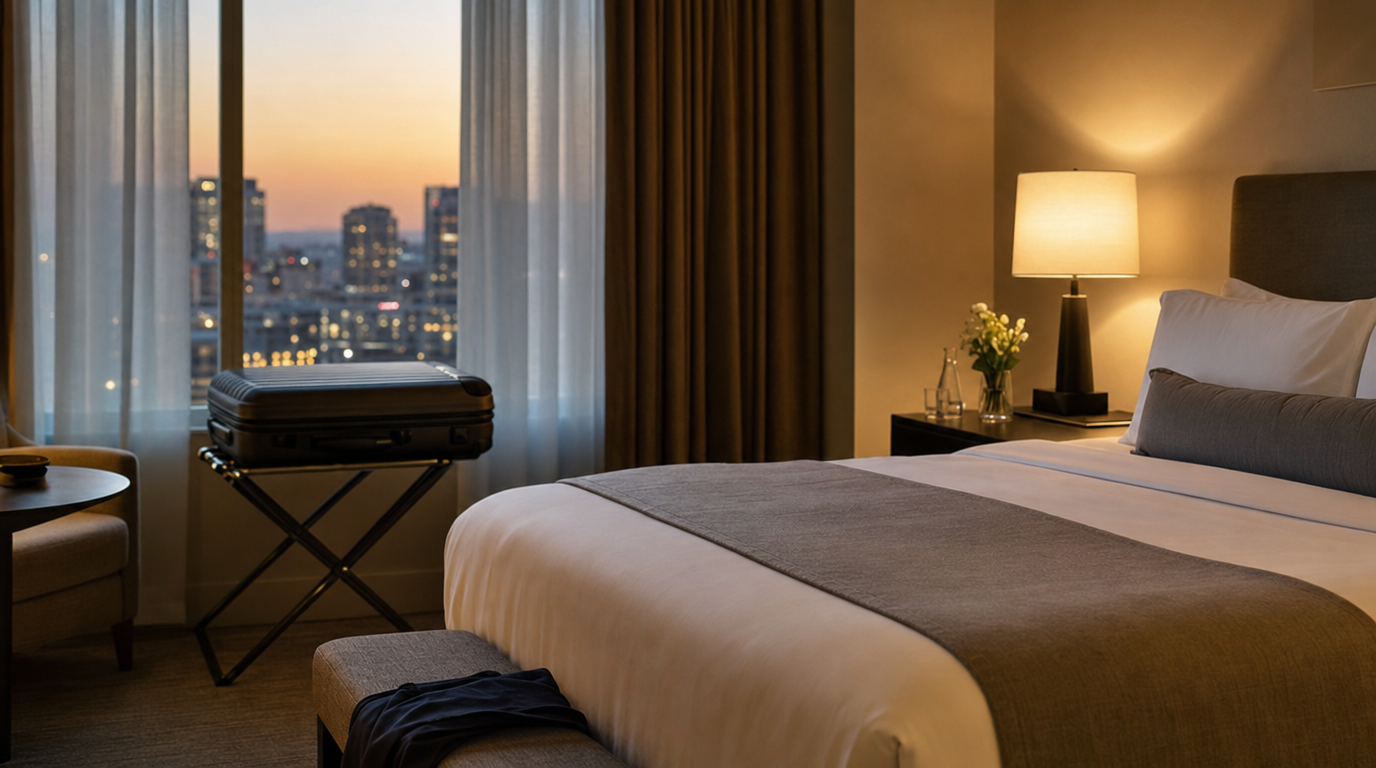
An unfamiliar bed, unfamiliar sounds, and an unfamiliar layout can all make it harder to settle in, even when you are exhausted. Many travelers notice their first night in a new place feels lighter or more restless than usual — this is a commonly reported travel experience, though individual sensitivity varies quite a bit from person to person.
Bringing a small piece of your normal routine into the room can help. This might be reading for a few minutes before turning off the light, using the same skincare or wind-down habit you use at home, or setting the room temperature to something close to what you are used to. These small, familiar cues can signal to your body that it is time to rest, even in a new place.
Unfamiliar light and noise are two of the most common hotel sleep complaints. Hotel curtains do not always block light as well as you would like, so it is worth checking the room when you arrive and using a travel sleep mask if needed. For noise, options range from earplugs to a portable white noise app or device, depending on what you find comfortable and effective. For a closer look at the tradeoffs between these two approaches, see White Noise Machine vs. Earplugs for Sleep.
It also helps to do a quick room check before bed: confirm the door is locked, adjust the thermostat, silence or dim any unnecessary electronics, and locate the light switches so you are not fumbling in the dark. Small logistics like these can prevent avoidable middle-of-the-night wake-ups.
Adjusting to a New Time Zone
Many travelers find that it takes a few days to feel fully adjusted after crossing time zones, though this varies widely from person to person and depends on how many time zones you crossed, your individual sleep patterns, and how much control you have over your schedule once you arrive. There is no single, reliable formula for how long adjustment takes, and it is worth being cautious of any claim that promises an exact number of days.
Getting outside in daylight at your destination is commonly suggested as one way to help your body adjust to the new time zone, though how quickly this works varies a lot from person to person. In practice, this often means getting outside during daylight hours that match your new schedule, and avoiding bright screens or artificial light late in the evening as you approach your target bedtime. Some travelers find it helpful to seek morning light when trying to shift their schedule earlier, and evening light when trying to shift it later, but the right approach depends on the direction and size of the time change, so treat this as a general habit rather than a precise formula.
Meal timing, activity, and staying on your destination’s clock as soon as possible can also help your body settle into the new rhythm. Try to eat, exercise lightly, and go to bed according to local time from the first day, rather than continuing to run on your home schedule. Short daytime naps of 20 to 30 minutes can help with fatigue without making nighttime sleep harder, but longer or later naps can sometimes work against adjustment.
Be patient with yourself during this period. Feeling foggy, tired at odd times, or wide awake in the middle of the night for the first day or two is a common experience for many travelers, not a sign that something is wrong.
When Travel Sleep Disruption Feels Like More Than Jet Lag
For most travelers, sleep disruption from a trip fades within a matter of days. If jet lag or travel-related sleep trouble happens frequently, feels unusually severe, or starts affecting your ability to function during the day well after a trip has ended, it may be worth discussing with a healthcare professional. This is especially true if disrupted sleep is a recurring pattern in your life beyond travel, since ongoing sleep problems are worth addressing directly rather than assuming travel is always the cause.
A Simple Pre-Trip Checklist
- Begin shifting your bedtime and wake time gradually a few days before departure if crossing time zones.
- Pack a familiar comfort item, such as a small pillow, blanket, or sleep mask.
- Pack earplugs, headphones, or a portable white noise option for transit and the hotel.
- Plan for light, comfortable clothing and layers for temperature changes in transit.
- Set a realistic sleep and rest schedule for travel days rather than assuming you will sleep whenever tired.
- Check your destination’s typical room setup (blackout curtains, thermostat controls) if you can, so you know what to expect.
- Keep your final pre-trip evenings as close to your normal routine as possible.
Common Mistakes
Staying Up Late to Prepare for an Early Flight
Packing and planning late into the night before travel often causes more fatigue than the trip itself. Prepare earlier when possible and protect your normal bedtime the night before departure.
Ignoring the Destination’s Clock
Continuing to eat, nap, and sleep on your home schedule after arrival can slow down adjustment. Switching to local time as soon as reasonably possible tends to help more than gradually easing into it once you are already there.
Relying on Heavy Caffeine or Alcohol to Manage Fatigue
Using caffeine to push through the day or alcohol to fall asleep faster can both work against you, since either can disrupt the quality of the sleep you do get. Moderation and timing matter more than reaching for either as a quick fix.
Skipping Any Pre-Trip Preparation
Assuming you will “just adjust” once you arrive can make the first few days of a trip harder than they need to be. A little preparation, even just gradually shifting your schedule and packing familiar items, tends to make a noticeable difference.
Expecting a Fixed Number of Adjustment Days
There is no universal timeline for adjusting to a new time zone. Expecting an exact recovery schedule can add unnecessary stress. It is more useful to focus on habits that support adjustment than to count down days.
FAQ
How many days does it take to adjust to a new time zone?
There is no fixed number that applies to everyone. Many travelers find it takes a few days to feel fully adjusted, but this varies widely depending on the person, how many time zones were crossed, and daily habits after arrival.
Should I take melatonin for jet lag?
This article does not provide supplement or dosing recommendations. If you are considering melatonin or any other supplement for travel sleep, speak with a healthcare professional first.
Is it better to sleep on the plane or stay awake?
It depends on your flight time and destination schedule. Try to rest during hours that line up with nighttime at your destination, and stay awake during hours that line up with daytime there, when your itinerary allows it.
How can I make a hotel room feel more comfortable for sleep?
Bring familiar comfort items, keep part of your normal wind-down routine, adjust the room temperature and lighting, and consider earplugs, a white noise option, or a sleep mask if light and noise are an issue.
Why do I wake up so early after crossing time zones?
Waking earlier than planned is a common experience after a time zone change. Getting light exposure at appropriate times and keeping consistent daily routines can help your schedule settle over the following days.
When should I be concerned about jet lag or travel sleep problems?
If jet lag or travel sleep disruption happens frequently, feels unusually severe, or continues affecting your daily functioning well after a trip, it is worth discussing with a healthcare professional.
Bottom Line
Sleeping well while traveling comes down to realistic preparation, not a perfect system. Adjust your schedule gradually before you go, pack a few familiar comfort items like a sleep mask or your preferred noise option, and be patient with your body as it settles into a new time zone. For a broader look at nightly habits that support consistent rest at home and away, see the Sleep Hygiene Guide.