How to Fall Asleep Faster
If you want to fall asleep faster, start by reducing bedtime friction instead of trying to force sleep on command. A calmer routine, less stimulation, thoughtful caffeine timing, and a bedroom that feels easy to rest in can make bedtime feel less tense and more predictable.
This guide is educational and non-diagnostic. It is designed to help you review practical habits. If sleep trouble keeps disrupting daily life, consider getting personalized guidance from an appropriate professional.
Quick Answer
To fall asleep faster, build a simple 30- to 60-minute wind-down routine: dim the lights, stop intense work, move caffeine earlier, write down tomorrow’s tasks, reduce stimulating screen use, and make the bedroom dark, quiet, and comfortable. Use the same routine for several nights before deciding whether it helps.
Why falling asleep can feel hard
Falling asleep is not just about feeling tired. Your evening can include bright light, caffeine, unfinished tasks, stress, noise, a warm room, or a schedule that changes from day to day. When those factors overlap, bedtime can feel active even if you want to sleep.
The goal is not to create a perfect night. The goal is to remove the most obvious sources of friction and give your body and mind a more consistent set of cues. For a broader routine framework, pair this article with the Sleep Hygiene Guide.
A simple routine to try tonight
- Choose a realistic bedtime that allows enough time in bed.
- Start winding down 30 to 60 minutes before that time.
- Dim bright lights and reduce intense screen use.
- Write down tomorrow’s tasks so they are not competing for attention in bed.
- Choose one calm activity, such as reading something light or preparing the room.
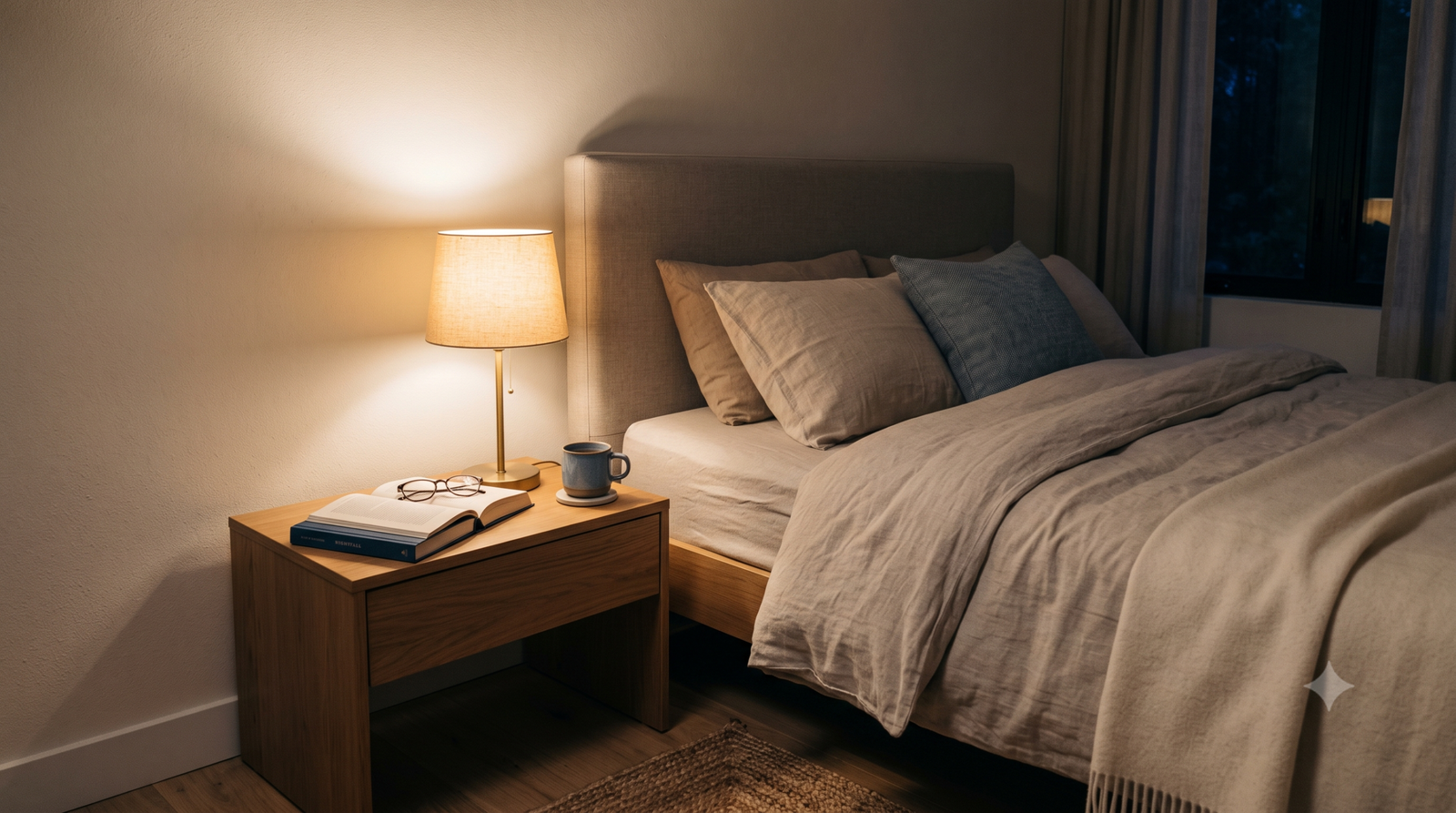
- Make the bedroom dark, quiet, and comfortable.
- Repeat the same routine for several nights before judging it.
What to try first
| Bedtime problem | What to try first | What to avoid |
|---|---|---|
| Your mind feels busy. | Write tomorrow’s tasks earlier in the evening. | Trying to solve work, conflict, or planning in bed. |
| You feel alert at bedtime. | Review caffeine timing and evening stimulation. | Assuming tiredness will appear just because it is late. |
| You keep checking the time. | Turn the clock away and return attention to a calm routine. | Tracking every minute while getting frustrated. |
| The room feels uncomfortable. | Adjust light, noise, bedding, airflow, or temperature. | Changing every bedroom factor at once. |
| Your schedule shifts often. | Anchor the routine with a steadier wake time when practical. | Expecting one bedtime to work after large schedule swings. |
1. Start winding down before you are frustrated
A wind-down routine works best when it starts before bedtime feels like a problem. If you wait until you are already irritated, the routine can feel like another task. Begin earlier, while the evening still feels manageable.
Keep it simple. Dim lights, finish demanding tasks, prepare the room, and choose a low-friction activity. The routine should feel repeatable on normal nights, not like a complicated performance.
2. Move stimulating inputs earlier
Stimulation can come from work, conflict, news, games, fast scrolling, intense exercise, or a demanding conversation. These inputs are not automatically bad, but they can keep bedtime feeling active for some people.
Instead of trying to remove everything at once, move the highest-stimulation activity earlier. If your phone is the issue, set a stopping point. If work is the issue, choose a realistic shutdown ritual that separates work time from sleep time.
3. Review caffeine timing
Caffeine timing is worth tracking if you feel awake at bedtime, especially after afternoon coffee, tea, energy drinks, pre-workout products, or some sodas. People respond differently, so the most useful first step is to compare your own timing with your own nights.
For a deeper routine-based caffeine review, read Does Coffee Affect Sleep?. If caffeine seems connected to harder nights, move it earlier for several days and compare how bedtime feels.
4. Use light as a routine cue
Light can help your day and evening feel more distinct. Morning light may be a useful cue when practical and safe. In the evening, dimmer light can help your environment feel calmer and less work-focused.
You do not need special equipment to start. Open curtains in the morning, avoid turning the final hour of the night into a bright work session, and make the bedroom feel visually quieter.
5. Make the bedroom easier to sleep in
Check light, noise, bedding, airflow, and temperature. If the room feels too warm, too cold, loud, bright, or uncomfortable, your routine has to work harder. The best first adjustment is the simplest one you can test without changing everything.
If room comfort is a regular issue, read Best Bedroom Temperature for Sleep. That guide focuses on bedding, airflow, and comfort rather than chasing one perfect number.
6. Use consistency without chasing perfection
A steadier wake time can make your sleep routine easier to understand. It gives you one anchor point while you review bedtime, caffeine, light, and stress. Perfection is not required, especially if your schedule is constrained by work, caregiving, travel, or family needs.
If you often wake tired after nights that looked long enough, use Why Do I Wake Up Tired? to review sleep quality, interruptions, and morning patterns.
What to do if you cannot fall asleep
If you are lying in bed frustrated, avoid turning the bed into a place for clock-watching and problem-solving. Shift back to a calm, low-stimulation routine. Keep lights dim and avoid activities that pull you into work, conflict, or endless scrolling.
The key is to reduce pressure. Trying harder to sleep can make bedtime feel more tense. A simple routine gives you something calm to return to without making promises about exactly when sleep will happen.
One-week falling-asleep checklist
- Keep wake time as steady as practical.
- Start wind-down before you feel frustrated.
- Move caffeine earlier if it seems connected to harder nights.
- Reduce the most stimulating screen use before bed.
- Write down next-day tasks outside the bedroom.
- Check light, noise, bedding, airflow, and temperature.
- Use the same routine for several nights before changing it.
- Note what helped, what did not, and what was unrealistic.
When to get more help
Practical habits can help you review common friction points, but they are not a substitute for personalized care. If trouble falling asleep keeps disrupting your daily life, consider getting guidance from an appropriate professional.
RestWell HQ content is written for general education. Read the Medical Disclaimer and Editorial Policy for more context on how to use this content.
FAQ
What is the fastest way to fall asleep?
There is no guaranteed fastest method. A safer first step is to build a repeatable wind-down routine and remove the most obvious sources of stimulation.
Should I use my phone before bed?
If phone use keeps you engaged or delays bedtime, move it earlier or set a clear stopping point. Calm, time-limited use may feel different from work, news, conflict, or fast scrolling.
Does caffeine make it harder to fall asleep?
It can for some people, especially when used later in the day. Track your last caffeine time and compare it with nights when falling asleep feels harder.
How long should my wind-down routine be?
A 30- to 60-minute routine is a practical starting point for many people, but the best length is the one you can repeat without stress.
What if I still cannot sleep after improving my routine?
If the pattern continues or affects daily life, consider professional guidance. Sleep routines can support better habits, but ongoing sleep trouble may need a more specific review.





8 Comments