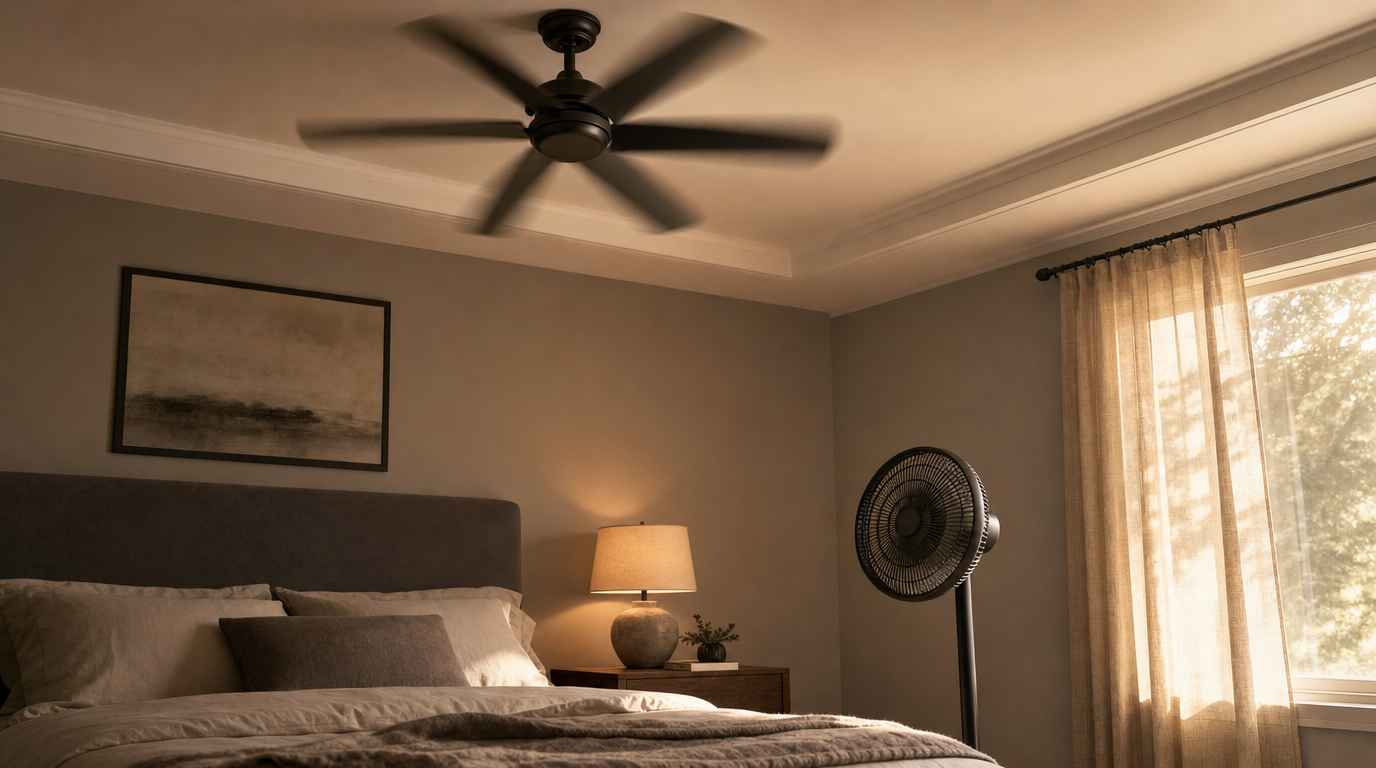
Ceiling Fan vs Standing Fan for Sleep: Which Is Better for Your Bedroom?
Choosing between a ceiling fan and a standing fan for better sleep often comes down to trade-offs: airflow pattern, noise, light, and how each fits your bedroom layout. Many people weigh these things differently depending on room size, sleep position, and sensitivity to sound or drafts.
This guide explains how ceiling fans and standing fans typically perform for sleep, practical pros and cons, placement tips, and simple strategies to get the cooling and white-noise benefits you want without introducing new sleep problems.
Quick Answer
Ceiling fans usually give even, whole-room airflow and a quieter hum for many sleepers, while standing fans are portable and let you aim stronger, focused airflow. The best choice depends on room size, where you sleep, and whether you prefer steady background noise or a directed breeze.
Table of Contents
- How ceiling fans and standing fans cool the bedroom
- Comfort and sleep factors to consider
- Pros and cons: quick comparison
- Setup and placement tips for better sleep
- When to talk to a doctor
- Common mistakes
- FAQ
- Bottom Line
How ceiling fans and standing fans cool the bedroom
Ceiling fans circulate air across the whole room by creating a horizontal airflow pattern; they tend to move large volumes of air more gently. Standing fans (also called pedestal or tower fans) create a more focused stream of air aimed where you choose, which can feel stronger at the mattress.
Neither type lowers the room’s temperature like an air conditioner, but many people find the airflow helps evaporative cooling on skin and makes the bedroom feel more comfortable at higher temperatures.
Comfort and sleep factors to consider
- Noise: Ceiling fans often produce a steady, low-frequency hum. Standing fans vary widely — some make a higher-pitched oscillation. If you’re noise-sensitive, test the fan for a night before committing.
- Airflow direction: Standing fans let you aim a cool breeze at your face or torso; ceiling fans distribute airflow across the room. Some people prefer directed airflow while others find it disruptive.
- Drafts and congestion: A direct breeze can bother people with dry eyes, sensitive nasal passages, or muscle stiffness. If you have breathing or allergy concerns, consider gentler circulation or alternate placement.
- Light and motion: Ceiling fans may cast moving shadows if paired with certain lights; standing fans can have visible oscillation. Minimize visible motion or choose softer lighting if that disturbs your sleep.
Pros and cons: quick comparison
- Ceiling fan — pros: Broad, even airflow; generally unobtrusive; frees floor space.
- Ceiling fan — cons: Less targeted cooling; installation required; blade wobble or poor mounting can cause noise.
- Standing fan — pros: Portable and adjustable; can provide a stronger, directed breeze; easy to turn off or move.
- Standing fan — cons: Can be louder or higher-pitched; occupies floor space; may need frequent repositioning to suit seasonal changes.
Setup and placement tips for better sleep
- Test at bedtime: Try each fan speed in the hour before bed so you know how the sound and airflow affect your ability to fall asleep.
- Aim placement: For standing fans, point the airflow near your torso rather than directly at your face if dry eyes or congestion are a concern.
- Use oscillation carefully: Oscillation can create a pleasant, variable sound for some people but can also be distracting to others. Turn oscillation off if motion bothers you.
- Combine with other sleep-friendly measures: Fans can complement cooler bedding, window shading, and a calm wind-down routine to support sleep.
- Keep fans clean: Dust buildup can affect airflow and may worsen allergy symptoms for some people; regular cleaning is a low-effort way to maintain comfort.
When to talk to a doctor
Using a fan is generally safe for most adults, but if you notice new or worsening breathing problems, persistent nasal congestion, worsened allergies, chronic dry eyes, or disturbed sleep that affects daytime functioning, consider talking to a doctor. These could be signs of an underlying issue that a clinician can help evaluate. For context on how RestWell HQ approaches medical content, see our medical disclaimer and editorial policy.
Common mistakes
- Placing a standing fan directly on the floor aimed at your face all night without testing for dryness or congestion.
- Assuming a fan cools the room like an air conditioner rather than providing evaporative comfort.
- Ignoring fan maintenance — dusty blades and filters reduce airflow and may increase irritants in the room.
- Overlooking noise quality — two fans at the same decibel level can sound very different and affect sleep differently.
- Expecting a single setting to work for every season or sleep partner; comfort needs can change night to night.
FAQ
Is a ceiling fan better for overall bedroom cooling?
Many people find ceiling fans provide more even, whole-room airflow, which can make a room feel cooler without a strong localized breeze. Whether that’s “better” depends on your personal comfort and room layout.
Does a standing fan make it easier to fall asleep?
Standing fans can help some sleepers by providing a direct breeze and steady background noise. Others may find the directed airflow or oscillation disruptive. Trying it for a few nights can help you decide.
Will a fan reduce night sweating?
A fan can improve comfort by increasing air movement and promoting evaporative cooling, which many people find reduces night sweating even if it doesn’t change the actual room temperature.
Can fans affect allergies or breathing during sleep?
Fans can circulate dust and other particles if they’re dusty, which might bother people with allergies. Regular cleaning helps; if symptoms persist, consider speaking with a healthcare professional.
Should I run a fan all night?
Some people sleep well with a fan on all night for cooling and sound, while others prefer to turn it off after falling asleep. Testing different approaches helps identify what supports your sleep best.
Bottom Line
Ceiling fans and standing fans each have advantages: ceiling fans for broad, consistent airflow and less floor clutter; standing fans for targeted cooling and portability. Which works better depends on your room, sleep sensitivities, and whether you prefer a gentle whole-room breeze or a direct airflow.
If you want practical next steps, consider combining fan use with other sleep-friendly measures like cooling bedding and a calming pre-sleep routine. For more on natural sleep supports and sound options, see How to Sleep Better Naturally, White Noise for Sleep: Does It Really Help?, and How to Soundproof a Bedroom for Sleep.