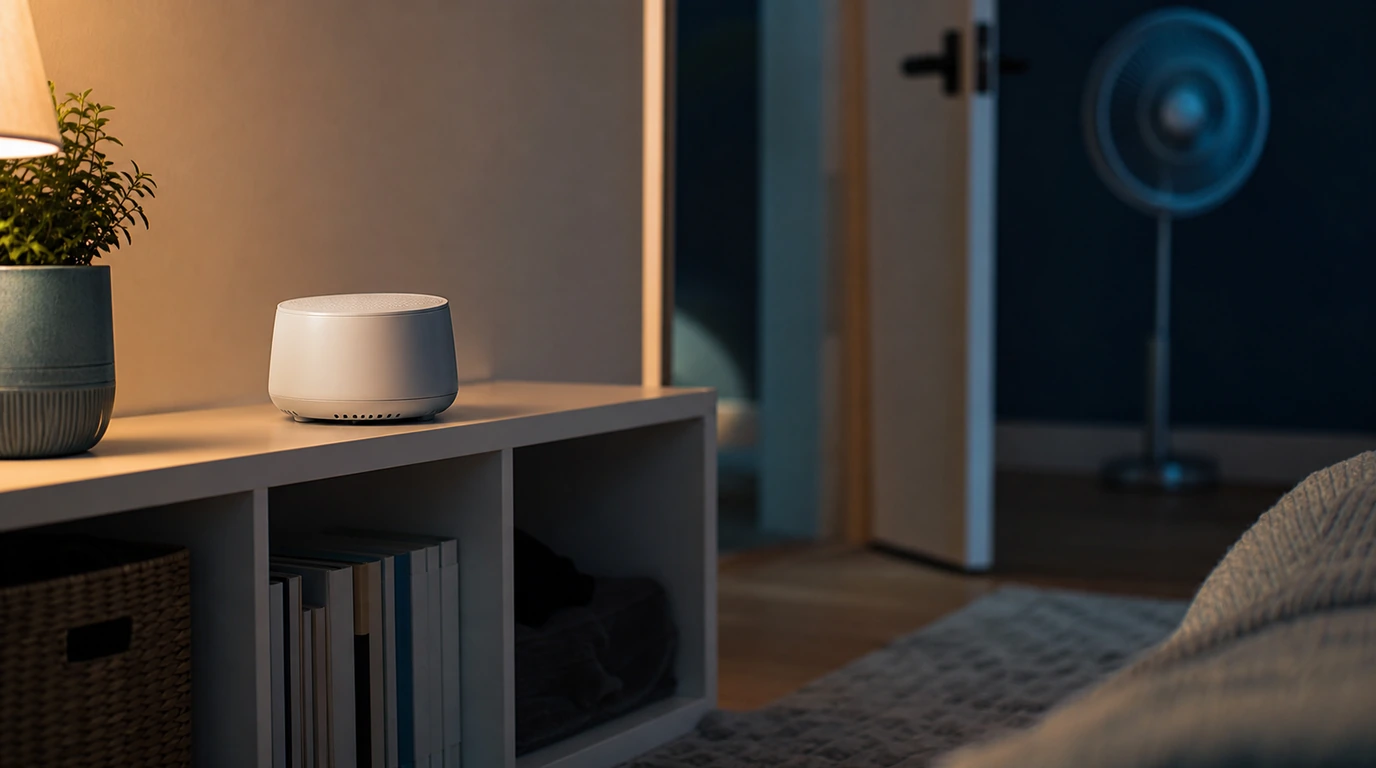
White Noise for Sleep: Does It Really Help?
Quick Answer
White noise may help some people sleep by masking sudden or inconsistent sounds, such as traffic, neighbors, hallway noise, or a partner moving around. It does not force sleep, cure insomnia, or fix every noisy bedroom. The most practical way to use white noise is to test a steady, comfortable sound at a low-to-moderate volume for several nights and notice whether it makes the room feel calmer.
White noise is best understood as an environment tool, not a medical treatment. It may be useful if unpredictable sound is one of the reasons you wake up or struggle to settle down. If sleep problems are persistent, severe, or affecting daily life, speak with a qualified healthcare professional.
Table of Contents
- What White Noise Is
- How White Noise May Help
- When White Noise May Not Help
- White Noise vs Pink Noise vs Brown Noise
- Sound Source Comparison
- White Noise Setup Checklist
- 7-Night Test
- FAQ
What White Noise Is
In everyday sleep advice, “white noise” usually means a steady background sound that fills the room and makes other sounds less noticeable. A fan, sound machine, air purifier, or app can all be used this way, even though they do not all produce technically identical sound. Most readers are not trying to analyze audio frequencies. They are trying to make the bedroom feel less jumpy.
The key idea is sound masking. If the room is silent, a door closing down the hall may feel sharp. If the room has a steady background sound, that same door may blend into the sound environment and feel less disruptive. This does not mean the sound disappears. It means the contrast may feel lower.
That difference matters because sleep is not only about whether a sound exists. It is also about whether the sound feels sudden, meaningful, or attention-grabbing. A steady, predictable sound can feel less disruptive than random bursts of noise. This is why some people like fans, rain sounds, or sound machines, while others find them unnecessary or distracting.
How White Noise May Help
White noise may help when the problem is environmental sound. Common examples include street traffic, neighbors, hallway noise, household activity, barking, plumbing sounds, elevators, or a partner’s movement. If these sounds are part of why you wake up or feel alert in bed, a steady background sound may make the room feel more consistent.
It can also become a routine cue. If you turn on the same sound as part of your evening wind-down, your bedroom may feel more predictable. This is similar to other routine cues: dimming lights, lowering stimulation, setting the room temperature, and putting the phone away. For a broader routine, see Night Routine for Better Sleep and the Sleep Hygiene Guide.
White noise may also help people who get distracted by small sounds because the room is otherwise too quiet. In a very quiet room, even normal house sounds can feel amplified. A steady sound can make the soundscape feel less empty. That said, some people sleep best in silence. The point is not to use white noise because it is popular. The point is to test whether it solves a real problem in your room.
When White Noise May Not Help
White noise is less likely to help if noise is not the main issue. If caffeine timing, stress, irregular sleep schedules, room temperature, late screens, or uncomfortable bedding are the bigger problem, a sound machine may only add another variable. It can make the room feel nicer, but it may not address the reason sleep is difficult.
If you often lie awake with a racing mind, start with routines and calming cues rather than assuming sound is the missing piece. How to Fall Asleep Faster covers a more bedtime-focused plan. If the bigger issue is not knowing why sleep feels difficult, read Why Can’t I Sleep?.
White noise can also backfire if it is too loud, too close, too harsh, or too interesting. A sound that grabs your attention is not a good sleep cue. Music with lyrics, changing podcasts, dramatic nature tracks, or high-volume audio may keep the brain engaged. The best sleep sound is usually boring in a useful way.
White Noise vs Pink Noise vs Brown Noise
People often use “white noise” as a general phrase, but sleep sound apps and devices may also offer pink noise, brown noise, fan noise, rain, ocean, or ambient sound. You do not need to treat these as a complicated audio test. The practical question is: which steady sound feels comfortable, unobtrusive, and repeatable?
White noise can sound hissy or static-like. Pink noise is often described as softer or more balanced. Brown noise may sound deeper. A fan creates a mechanical sound that many people find familiar. Rain or nature sounds can be calming for some people, but may be too variable for others. None is automatically best for everyone.
If you are testing sleep sounds, choose one sound and keep it consistent for several nights. Changing sounds every night makes it harder to know what helped. Treat it the same way you would treat caffeine timing or light exposure: test one meaningful variable at a time. For more on tracking without overreacting to one night, see Sleep Tracker Basics.
Sound Source Comparison
| Sound source | Best for | Watch out for | Future product angle |
|---|---|---|---|
| Fan | Simple steady sound and airflow | May cool the room more than desired or collect dust | Fans, bedroom airflow, cooling setup |
| White noise machine | Consistent sound without using a phone | Quality and sound options vary by device | Sound machines, travel sound machines |
| Phone app | Testing before buying anything | Phone near bed can add light and distractions | App education only; no affiliate links now |
| Air purifier | Background hum with room environment benefits | Should not be bought only for sound without checking actual needs | Air purifiers as future environment category |
| Earplugs | Blocking sound rather than masking it | Comfort, fit, and safety preferences vary | Earplugs guide after validation |
| Nature sounds | People who prefer less mechanical sound | Changing sound patterns may distract some sleepers | Sleep sounds education, not product claims |
White Noise Setup Checklist
- Start quietly. Use the lowest volume that makes disruptive sounds feel less sharp.
- Place the sound source away from your head. A little distance can make the sound feel more like a room cue and less like audio aimed at you.
- Keep it steady. Avoid soundtracks that change dramatically or include speech.
- Reduce device light. If using a phone or machine, dim or block unnecessary display light safely.
- Use a timer only if it helps. Some people prefer all-night sound. Others prefer a timer. Test what feels less disruptive.
- Do not use loud sound to overpower a major issue. If outside noise is extreme, consider room setup, window sealing, earplugs, or landlord/building options where relevant.
- Track the pattern, not one night. Judge the setup over several nights, not after one unusually good or bad night.
Where White Noise Fits in a Better Bedroom
Sound is only one layer of bedroom design. A room can be quiet but too warm, dark but stressful, cool but bright, or comfortable but tied to an inconsistent schedule. If you are already improving sound, review the other major environment cues too: darkness, temperature, light timing, and bedtime routine.
Temperature is especially worth checking because fans and air purifiers can change how a room feels. If your bedroom is too warm or too cold, a sound source may create comfort problems while solving a noise problem. Pair this guide with Best Bedroom Temperature for Sleep if airflow or bedding is part of your setup.
Light matters too. A sound machine with a bright display may solve noise while adding visual distraction. A phone app may create sound while keeping your phone within reach. If screens and light are part of your nights, read Does Blue Light Affect Sleep?.
A 7-Night Test for White Noise
The cleanest way to evaluate white noise is to test it without changing everything else at once. Keep your bedtime routine, caffeine timing, and bedroom temperature as stable as reasonably possible. Then add one sound setup for a week.
- Night 1: Choose one sound. Pick a fan, machine, or simple app sound. Do not rotate options all night.
- Night 2: Adjust volume. Set it low enough to be comfortable but high enough to soften sudden sounds.
- Night 3: Adjust placement. Move it farther away, lower, or toward the main noise source if needed.
- Night 4: Remove extra light. Dim displays and keep the room visually calm.
- Night 5: Notice wakeups. Did sudden noises feel less noticeable, or did the sound itself become distracting?
- Night 6: Check comfort. Is the sound pleasant enough to repeat, or are you tolerating it because you think you should?
- Night 7: Decide. Keep it, change the sound, try silence again, or focus on another sleep variable.
If white noise helps, keep the setup simple. If it does not help, that is useful information. You may need to focus on schedule, light, stress, caffeine, or the specific source of noise instead. How to Fix a Sleep Schedule and How to Sleep Better Naturally can help you review the broader pattern.
Common Mistakes
Using Sound That Is Too Interesting
Podcasts, lyrics, changing playlists, and dramatic soundtracks can keep attention active. If the content makes you follow a story, it is probably not functioning like white noise. Choose something steady and forgettable.
Turning the Volume Too High
White noise should not feel like blasting over the room. Start lower than you think you need and raise it only if disruptive sounds still feel sharp. If you need very loud audio to tolerate the room, the noise problem may need a different fix.
Buying a Device Before Testing the Habit
A dedicated sound machine may be useful later, but you can often test the concept first with a fan, simple app, or existing device. Once you know what type of sound and placement works, future purchases become more informed.
Ignoring the Real Noise Source
If the problem is a rattling window, loud hallway, thin wall, or appliance noise, masking may help but may not be enough. Sometimes the best fix is sealing a gap, moving the bed, adding soft furnishings, adjusting a door, or discussing a building issue.
Should You Use White Noise Every Night?
If white noise is comfortable, low enough, and helps your room feel more stable, using it nightly may be reasonable for some people. Others may prefer it only during travel, noisy seasons, apartment noise, or when sharing a space. There is no need to force daily use if silence works better.
Pay attention to dependency in a practical sense. If you become anxious about sleeping without one exact sound, simplify the setup or practice flexibility when conditions are easy. A routine cue should support sleep, not make you feel trapped by perfect conditions.
If you use a sleep tracker, remember that nightly scores can fluctuate for many reasons. Do not judge white noise only by one score. Look for patterns across several nights and how you feel during the day. For a cautious view of tracking, see Sleep Tracker Basics.
When to Look Beyond White Noise
White noise is not the right answer to every sleep problem. If you are waking often, struggling to fall asleep, feeling exhausted despite enough time in bed, or noticing symptoms that concern you, treat sound as only one clue. Persistent or severe sleep issues deserve more than a gadget-based solution.
For repeated nighttime wakeups, see Why Do I Wake Up at 3 AM?. For tired mornings, see Why Do I Wake Up Tired?. If sleep problems are persistent, severe, worsening, or affecting daily functioning, speak with a qualified healthcare professional. RestWell HQ explains its editorial approach in the Editorial Policy and its health-content limits in the Medical Disclaimer.
FAQ
Does white noise really help you sleep?
It may help some people, especially when sudden or inconsistent noise is part of the problem. It is less likely to help if the main issue is schedule, caffeine, stress, discomfort, or another factor unrelated to sound.
Is a fan the same as white noise?
A fan is not always technically the same as white noise, but it can serve a similar practical purpose by creating steady background sound. Many people use fan noise as a simple sound-masking option.
Is pink noise or brown noise better than white noise?
There is no universal best sound for everyone. Pink noise may feel softer to some people, while brown noise may feel deeper. Choose the sound that feels comfortable, steady, and easy to ignore.
How loud should white noise be for sleep?
Use the lowest comfortable volume that softens disruptive sounds. It should not feel like you are blasting audio near your head. If you need a very loud volume, consider whether the noise source needs a different fix.
Should white noise stay on all night?
It depends on what feels less disruptive. Some people prefer all-night sound because turning off the sound creates a change. Others prefer a timer. Test both and keep the option that feels calmer.
Can white noise cure insomnia?
No. White noise is an environment tool, not a cure or medical treatment. If sleep problems are persistent, severe, or affecting daily life, speak with a qualified healthcare professional.


2 Comments