How to Soundproof a Bedroom for Sleep
Quick Answer
To soundproof a bedroom for sleep, start by finding where noise actually gets in: gaps under doors, thin or poorly sealed windows, shared walls, and hallway or outside sound that travels easily through hard, empty surfaces. Then work through fixes in order of effort. Quick, low-cost changes like a door sweep, weatherstripping, a thick rug, and rearranging furniture away from shared walls tend to make a noticeable difference for many people. If noise is still a problem after that, bigger changes like heavier curtains, layered soft furnishings, and sealing outlets or baseboard gaps can help further.
Soundproofing is about reducing and softening noise, not eliminating every sound. It works alongside other sleep-environment habits rather than replacing them. If sound sensitivity is significantly affecting your sleep or daily life, consider speaking with a qualified healthcare professional.
Table of Contents
- Where Bedroom Noise Commonly Comes From
- Quick Fixes to Try First
- Bigger Changes for Persistent Noise
- What Soundproofing Can and Cannot Fix
- A Simple Room-by-Room Checklist
- Common Mistakes
- FAQ
- Bottom Line
Where Bedroom Noise Commonly Comes From
Before changing anything, it helps to spend a few minutes identifying where sound is actually entering your room. Bedroom noise usually comes from a handful of predictable places, and most rooms only have two or three that matter.
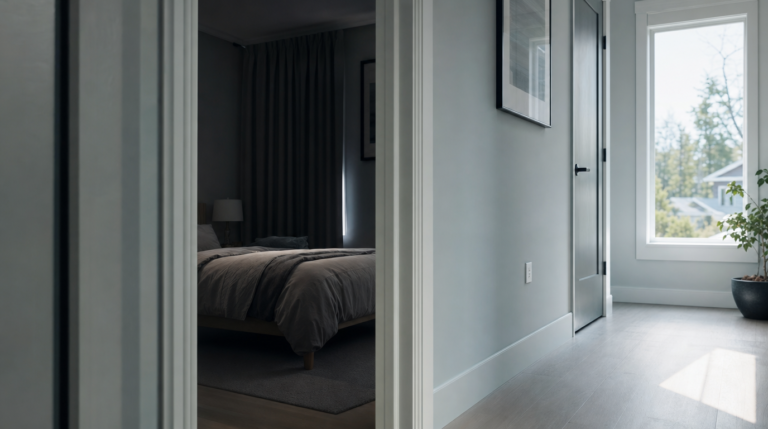
Doors are a common entry point. A standard interior door often has a gap along the bottom and sometimes along the sides, and sound tends to travel easily through that open space, especially hallway conversation, footsteps, or a TV in another room. Windows are another frequent source, particularly older windows, single-pane glass, or windows with a loose seal around the frame. Outside traffic, neighbors, and street noise often reach a bedroom primarily through the window rather than the wall.
Shared walls, such as those in apartments, townhouses, or bedrooms next to a living room, can carry sound from the other side, especially lower-frequency sound like bass, footsteps, or voices. Hard, empty rooms also play a role: bare floors, large uncovered windows, and rooms with little soft furniture tend to let sound bounce around more than rooms with rugs, curtains, and upholstered furniture. Finally, small gaps that are easy to overlook, like unsealed electrical outlets on an exterior wall or a gap where baseboard meets the wall, can let in a surprising amount of sound over time.
Quick Fixes to Try First
Start with the changes that are low-cost, reversible, and don’t require special tools. Many people notice a difference after addressing just one or two of these.
- Add a door sweep. A door sweep attaches to the bottom of the door and helps close the gap that lets in hallway noise and light. It’s a simple, inexpensive fix that can help reduce sound coming under the door.
- Apply weatherstripping. Self-adhesive weatherstripping around a door frame or window frame can help close small gaps where sound (and drafts) tend to sneak through. It’s easy to apply and easy to remove if you’re renting.
- Put down a thick rug. A rug, especially with a pad underneath, can help absorb sound in a room with hard flooring and reduce the amount of noise that bounces around or travels to the room below.
- Rearrange furniture. Moving a bookshelf, dresser, or upholstered headboard against a shared wall can add a layer of material between you and the noise source. Soft, dense furniture tends to help more than a bare wall.
- Close gaps around the room. Walk the perimeter of the room and look for visible gaps around trim, vents, or where the wall meets the floor. Sealing what you can with basic caulk or foam gap fillers is a small task that can add up.
These changes are worth trying first because they’re inexpensive, don’t require permanent alterations, and give you a sense of how much of a difference a quieter setup can make before you invest more time or money.
Bigger Changes for Persistent Noise
If quick fixes help but noise is still a regular problem, a few bigger changes can add another layer of noise reduction. These generally take more effort or a modest investment, so it’s worth trying the simpler fixes first to see how far they get you.
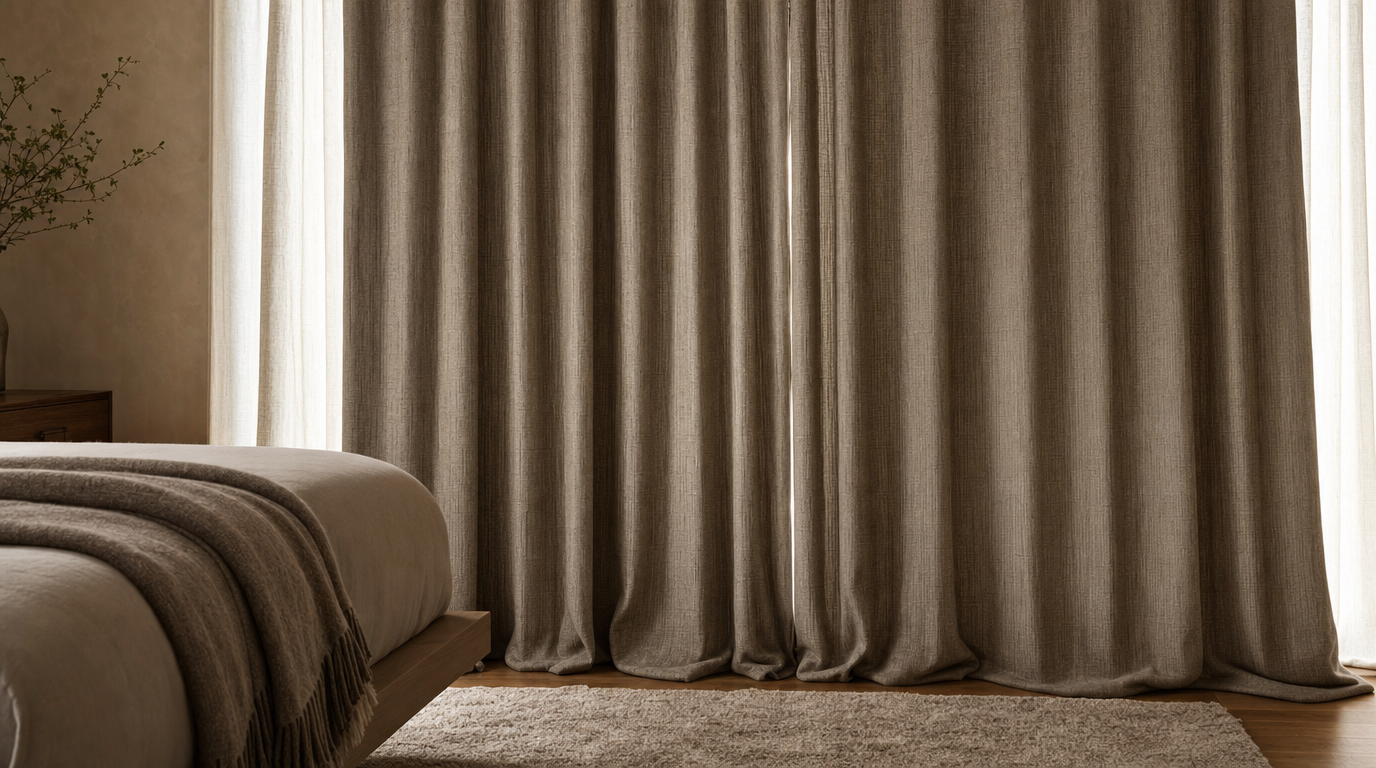
Heavier curtains. Dense, tightly woven curtains that extend past the window frame on all sides can help reduce sound coming through the glass, in addition to their light-blocking benefits. Look for curtains that hang close to the wall with minimal gaps at the top and sides, since sound tends to travel through any opening.
Furniture placement against shared walls. If one wall is the main noise source, consider placing a tall bookshelf, a wardrobe, or a padded headboard against that wall rather than an open stretch of drywall. Dense, soft materials placed between you and the noise source can help soften what comes through, though they generally will not fully block it.
Sealing outlets and baseboard gaps. Foam outlet gaskets behind switch plates on exterior or shared walls, along with sealing gaps where baseboards meet the floor, can help close some of the smaller pathways sound uses to travel between rooms. This is a modest, low-cost project that pairs well with the other fixes above.
Adding soft surfaces throughout the room. A room with a rug, curtains, upholstered furniture, and even fabric wall art tends to feel quieter than a room with mostly hard, bare surfaces, since soft materials generally absorb sound rather than reflecting it. This won’t block outside noise, but it can reduce echo and make everyday sounds feel less sharp.
What Soundproofing Can and Cannot Fix
It helps to set realistic expectations. The changes in this guide are about reducing and softening noise, not creating a silent room. Gaps sealed, doors fitted, and soft materials added can often make a real difference for everyday sounds like hallway conversation, footsteps, or street traffic. But a bedroom in a typical home is unlikely to become fully sound-isolated without significant structural changes, which are outside the scope of this guide.
It’s also worth understanding the difference between soundproofing and sound masking. Soundproofing, as covered here, is about physically blocking or absorbing noise at its source: sealing gaps, adding barriers, and softening hard surfaces. Sound masking is a different approach entirely. Instead of blocking noise, it introduces a steady, consistent sound, such as white noise, that can make other sounds less noticeable or distracting. The two approaches aren’t competing; they’re complementary. Many people combine physical noise reduction with a masking sound for the noises that are hardest to block, like a partner’s snoring or unpredictable outside noise. If you want to explore that side of things, see White Noise for Sleep.
A Simple Room-by-Room Checklist
- Door: Check for a visible gap at the bottom. Add a door sweep or draft stopper if light or sound comes through.
- Door and window frames: Look for gaps around the edges. Apply weatherstripping where you find them.
- Windows: Check whether curtains fully cover the frame with minimal gaps. Consider heavier, floor-length curtains if outside noise is an issue.
- Floor: Add a rug with a pad, especially if the floor is hard and bare.
- Shared walls: Note which wall backs onto another room or unit, and consider placing dense furniture like a bookshelf or wardrobe against it.
- Outlets and baseboards: Check exterior or shared walls for unsealed outlets or visible baseboard gaps, and seal what you can.
- Overall room feel: Notice whether the room feels echoey or “hard.” Adding soft furniture, curtains, and a rug can help even out the acoustics.
Common Mistakes
Trying to fix everything at once. It’s easy to feel like a noisy room needs a full renovation. In practice, most rooms have one or two main noise sources. Identify those first, fix them, and reassess before spending more time or money on the rest.
Ignoring the door. Windows tend to get the most attention, but a gap under the door is one of the most common and easiest sources of noise to miss. It’s worth checking before assuming the problem is coming from outside.
Expecting a completely silent room. Even a well-sealed, well-furnished bedroom will still let some sound through, especially loud or low-frequency noise. Setting the goal at “noticeably quieter” rather than “silent” tends to lead to a more satisfying result.
Overlooking soft furnishings. It’s tempting to focus only on sealing gaps and forget that rugs, curtains, and upholstered furniture also play a role in how a room sounds day to day, particularly for reducing echo and everyday noise.
FAQ
What’s the cheapest way to soundproof a bedroom?
A door sweep, weatherstripping around the door and window frames, and a thick rug are generally the lowest-cost starting points. These are simple to install, don’t require permanent changes, and can be removed easily if you’re renting.
Can I soundproof a bedroom without making permanent changes?
Yes. Weatherstripping, draft stoppers, rugs, curtains, and furniture placement are all reversible options that don’t involve drilling, painting, or altering the walls, which makes them a good fit for renters.
Will heavier curtains really help with noise?
Dense, tightly woven curtains that fully cover the window frame can help reduce sound coming through the glass, particularly when they hang close to the wall with minimal gaps. They tend to be more noticeable for softening everyday outside noise than for blocking loud or sudden sounds.
Is soundproofing the same as using a white noise machine?
No. Soundproofing is about physically blocking or absorbing noise, while a white noise machine masks noise by adding a steady, consistent sound. They work differently and can be used together for a quieter overall sleep environment.
How long does it take to notice a difference?
Many people notice a difference right after simple fixes like a door sweep or weatherstripping, since these directly close obvious gaps. Bigger changes, like rearranging furniture or adding heavier curtains, may take a bit more time to settle into and evaluate over a few nights.
Can soundproofing fix a noise-sensitivity problem?
A quieter room can support better sleep, but it is not a treatment for noise sensitivity. If sound sensitivity is significantly affecting your sleep or daily life, consider speaking with a qualified healthcare professional.
Bottom Line
Most bedroom noise problems come down to a few predictable gaps: under the door, around the window, or through a shared wall. Start with the simple, low-cost fixes, like a door sweep, weatherstripping, a thick rug, and thoughtful furniture placement, and reassess before moving on to bigger changes like heavier curtains or sealing outlets and baseboards. Soundproofing works best as one part of a broader sleep environment, alongside habits covered in the Sleep Hygiene Guide. If darkness is also a factor in your room, pair this guide with How to Make Your Bedroom Darker for Better Sleep, and if some noise is unavoidable, a masking sound from the White Noise for Sleep guide can complement the physical changes here.