How to Choose a Pillow for Stomach Sleepers
Sleeping on your stomach changes how your head and neck align with the spine. Many people who sleep on their stomachs find that a typical high‑loft pillow can angle the neck awkwardly and cause discomfort.
This guide explains what to look for in a pillow for stomach sleepers, why loft and softness matter, and safer alternatives or tweaks you can try if you want less neck strain while still sleeping on your stomach.
Quick Answer
Most stomach sleepers generally do better with a low‑loft, soft pillow or no pillow under the head; look for a slim profile (often called a flat pillow), gentle compressibility, and breathable materials, and consider placing a thin cushion under the hips to ease spinal curvature.
Table of Contents
- Why stomach sleeping is different
- What to look for in a pillow for stomach sleepers
- Materials and construction: pros and cons
- Alternatives and position tweaks for stomach sleepers
- When to see a doctor
- Common mistakes
- FAQ
- Bottom Line
Why stomach sleeping is different
When you sleep on your stomach, the head is usually turned to one side and the spine can be pushed into a more extended position. That changes the mechanical demands on the neck and shoulders compared with back or side sleeping. A pillow that is too thick or too firm can force the neck upward, which some people find uncomfortable.
What to look for in a pillow for stomach sleepers
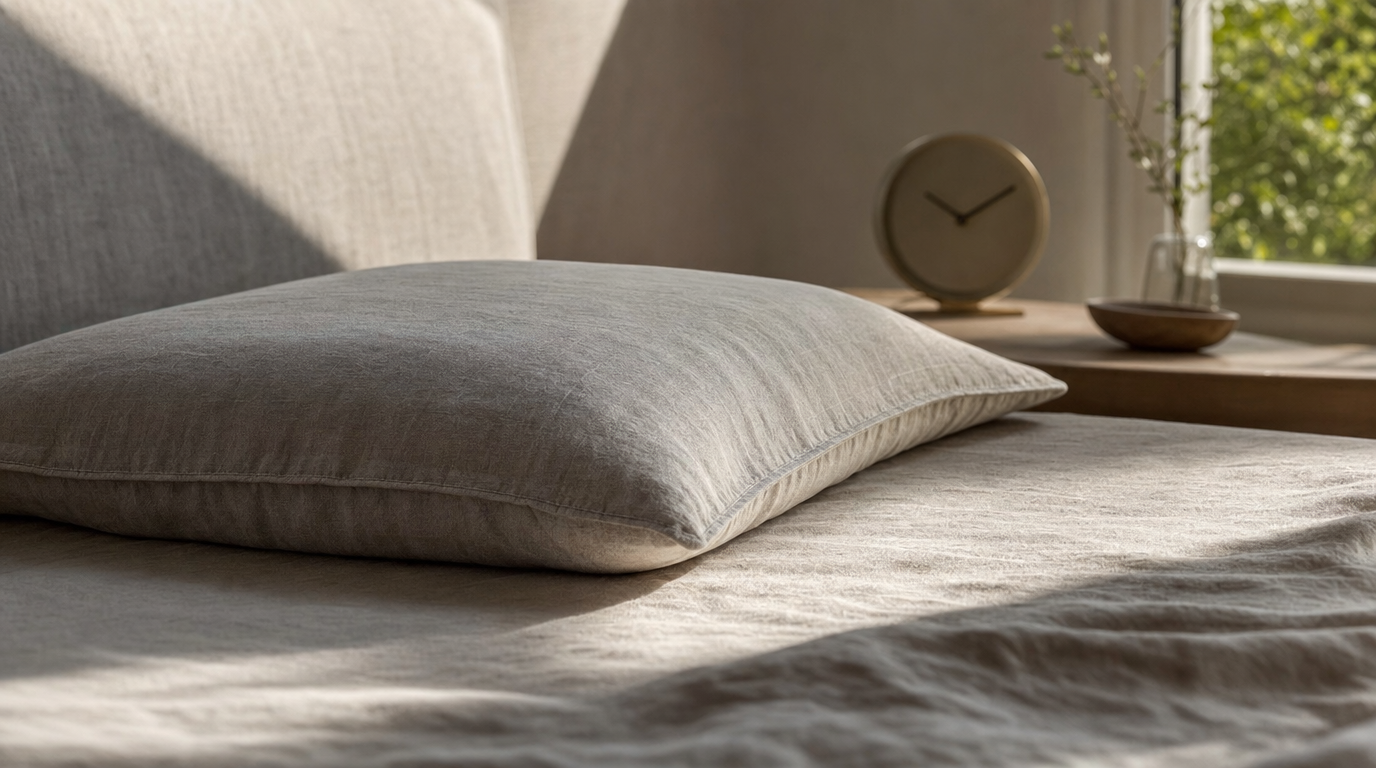
- Low loft (flat profile): A thinner pillow keeps the head closer to the mattress and reduces neck angle.
- Soft, compressible fill: Materials that compress easily let the head sink in slightly rather than tilting the neck.
- Breathability: Because stomach sleepers can feel warmer with face close to the pillow, breathable covers or fills may feel more comfortable.
- Adjustability: Some people prefer pillows with removable fill so they can fine‑tune height without replacing the whole pillow.
Materials and construction: pros and cons for stomach sleepers
There isn’t one material that suits everyone. Memory foam can contour but may be too high unless it’s a thin version. Down or down‑alternative tends to be softer and easier to flatten. Latex is supportive but can be firmer unless it’s a low‑profile design. Look for options described as low loft, thin, or “stomach‑friendly.” Many people find a soft, thin pillow feels less intrusive.
Alternatives and position tweaks for stomach sleepers
If a pillow under your head still feels uncomfortable, consider these options some people try:
- Sleep with no pillow under the head and place a thin cushion or folded towel under the hips to reduce lower back strain.
- Use a very thin, soft pillow or a flattened standard pillow instead of a high‑loft design.
- Try alternating sides or briefly practicing a three‑quarter stomach/side position to relieve pressure on one side of the neck.
When to see a doctor
Neck pain, numbness, or persistent headaches that continue despite trying different pillows or sleep positions may benefit from medical evaluation. If pain limits daily activities or worsens over time, it’s reasonable to talk with a clinician. RestWell HQ content is educational and not a substitute for professional advice; see our medical disclaimer and editorial policy for more on how we create guidance.
Common mistakes
- Choosing a high‑loft pillow intended for side sleepers.
- Picking an overly firm pillow that doesn’t compress under the head.
- Assuming one pillow fits every mattress and position.
- Not trying small adjustments like a folded towel or thin pad first.
- Replacing a pillow immediately instead of testing temporary fixes to see if comfort improves.
FAQ
Can stomach sleepers use a regular pillow?
Some can, but many people who sleep on their stomachs prefer a much flatter pillow or no pillow at all; comfort and neck alignment vary between individuals.
How flat should a pillow be for stomach sleeping?
Generally, a low‑profile pillow that keeps the head close to the mattress is recommended, though “flat” is subjective—try a thin pillow and adjust until the neck feels neutral.
Is it better to sleep without a pillow?
Some stomach sleepers sleep without a pillow and feel better; others prefer a thin pillow. If going pillow‑free, consider a small pad under the hips to reduce lumbar stress.
What pillow materials are best for stomach sleepers?
Soft, compressible fills like down or down‑alternative are often comfortable; thin memory foam or low‑loft designs can work too. Prioritize low height and compressibility over a specific material.
Will switching pillows fix neck pain?
Switching to a lower, softer pillow can help for many people, but persistent or severe pain should prompt a conversation with a healthcare professional.
Bottom Line
Many stomach sleepers find better neck comfort with a low‑loft, soft pillow or by sleeping without a head pillow and using a thin pad under the hips. Start with small changes—a thinner pillow or a folded towel—before replacing your pillow, and pay attention to how your neck feels after several nights. For more guidance on pillow choices and related concerns, see Best Pillow for Neck Pain, Does a Cooling Pillow Help You Sleep Cooler?, and How to Choose a Pillow for Back Sleepers.