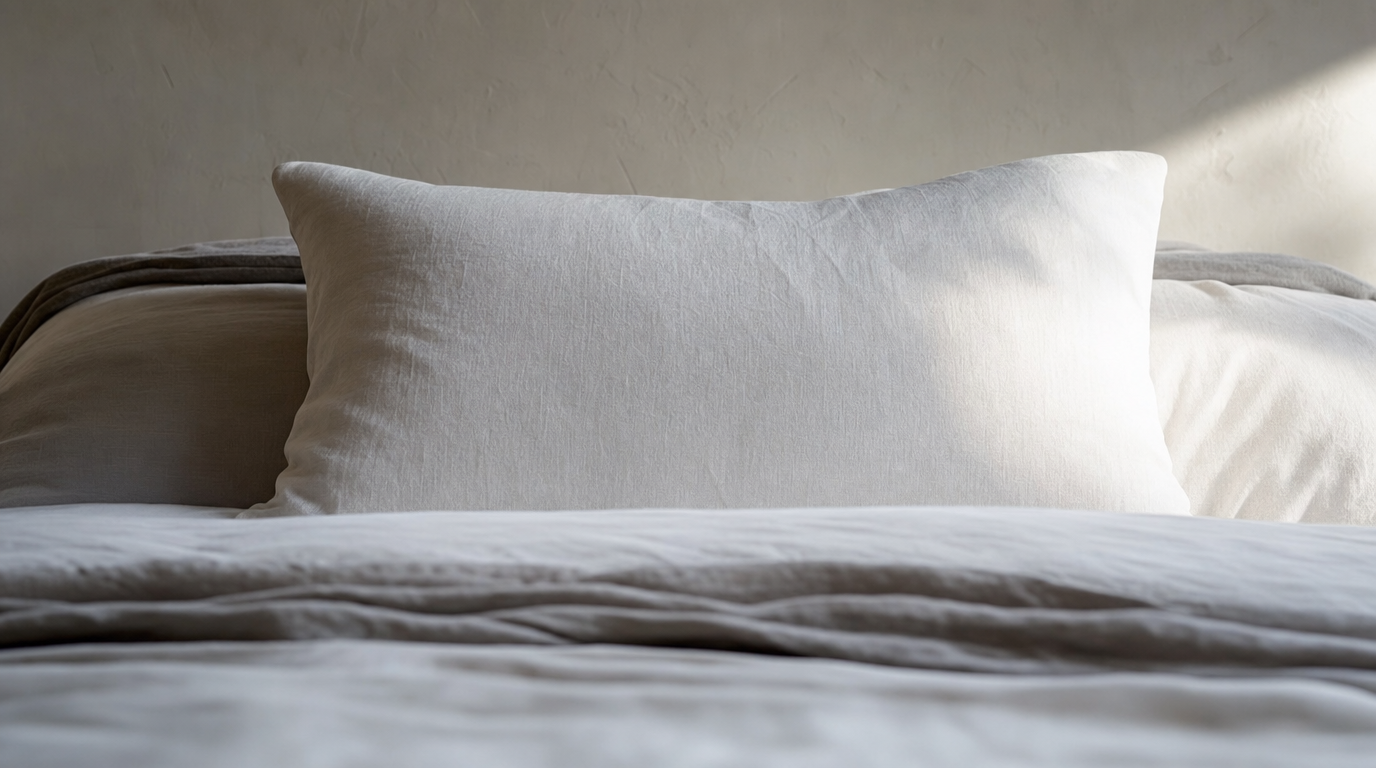
Best Pillow for Neck Pain
There is no single pillow that is objectively “best” for neck pain, but there are properties — loft, firmness, and material response — that tend to matter more than brand or price. If you regularly wake up with a stiff or sore neck, your pillow is one of the more fixable parts of the equation, alongside sleep position and mattress firmness.
This guide walks through what to look for when choosing a pillow, how sleep position changes what “supportive” means, common mistakes people make when shopping for one, and when neck pain is a signal to see a professional rather than keep testing pillows.
Quick Answer
Many people with morning neck discomfort find relief by matching pillow loft to sleep position — lower loft for stomach sleeping, medium loft for back sleeping, and higher loft for side sleeping — combined with a pillow firm enough to hold its shape through the night instead of flattening under the head’s weight. This is general comfort guidance, not a medical recommendation, and the right pillow still depends on your body and mattress.
Table of Contents
- Why the wrong pillow can contribute to neck discomfort
- Matching pillow loft to your sleep position
- Firmness and material: what tends to hold support overnight
- Pillow types commonly used for neck comfort
- Signs your pillow may be part of the problem
- Common mistakes when shopping for a neck-pain pillow
- When to talk to a professional about neck pain
- FAQ
Why the wrong pillow can contribute to neck discomfort
A pillow’s job is to fill the gap between your head and the mattress so your neck can stay in a relatively neutral position for hours at a stretch. When that gap is filled poorly — too little support, too much, or support that collapses partway through the night — the neck can end up held at an angle it would not choose while awake. Held long enough, many people describe that as stiffness or soreness that shows up specifically in the morning.
This is comfort framing, not a clinical claim about cause and effect. Pillow choice is one variable among several — sleep position, mattress firmness, and daytime posture all play a role too, which is covered in the broader Sleep Hygiene Guide.
Matching pillow loft to your sleep position
“Loft” refers to how tall or thick a pillow sits once your head is resting on it. The amount of loft that feels comfortable tends to track closely with sleep position, since each position creates a different gap between the head and the mattress.
| Sleep position | Typical loft that feels comfortable | Why |
|---|---|---|
| Side sleeping | Higher loft, firmer support | The shoulder creates a wider gap between the mattress and the head that needs filling. |
| Back sleeping | Medium loft, moderate firmness | Less gap to fill than side sleeping, but still enough to avoid the chin tucking down or the head tilting back. |
| Stomach sleeping | Low loft, soft and thin | A thick pillow can push the neck into an exaggerated angle in this position; many stomach sleepers prefer little to no pillow. |
| Combination sleeping | Medium loft, adaptable material | Switching positions overnight often works better with a pillow that adjusts rather than one tuned for a single position. |
These are starting points, not fixed rules. Body size, shoulder width, and mattress firmness all shift the ideal loft slightly, so treat the table as a place to begin testing rather than an exact prescription.
If you sleep on your side and want more detail on knee and arm positioning alongside pillow height, see Best Pillow Position for Side Sleepers.
Firmness and material: what tends to hold support overnight
Loft only matters if the pillow keeps that shape once weight is on it for hours. A pillow that measures the right height on a shelf but compresses flat by 2 a.m. is not actually giving that support anymore.
- Memory foam and shaped foam pillows tend to hold their loft consistently and slowly recover shape, which some people with neck discomfort find helpful for steady support.
- Shredded or adjustable-fill pillows let you add or remove material to fine-tune loft and firmness, which can help if you are unsure what height works before committing to a fixed-shape pillow.
- Down and down-alternative pillows feel soft initially but often compress more through the night, which some side and back sleepers find insufficient on its own for neck support.
- Latex pillows tend to feel firmer and more responsive than foam, holding shape well but with less contouring than memory foam.
None of these materials is universally “best.” A firmer, higher-support material tends to suit side sleepers and people who want the pillow to hold its shape all night, while softer materials suit stomach sleepers or people who find firm pillows uncomfortable against the ear or jaw.
Pillow types commonly used for neck comfort
Beyond loft and firmness, some pillows are shaped specifically with neck support in mind. General categories people commonly compare include:
- Contoured or cervical pillows, shaped with a raised edge or curve intended to cradle the neck rather than only the head.
- Standard rectangular pillows in various lofts and firmness levels, the most common and widely adjustable option.
- Adjustable-fill pillows, which let you customize loft over time as your preference changes.
- Cooling pillows, aimed at temperature regulation rather than shape — worth considering if overheating disrupts your sleep alongside neck discomfort, covered separately in Does a Cooling Pillow Help You Sleep Cooler?
This is general category information, not a product recommendation, and no specific brand, price, or rating is implied. What suits one person’s neck, shoulders, and mattress may not suit another, so use this as a starting list for your own comparison.
Signs your pillow may be part of the problem
Not every case of neck stiffness traces back to a pillow, but a few patterns suggest it is worth testing a change:
- Neck stiffness that is noticeably worse in the morning and eases somewhat as the day goes on.
- A pillow that visibly stays flattened in the shape of your head rather than springing back.
- Frequently folding, doubling, or stacking pillows to get enough height.
- Waking up with your head at an angle or your pillow pushed away from where it started.
- A pillow that is more than one to two years old and no longer feels as supportive as it once did.
These are cues to test an adjustment, not a diagnosis. If stiffness clears up quickly once you are up and moving, that pattern is more consistent with a positional or support issue than something that needs medical attention — though persistent or worsening pain is a different matter, covered below.
Common mistakes when shopping for a neck-pain pillow
- Buying based on marketing claims like “orthopedic” or “cervical” without checking whether the loft actually matches your sleep position.
- Choosing a pillow’s firmness based on how it feels for thirty seconds in a store rather than how it holds up over hours.
- Ignoring mattress firmness, which changes how much the shoulder sinks in and how much pillow loft is actually needed.
- Changing the pillow, mattress, and sleep position all at once, making it hard to tell what actually helped.
- Keeping a flattened, unsupportive pillow well past the point where it stopped holding its shape.
- Assuming a single “best” pillow exists rather than testing what fits your body and position.
When to talk to a professional about neck pain
Adjusting your pillow is a reasonable first step for general nighttime comfort, but it is not a treatment for neck pain. If discomfort is frequent, lingers well into the day, is getting worse over time, or comes with numbness, tingling, weakness, or pain radiating into the arm, it is worth talking to a doctor or physical therapist rather than continuing to troubleshoot with pillows alone.
A professional can assess your specific situation in a way that general sleep content cannot. RestWell HQ content is written for general education. Read the Medical Disclaimer and Editorial Policy for more detail.
FAQ
What type of pillow is best for neck pain?
There is no single pillow type proven best for everyone. Many people with neck discomfort find that a pillow with loft matched to their sleep position — higher for side sleeping, medium for back sleeping, low for stomach sleeping — and firm enough to hold its shape overnight is more comfortable than one chosen by material or brand alone.
Do cervical or orthopedic pillows actually help neck pain?
Some people find contoured or cervical-shaped pillows more comfortable, since the shape is designed to cradle the neck rather than just the head. This is a comfort preference, not a verified treatment, and results vary by body and sleep position. Persistent neck pain should be evaluated by a professional rather than managed with a specific pillow shape alone.
Should side sleepers use a firmer pillow than back sleepers?
Many side sleepers find a firmer, higher-loft pillow more comfortable because the shoulder creates a wider gap between the head and mattress than back sleeping does. Back sleepers commonly prefer a medium loft and moderate firmness. These are general patterns to test, not fixed rules.
How often should you replace a pillow for neck comfort?
There is no single confirmed replacement schedule that applies to every pillow. As a general comfort signal, consider replacing a pillow when it no longer springs back into shape, feels visibly flattened, or requires folding or stacking to get enough height.
Can a new pillow fix chronic neck pain?
A better-matched pillow may improve general nighttime comfort, but it is not a treatment for chronic neck pain. If pain is frequent, persistent, or getting worse, it should be evaluated by a doctor or physical therapist rather than managed with pillow changes alone.
Bottom Line
No single pillow is “best” for neck pain across every body and sleep position. A reasonable starting point is matching loft to how you sleep, choosing a material firm enough to hold its shape overnight, and testing one change at a time rather than overhauling your whole setup at once. If discomfort persists or worsens despite trying this, a professional evaluation is the more reliable next step.
Pillow choice is one part of a comfortable sleep setup. If you sleep on your side, see Best Pillow Position for Side Sleepers for more on knee and arm placement. If overheating is also part of the problem, review Does a Cooling Pillow Help You Sleep Cooler? And for broader nightly habits, see the Sleep Hygiene Guide.




3 Comments