How to Soundproof Against a Snoring Partner: Practical Steps That Help
Sleeping next to a partner who snores can be frustrating and draining. Many people find that a layered approach — combining sound-reduction at the source, simple bedroom upgrades, and sleep tools for the bed — helps more than relying on any single solution.
This guide focuses on non-clinical, practical steps you can try at home to reduce snoring noise and protect your sleep. If the snoring is tied to health concerns for either partner, consider the guidance in the “When to see a doctor” section below.
Quick Answer
Start with simple, layered fixes: ask your partner to try positional changes or lifestyle adjustments, reduce noise transfer in the bedroom (door seals, curtains, rugs), and use sleep tools like earplugs or a white-noise machine. Combining approaches usually helps most people.
Table of Contents
- Understand the noise and prioritize solutions
- Reduce sound at the source
- Improve your bedroom’s sound control
- Sleep-friendly gear: earplugs, white noise, and more
- Bedroom habits and schedule adjustments
- When to see a doctor
- Common mistakes
- FAQ
- Bottom Line
Understand the noise and prioritize solutions
Not all snoring noise is the same. Some nights are intermittently loud, others are steady. Before making changes, spend a few nights noting when the noise is worst and how it affects your sleep. That can help you choose which fixes to try first — for example, source-focused strategies if snoring spikes while lying on the back, or bedroom acoustics if the sound seems to reverberate.
Reduce sound at the source
- Encourage positional adjustments: Some people snore less when they avoid sleeping on their back. Gentle positional supports or body pillows can sometimes help; many people find subtle changes easier than large interventions.
- Nighttime habits: Alcohol and late heavy meals can make snoring worse for some people. Suggesting a trial of lighter evenings may reduce intensity.
- Bedroom routine before bed: A calm wind-down can reduce nasal congestion and restlessness that sometimes accompany louder nights; see Simple Wind-Down Techniques for Stress and Sleep for ideas.
Improve your bedroom’s sound control
Soundproofing a room completely is often costly, but targeted steps can reduce how much snoring reaches your bed.
- Seal gaps: Add door sweeps or weatherstripping to the door and gaps around windows to block direct sound paths.
- Soft surfaces: Rugs, wall hangings, and upholstered headboards absorb sound and reduce echo. Thick curtains over windows also help.
- Rearrange furniture: Placing a tall bookshelf or wardrobe against the shared wall can add mass and muffle noise transmission.
- Learn practical steps: For a step-by-step list of room-focused options people often find useful, see How to Soundproof a Bedroom for Sleep.
Sleep-friendly gear: earplugs, white noise, and more
Many sleepers use bedside tools to mask or block snoring. Each option has pros and cons, and personal comfort matters.
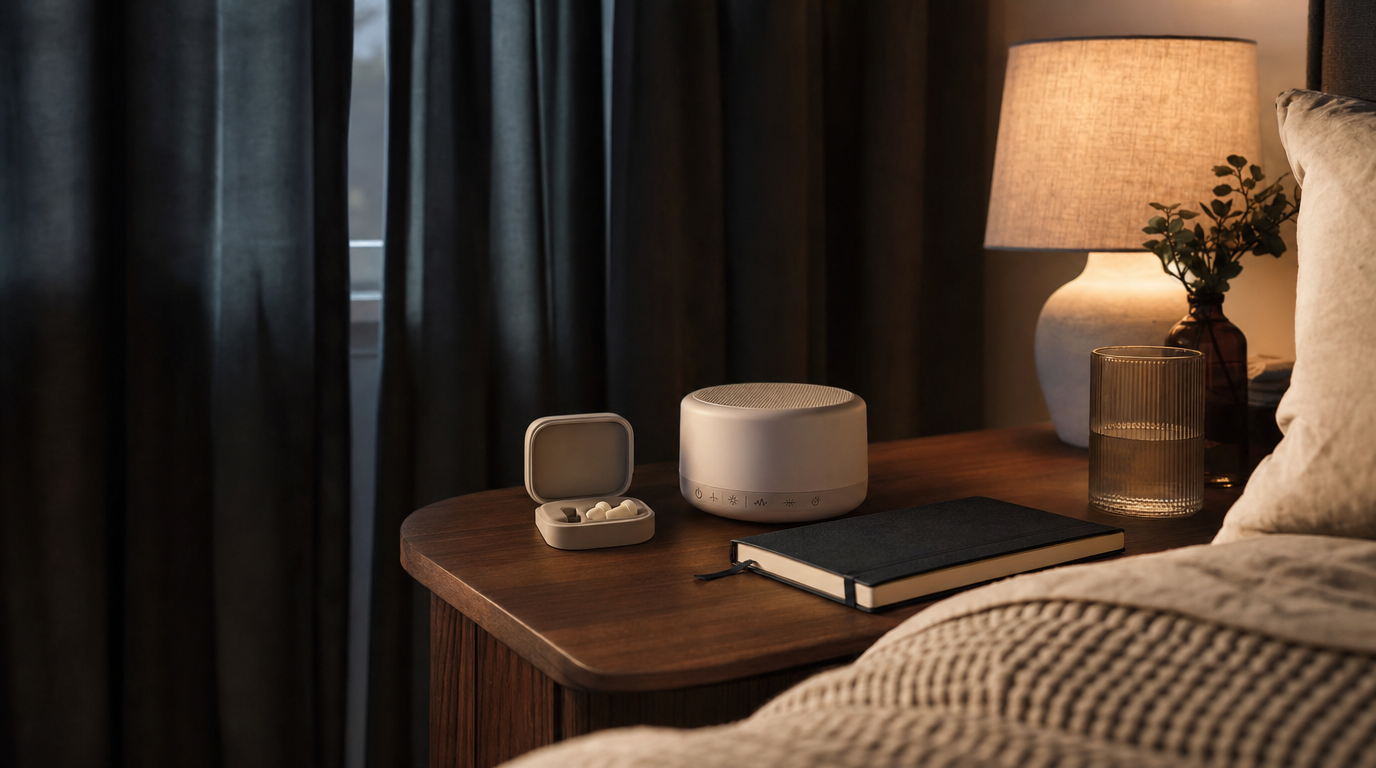
- Earplugs: Foam or silicone earplugs can reduce volume significantly for many people. Fit and comfort vary — try a few styles to find one you can sleep in consistently.
- White-noise or masking sound: A white-noise machine or app can make snoring less noticeable by filling silence with steady sound. To compare common approaches, some people read White Noise Machine vs Earplugs for Sleep.
- Combine tools cautiously: Layering a white-noise machine with comfortable earplugs can offer extra relief for light sleepers, but comfort and safety (able to hear alarms) are important considerations.
Bedroom habits and schedule adjustments
Small changes to when and how you sleep can also help reduce the impact of partner snoring.
- Stagger sleep times: If practical, going to bed slightly earlier or later than your partner reduces overlap with the worst snoring periods.
- Create a wind-down routine: A predictable pre-sleep routine can help you fall asleep more quickly and be less disturbed if noise begins later; see Night Routine for Better Sleep for ideas.
- Consider alternative sleeping arrangements occasionally: For particularly difficult nights, some people find sleeping in a different room temporarily helps catch up on rest without turning the situation into a long-term conflict.
When to see a doctor
Snoring can sometimes signal an underlying health issue for the snoring partner. If snoring is very loud, abrupt, accompanied by pauses in breathing, daytime sleepiness, or other concerning symptoms, many people choose to encourage their partner to seek medical advice. A clinician can assess breathing-related concerns and advise on next steps.
RestWell HQ content is educational and not a substitute for medical care. For more on how our content is created and limits of this information, see our editorial policy and medical disclaimer.
Common mistakes
- Relying on a single fix (for example, only earplugs) instead of combining strategies.
- Using uncomfortable earplugs that wake you up more than they help.
- Trying expensive full-room soundproofing without first testing simpler options.
- Ignoring the partner’s comfort — solutions work best when both people feel heard and involved.
- Expecting overnight perfection; most approaches need a few nights to judge.
FAQ
Will earplugs block loud snoring?
Earplugs can reduce the volume of snoring for many people, but effectiveness depends on fit and material. Some sleepers need trial-and-error to find a type that is comfortable all night.
Is a white-noise machine better than earplugs?
White-noise machines mask snoring by filling the background with steady sound, while earplugs block volume directly. Many people prefer one over the other based on comfort and ability to hear alarms; combining both is an option some people find helpful.
Can I soundproof a bedroom on a budget?
Yes. Simple steps like adding rugs, heavy curtains, sealing door gaps, and rearranging furniture can noticeably reduce echo and transmission without major expense.
Should I ask my partner to see a doctor about snoring?
If the snoring includes pauses in breathing, very loud nightly noise, or daytime sleepiness, many people encourage their partner to talk to a clinician. A healthcare visit can clarify whether further evaluation is advisable.
What if nothing I try helps my sleep?
If multiple practical strategies haven’t improved your sleep, consider discussing options with your partner and, if appropriate, a healthcare professional to explore next steps together.
Bottom Line
Dealing with a snoring partner usually works best with multiple modest changes: try source-focused tactics, modest bedroom soundproofing, and bedside tools like earplugs or masking noise. Start with inexpensive, reversible steps and track what helps over several nights.
For room-focused options and gear comparisons that many sleepers find useful, see How to Soundproof a Bedroom for Sleep, White Noise Machine vs Earplugs for Sleep, and How to Sleep Better Naturally.