
Night Routine for Better Sleep
Quick Answer
A good night routine for better sleep should be simple, repeatable, and low-stimulation. Start by closing the day, dimming lights, reducing screen intensity, preparing your bedroom, moving caffeine earlier, and giving your mind a place to park unfinished tasks. The goal is not to force sleep. The goal is to make the last part of the day less demanding so sleep has a better chance to arrive naturally.
This article is general education, not medical advice. If sleep problems are persistent, severe, or affecting your daily life, consider speaking with a qualified healthcare professional.
Why a Night Routine Works Best When It Is Boring
The most useful night routine is rarely the most aesthetic one. It is the one you can repeat on a normal Tuesday when you are tired, distracted, or busy. A complicated routine may look impressive, but it can create pressure. If you need perfect lighting, a long checklist, a special drink, a spotless room, and a full hour of discipline, the routine may become another task to fail.
RestWell HQ recommends a calmer approach: build a routine that removes friction. Make tomorrow easier. Make the bedroom easier to use. Make screens less dominant. Make the last part of the day less chaotic. A night routine is not a sleep guarantee. It is a repeatable transition.
The routine should also fit your real evening. Some people have children, shift work, shared bedrooms, small apartments, late chores, or unpredictable schedules. A useful routine does not pretend those constraints disappear. It gives you a small sequence you can return to even when the evening is imperfect.
If you want the broader foundation, read the Sleep Hygiene Guide. If your main issue is lying awake after getting into bed, pair this with How to Fall Asleep Faster.
The Better Sleep Night Routine Framework
Think of your night routine as four transitions: close the day, lower stimulation, prepare the room, and give yourself a low-pressure landing. Each transition should be practical and specific.
| Routine phase | Purpose | Simple example |
|---|---|---|
| Close the day | Reduce unfinished-task pressure. | Write tomorrow’s top three tasks and stop work-like decisions. |
| Lower stimulation | Make the evening feel less active. | Dim lights, silence nonessential alerts, and choose calmer content. |
| Prepare the room | Remove avoidable discomfort. | Adjust bedding, airflow, temperature, and light leaks. |
| Set a boundary | Keep the bed from becoming a work zone. | Charge the phone away from the pillow or place it face down. |
| Land gently | Transition without forcing sleep. | Read, stretch lightly, breathe quietly, or use another calm activity. |
Step 1: Choose a Realistic Start Time
A night routine needs a starting point, but it does not need to be rigid. Choose a time when you can realistically begin closing the day. For some people, that is an hour before bed. For others, it is twenty minutes. The key is consistency. A short routine repeated most nights is more useful than an elaborate one done once a week.
If your sleep schedule changes constantly, your routine may feel harder to anchor. In that case, start with wake time and morning cues before expecting bedtime to become smooth. The guide How to Fix a Sleep Schedule can help you build that foundation.
Step 2: Close Open Loops Before Bed
Many people do not feel mentally busy until they finally stop moving. Then the bed becomes the first quiet place where every unfinished task appears. A simple close-down ritual can help separate tomorrow’s problems from tonight’s rest.
Try writing three things: what must be handled tomorrow, one next step for each, and anything that can wait. Keep it plain. You are not journaling perfectly or solving your life at night. You are giving your brain a basic receipt that the task has been noticed. This can be especially useful if you tend to wake up thinking at night. For broader troubleshooting, start with Why Can’t I Sleep?.
Keep this close-down step short. If writing turns into a long planning session, it may become stimulating. A better format is a small note: pay bill after breakfast, pack bag before leaving, or reply to message tomorrow. The wording should make tomorrow feel more contained, not reopen the day.
Step 3: Make Light Work With the Routine
Lighting gives your evening a tone. Bright overhead light can make the night feel like the day is still open. Dimmer, warmer light can help the routine feel quieter. You do not need a perfect lighting system. Start by lowering overhead brightness and reducing intense screen exposure in the last part of the evening.
Screen changes are more useful when they address both light and behavior. A phone is not only a light source. It is a source of messages, decisions, novelty, work, and time awareness. If screens are your main bedtime friction, read Does Blue Light Affect Sleep?.
If putting the phone away completely is unrealistic, create a narrower rule. For example, keep the phone outside the bed, turn off nonessential alerts, avoid work apps, or choose one calm use and stop there. The goal is not to prove discipline. The goal is to reduce the number of decisions your night routine has to absorb.
Step 4: Move Caffeine Earlier in the Day
A night routine starts before night if caffeine is involved. You do not need to assume caffeine is the problem, but you should know your pattern. Track your last caffeine time for several days. If your routine still feels wired at night, test an earlier cutoff and watch what changes.
Some readers are more sensitive to caffeine than others. Some are more affected by amount, timing, stress, or the combination of caffeine and late work. For a practical caffeine tracking guide, read Does Coffee Affect Sleep?.
Step 5: Prepare the Bedroom Before You Are Exhausted
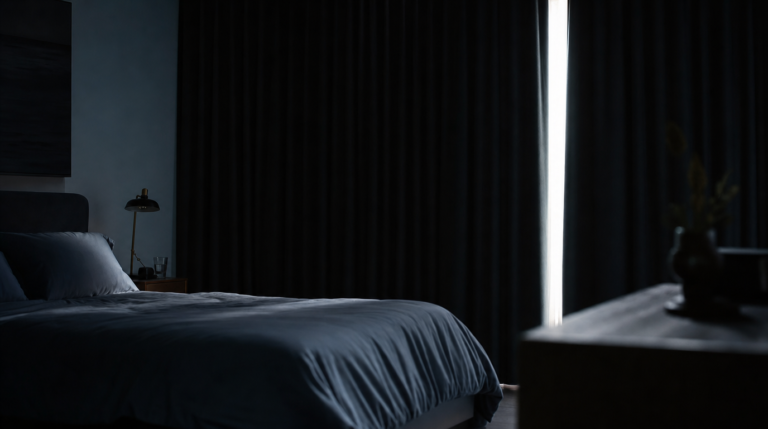
Bedroom setup is easier before you are already tired. Check the room earlier in the evening. Is the bed ready? Is the room too warm or too cold? Is there a light leak? Is the phone charging where you can reach it too easily? Is there noise you can reduce? The goal is not a perfect room. The goal is fewer avoidable interruptions.
Temperature and bedding are especially practical because they can be adjusted without making medical claims or buying complicated tools. Review layers, airflow, and comfort first. For a deeper environment guide, read Best Bedroom Temperature for Sleep.
Step 6: Choose a Low-Pressure Landing Activity
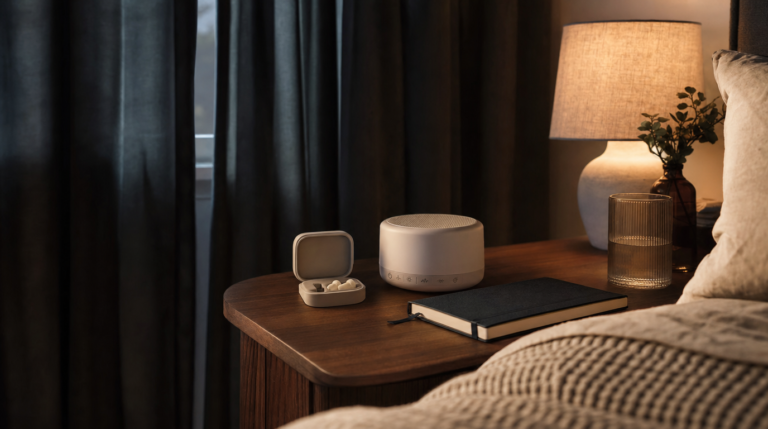
The last activity before bed should not demand much from you. It should be easy to stop. Reading something calm, listening to quiet audio, stretching lightly, preparing clothes, or sitting with dim light may work for different people. Avoid turning this into another performance. If the activity becomes stimulating, competitive, emotional, or hard to stop, it is not serving the routine.
A good landing activity gives your mind something simple enough to hold without pulling you deeper into the day. It should not require a purchase, a claim, or a perfect mood. If it helps you repeat the routine, it is useful. If it makes bedtime feel more demanding, simplify it.
A Practical 30-Minute Night Routine
- 30 minutes before bed: stop work-like tasks and write tomorrow’s top priorities.
- 25 minutes before bed: dim lights and reduce phone use or place the phone away from the bed.
- 20 minutes before bed: prepare the room: bedding, temperature, water, alarm, and light.
- 15 minutes before bed: do hygiene tasks without rushing.
- 10 minutes before bed: choose a calm landing activity such as reading or quiet stretching.
- At bedtime: keep the goal simple: rest quietly, without forcing sleep.
If thirty minutes is unrealistic, shrink the routine to ten minutes. The best routine is the one you actually repeat.
What to Avoid in a Night Routine
- A routine so long that it creates pressure.
- Checking sleep trackers repeatedly before bed.
- Using the bed for work, conflict, or stressful planning.
- Scrolling until you feel exhausted.
- Making one bad night mean the whole plan failed.
- Adding supplements or products before reviewing routine basics.
- Expecting a routine to replace professional help when symptoms are serious.
If you use a wearable or app, keep the data in perspective. Trackers can give clues about timing and routine, but they should not make you anxious about every night. Read Sleep Tracker Basics if sleep data is becoming part of your routine.
A practical routine should leave you feeling less monitored, not more judged. If you notice that a score or graph changes your mood before breakfast, consider checking it less often or using it only for broad trends. Your lived experience still matters.
When a Night Routine Is Not Enough
A night routine is a useful foundation, not a medical solution. If you regularly cannot sleep, wake often, feel very sleepy during the day, or have symptoms that concern you, speak with a qualified healthcare professional. RestWell HQ does not diagnose insomnia, anxiety, depression, sleep apnea, hormone issues, or any other condition.
If mornings are the main issue, read Why Do I Wake Up Tired?. If your routine feels scattered, return to one anchor at a time: wake time, caffeine timing, screen boundaries, room comfort, or a shorter wind-down. Trying to fix every part of the evening at once can make bedtime feel more complicated. A smaller routine that repeats is usually easier to learn from than a perfect routine that only happens once.
Review the routine after several nights rather than one. Ask what was easiest to repeat, what created resistance, and what made the bedroom feel calmer. Then adjust only the weakest part. This turns the night routine into a practical feedback loop instead of another strict rule.
FAQ
What is the best night routine for better sleep?
The best routine is simple enough to repeat: close the day, dim lights, reduce screens, prepare the room, and use a calm activity before bed.
How long should a night routine be?
It can be as short as ten minutes or as long as an hour. Consistency matters more than length.
Should I stop using my phone before bed?
You do not need an extreme rule, but reducing phone use near bed can help lower stimulation for many people. Consider placing it away from the pillow or using it only for calm, intentional tasks.
Can a night routine fix insomnia?
This article does not diagnose or treat insomnia. A routine may support better habits, but persistent or severe sleep problems should be discussed with a qualified healthcare professional.
What should I do if I wake up during the night?
Keep the wakeup boring: avoid bright light, avoid repeated clock-checking, and use a calm low-stimulation activity if you feel fully awake.
About the author: MSS is an editorial contributor and research-focused writer for RestWell HQ. RestWell HQ content is written for general education and follows cautious editorial standards.




10 Comments