How to Choose the Right Sunrise Alarm Clock Brightness
FAQ
How bright should a sunrise alarm be to wake me up?
There’s no universal brightness that works for everyone. Many people start low and increase gradually until the light reliably helps them wake; consider room ambient light, distance, and personal sensitivity.
Is warmer or cooler light better for waking?
Warmer tones are often perceived as gentler and less stimulating first thing in the morning, while cooler (bluer) light can feel more alerting; individual preference and tolerance matter.
Will a sunrise alarm disrupt my partner?
Possibly, if it’s very bright or unfocused. Use directional placement, lower peak brightness, or models with adjustable beams to minimize disturbance in shared bedrooms.
How long should the light ramp up be?
Many people prefer a gradual ramp over 20–30 minutes, but some devices offer longer or shorter ramps. Try a ramp that matches your waketime and adjust based on how alert you feel when you wake.
Can I use a sunrise alarm if I work shifts?
Wake lights can help if your sleep schedule is stable, but shift work often requires coordinated strategies beyond a wake light. Consider timing, light exposure at other times, and seek professional guidance if you have ongoing issues.
Bottom Line
Pick a brightness based on your room, distance to the device, and how sensitive your eyes are. Start low, test for several days, and adjust in small steps until you wake more smoothly. For setup ideas and further reading, see How to Use a Sunrise Alarm Clock: Setup Guide, Best Bedside Lighting for Sleep: A Practical Guide, and Red Light vs Blue Light Before Bed.
- Starting at the maximum brightness and expecting immediate improvement.
- Placing the device too far or directly aimed at the eyes without testing.
- Ignoring room ambient light (dawn light or streetlights can change what setting you need).
- Changing settings nightly instead of testing each level for several days.
- Assuming one color temperature suits everyone — some find warmer tones easier to wake to.
FAQ
How bright should a sunrise alarm be to wake me up?
There’s no universal brightness that works for everyone. Many people start low and increase gradually until the light reliably helps them wake; consider room ambient light, distance, and personal sensitivity.
Is warmer or cooler light better for waking?
Warmer tones are often perceived as gentler and less stimulating first thing in the morning, while cooler (bluer) light can feel more alerting; individual preference and tolerance matter.
Will a sunrise alarm disrupt my partner?
Possibly, if it’s very bright or unfocused. Use directional placement, lower peak brightness, or models with adjustable beams to minimize disturbance in shared bedrooms.
How long should the light ramp up be?
Many people prefer a gradual ramp over 20–30 minutes, but some devices offer longer or shorter ramps. Try a ramp that matches your waketime and adjust based on how alert you feel when you wake.
Can I use a sunrise alarm if I work shifts?
Wake lights can help if your sleep schedule is stable, but shift work often requires coordinated strategies beyond a wake light. Consider timing, light exposure at other times, and seek professional guidance if you have ongoing issues.
Bottom Line
Pick a brightness based on your room, distance to the device, and how sensitive your eyes are. Start low, test for several days, and adjust in small steps until you wake more smoothly. For setup ideas and further reading, see How to Use a Sunrise Alarm Clock: Setup Guide, Best Bedside Lighting for Sleep: A Practical Guide, and Red Light vs Blue Light Before Bed.
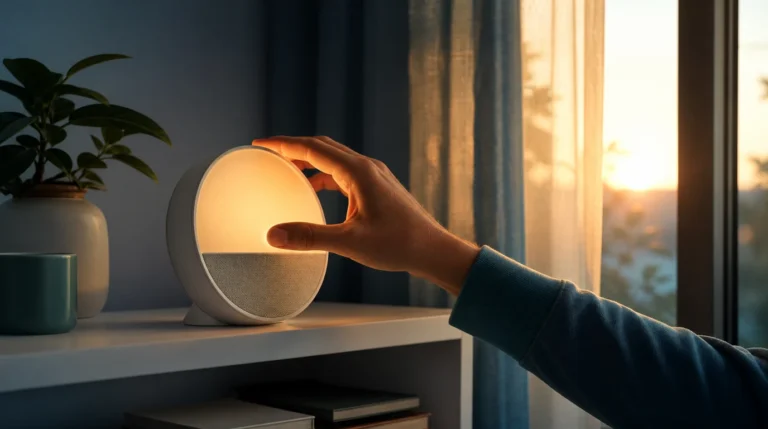
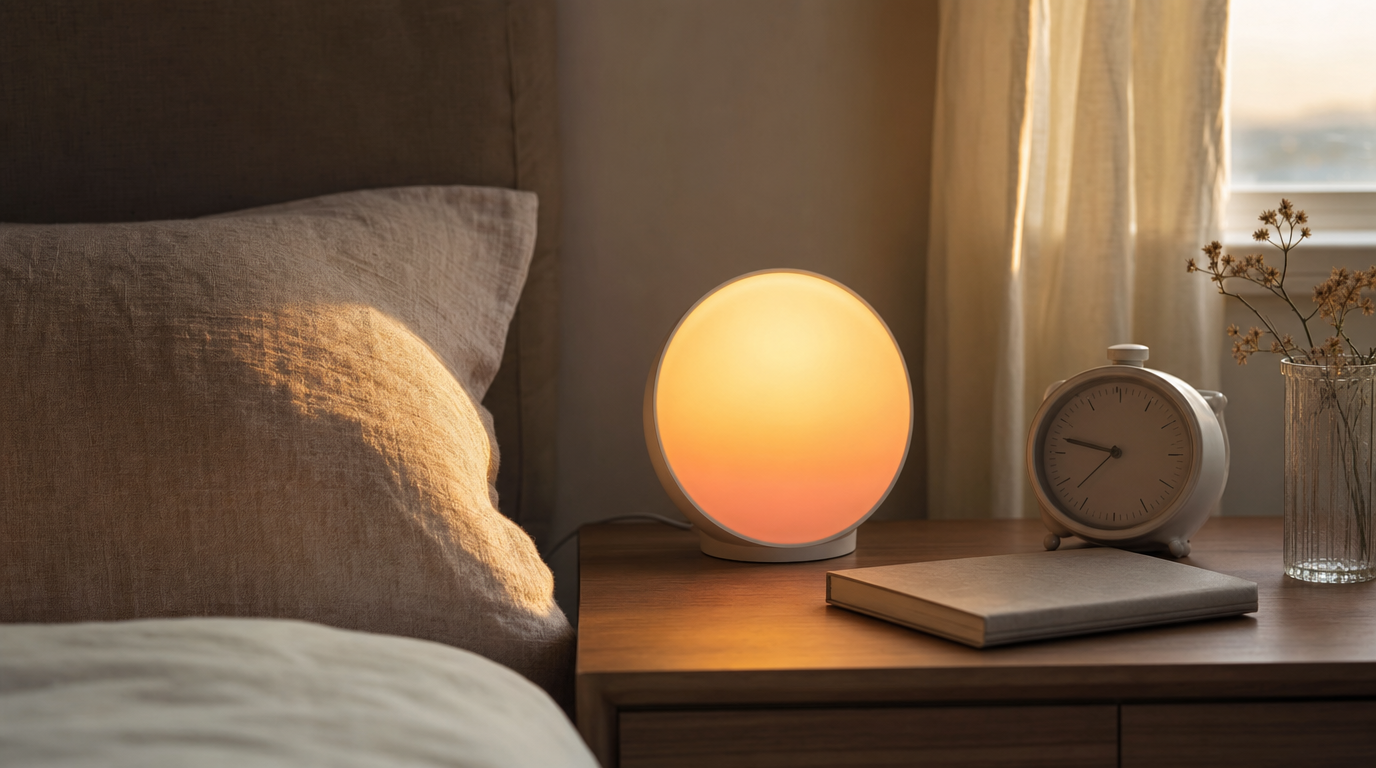
Sunrise alarm clocks (wake lights) are designed to wake you using gradually increasing light instead of a sudden sound. Choosing the right brightness can help the light feel natural and effective rather than jarring or too subtle to register.
There isn’t a single “best” lumen or percentage for everyone — factors like your bedroom’s ambient light, distance from the device, eye sensitivity, and sleep timing all matter. This guide explains how to test and adjust brightness so the light supports a smoother wake-up for your situation.
Quick Answer
Start with a low-to-moderate brightness and test it for a week, increasing gradually until you wake reliably without feeling overstimulated; account for room darkness, distance, and whether you naturally wake earlier or later.
Table of Contents
- How light brightness affects waking
- How to choose the right brightness for your bedroom
- Practical setup and testing steps
- Special cases: sensitivity, shared rooms, shift work
- When to talk to a doctor about sleep and light sensitivity
- Common mistakes
- FAQ
- Bottom Line
How light brightness affects waking
Gradually increasing light aims to mimic dawn, which can help reduce the stark contrast of being pulled from deep sleep. For many people, a gentle rise in warm, low-blue light reduces sleep inertia (that groggy feeling) more smoothly than an abrupt noise. That said, very bright or very blue-rich light right before waking can feel harsh and might be disruptive for some people.
How to choose the right brightness for your bedroom
- Consider ambient light: If your room gets a lot of pre-dawn light, your wake light can be dimmer. In a very dark room you may need a higher setting to be noticeable.
- Measure distance: Wake lights are rated for illumination at certain distances — the further the device is from your face, the brighter it needs to be to have the same effect.
- Account for eye sensitivity and chronotype: Some people are more light-sensitive or naturally wake early and may prefer lower intensity; night owls may need a slightly stronger stimulus to shift wake time.
- Color temperature matters: Many sunrise alarms offer warmer tones at lower intensities. Warmer, less-blue light is generally described as calmer than bright white or blue-rich light close to waking.
Practical setup and testing steps
Follow a simple, cautious test plan rather than making a single one-time change:
- Start low: Set the sunrise alarm to a low brightness and a gradual ramp-up over 20–30 minutes if the device allows. Try this for several mornings to see if it wakes you consistently.
- Adjust by small increments: Increase brightness in small steps and give each setting a few days. Notice whether you wake earlier, more alert, or feel overstimulated.
- Positioning: Place the device where the light will reach your face without shining directly into your eyes at high intensity. A slightly angled placement or behind a bedside object can diffuse the beam while remaining effective.
- Combine with sound thoughtfully: If a light-only wake doesn’t work for you, pairing a gentle sound near the end of the wake period can help. Try to keep sound gentle to avoid abrupt awakenings.
- Track results: Keep a brief note of how you feel each morning for a week at each setting. If you want more detail, see Sleep Tracker Basics for tips on tracking sleep patterns.
Special cases: sensitivity, shared rooms, and shift work
Some situations call for extra caution or different strategies:
- Light sensitivity or migraine history: If bright light triggers headaches or discomfort, favor lower intensities and warmer tones, and consult a clinician if sensitivity is significant.
- Shared bedrooms or partners: Use directional placement, lower peak brightness, or a model with a focused beam so the light wakes you without disturbing others.
- Shift workers or irregular schedules: Wake-light strategies may need to be combined with strict sleep timing and other cues; this can be more complex and benefit from professional guidance.
When to talk to a doctor about light sensitivity or sleep problems
Light-based wake tools are non-clinical, but if you experience persistent sleepiness, significant changes in mood, severe sensitivity to light, or other concerning symptoms, it’s reasonable to consult a healthcare professional. RestWell HQ content is educational and not a substitute for medical advice; see our medical disclaimer and editorial policy for more about our scope.
Common mistakes
- Starting at the maximum brightness and expecting immediate improvement.
- Placing the device too far or directly aimed at the eyes without testing.
- Ignoring room ambient light (dawn light or streetlights can change what setting you need).
- Changing settings nightly instead of testing each level for several days.
- Assuming one color temperature suits everyone — some find warmer tones easier to wake to.
FAQ
How bright should a sunrise alarm be to wake me up?
There’s no universal brightness that works for everyone. Many people start low and increase gradually until the light reliably helps them wake; consider room ambient light, distance, and personal sensitivity.
Is warmer or cooler light better for waking?
Warmer tones are often perceived as gentler and less stimulating first thing in the morning, while cooler (bluer) light can feel more alerting; individual preference and tolerance matter.
Will a sunrise alarm disrupt my partner?
Possibly, if it’s very bright or unfocused. Use directional placement, lower peak brightness, or models with adjustable beams to minimize disturbance in shared bedrooms.
How long should the light ramp up be?
Many people prefer a gradual ramp over 20–30 minutes, but some devices offer longer or shorter ramps. Try a ramp that matches your waketime and adjust based on how alert you feel when you wake.
Can I use a sunrise alarm if I work shifts?
Wake lights can help if your sleep schedule is stable, but shift work often requires coordinated strategies beyond a wake light. Consider timing, light exposure at other times, and seek professional guidance if you have ongoing issues.
Bottom Line
Pick a brightness based on your room, distance to the device, and how sensitive your eyes are. Start low, test for several days, and adjust in small steps until you wake more smoothly. For setup ideas and further reading, see How to Use a Sunrise Alarm Clock: Setup Guide, Best Bedside Lighting for Sleep: A Practical Guide, and Red Light vs Blue Light Before Bed.
Sunrise alarm clocks (wake lights) are designed to wake you using gradually increasing light instead of a sudden sound. Choosing the right brightness can help the light feel natural and effective rather than jarring or too subtle to register.
There isn’t a single “best” lumen or percentage for everyone — factors like your bedroom’s ambient light, distance from the device, eye sensitivity, and sleep timing all matter. This guide explains how to test and adjust brightness so the light supports a smoother wake-up for your situation.
Quick Answer
Start with a low-to-moderate brightness and test it for a week, increasing gradually until you wake reliably without feeling overstimulated; account for room darkness, distance, and whether you naturally wake earlier or later.
Table of Contents
- How light brightness affects waking
- How to choose the right brightness for your bedroom
- Practical setup and testing steps
- Special cases: sensitivity, shared rooms, shift work
- When to talk to a doctor about sleep and light sensitivity
- Common mistakes
- FAQ
- Bottom Line
How light brightness affects waking
Gradually increasing light aims to mimic dawn, which can help reduce the stark contrast of being pulled from deep sleep. For many people, a gentle rise in warm, low-blue light reduces sleep inertia (that groggy feeling) more smoothly than an abrupt noise. That said, very bright or very blue-rich light right before waking can feel harsh and might be disruptive for some people.
How to choose the right brightness for your bedroom
- Consider ambient light: If your room gets a lot of pre-dawn light, your wake light can be dimmer. In a very dark room you may need a higher setting to be noticeable.
- Measure distance: Wake lights are rated for illumination at certain distances — the further the device is from your face, the brighter it needs to be to have the same effect.
- Account for eye sensitivity and chronotype: Some people are more light-sensitive or naturally wake early and may prefer lower intensity; night owls may need a slightly stronger stimulus to shift wake time.
- Color temperature matters: Many sunrise alarms offer warmer tones at lower intensities. Warmer, less-blue light is generally described as calmer than bright white or blue-rich light close to waking.
Practical setup and testing steps
Follow a simple, cautious test plan rather than making a single one-time change:
- Start low: Set the sunrise alarm to a low brightness and a gradual ramp-up over 20–30 minutes if the device allows. Try this for several mornings to see if it wakes you consistently.
- Adjust by small increments: Increase brightness in small steps and give each setting a few days. Notice whether you wake earlier, more alert, or feel overstimulated.
- Positioning: Place the device where the light will reach your face without shining directly into your eyes at high intensity. A slightly angled placement or behind a bedside object can diffuse the beam while remaining effective.
- Combine with sound thoughtfully: If a light-only wake doesn’t work for you, pairing a gentle sound near the end of the wake period can help. Try to keep sound gentle to avoid abrupt awakenings.
- Track results: Keep a brief note of how you feel each morning for a week at each setting. If you want more detail, see Sleep Tracker Basics for tips on tracking sleep patterns.
Special cases: sensitivity, shared rooms, and shift work
Some situations call for extra caution or different strategies:
- Light sensitivity or migraine history: If bright light triggers headaches or discomfort, favor lower intensities and warmer tones, and consult a clinician if sensitivity is significant.
- Shared bedrooms or partners: Use directional placement, lower peak brightness, or a model with a focused beam so the light wakes you without disturbing others.
- Shift workers or irregular schedules: Wake-light strategies may need to be combined with strict sleep timing and other cues; this can be more complex and benefit from professional guidance.
When to talk to a doctor about light sensitivity or sleep problems
Light-based wake tools are non-clinical, but if you experience persistent sleepiness, significant changes in mood, severe sensitivity to light, or other concerning symptoms, it’s reasonable to consult a healthcare professional. RestWell HQ content is educational and not a substitute for medical advice; see our medical disclaimer and editorial policy for more about our scope.
Common mistakes
- Starting at the maximum brightness and expecting immediate improvement.
- Placing the device too far or directly aimed at the eyes without testing.
- Ignoring room ambient light (dawn light or streetlights can change what setting you need).
- Changing settings nightly instead of testing each level for several days.
- Assuming one color temperature suits everyone — some find warmer tones easier to wake to.
FAQ
How bright should a sunrise alarm be to wake me up?
There’s no universal brightness that works for everyone. Many people start low and increase gradually until the light reliably helps them wake; consider room ambient light, distance, and personal sensitivity.
Is warmer or cooler light better for waking?
Warmer tones are often perceived as gentler and less stimulating first thing in the morning, while cooler (bluer) light can feel more alerting; individual preference and tolerance matter.
Will a sunrise alarm disrupt my partner?
Possibly, if it’s very bright or unfocused. Use directional placement, lower peak brightness, or models with adjustable beams to minimize disturbance in shared bedrooms.
How long should the light ramp up be?
Many people prefer a gradual ramp over 20–30 minutes, but some devices offer longer or shorter ramps. Try a ramp that matches your waketime and adjust based on how alert you feel when you wake.
Can I use a sunrise alarm if I work shifts?
Wake lights can help if your sleep schedule is stable, but shift work often requires coordinated strategies beyond a wake light. Consider timing, light exposure at other times, and seek professional guidance if you have ongoing issues.
Bottom Line
Pick a brightness based on your room, distance to the device, and how sensitive your eyes are. Start low, test for several days, and adjust in small steps until you wake more smoothly. For setup ideas and further reading, see How to Use a Sunrise Alarm Clock: Setup Guide, Best Bedside Lighting for Sleep: A Practical Guide, and Red Light vs Blue Light Before Bed.
Sunrise alarm clocks (wake lights) are designed to wake you using gradually increasing light instead of a sudden sound. Choosing the right brightness can help the light feel natural and effective rather than jarring or too subtle to register.
There isn’t a single “best” lumen or percentage for everyone — factors like your bedroom’s ambient light, distance from the device, eye sensitivity, and sleep timing all matter. This guide explains how to test and adjust brightness so the light supports a smoother wake-up for your situation.
Quick Answer
Start with a low-to-moderate brightness and test it for a week, increasing gradually until you wake reliably without feeling overstimulated; account for room darkness, distance, and whether you naturally wake earlier or later.
Table of Contents
- How light brightness affects waking
- How to choose the right brightness for your bedroom
- Practical setup and testing steps
- Special cases: sensitivity, shared rooms, shift work
- When to talk to a doctor about sleep and light sensitivity
- Common mistakes
- FAQ
- Bottom Line
How light brightness affects waking
Gradually increasing light aims to mimic dawn, which can help reduce the stark contrast of being pulled from deep sleep. For many people, a gentle rise in warm, low-blue light reduces sleep inertia (that groggy feeling) more smoothly than an abrupt noise. That said, very bright or very blue-rich light right before waking can feel harsh and might be disruptive for some people.
How to choose the right brightness for your bedroom
- Consider ambient light: If your room gets a lot of pre-dawn light, your wake light can be dimmer. In a very dark room you may need a higher setting to be noticeable.
- Measure distance: Wake lights are rated for illumination at certain distances — the further the device is from your face, the brighter it needs to be to have the same effect.
- Account for eye sensitivity and chronotype: Some people are more light-sensitive or naturally wake early and may prefer lower intensity; night owls may need a slightly stronger stimulus to shift wake time.
- Color temperature matters: Many sunrise alarms offer warmer tones at lower intensities. Warmer, less-blue light is generally described as calmer than bright white or blue-rich light close to waking.
Practical setup and testing steps
Follow a simple, cautious test plan rather than making a single one-time change:
- Start low: Set the sunrise alarm to a low brightness and a gradual ramp-up over 20–30 minutes if the device allows. Try this for several mornings to see if it wakes you consistently.
- Adjust by small increments: Increase brightness in small steps and give each setting a few days. Notice whether you wake earlier, more alert, or feel overstimulated.
- Positioning: Place the device where the light will reach your face without shining directly into your eyes at high intensity. A slightly angled placement or behind a bedside object can diffuse the beam while remaining effective.
- Combine with sound thoughtfully: If a light-only wake doesn’t work for you, pairing a gentle sound near the end of the wake period can help. Try to keep sound gentle to avoid abrupt awakenings.
- Track results: Keep a brief note of how you feel each morning for a week at each setting. If you want more detail, see Sleep Tracker Basics for tips on tracking sleep patterns.
Special cases: sensitivity, shared rooms, and shift work
Some situations call for extra caution or different strategies:
- Light sensitivity or migraine history: If bright light triggers headaches or discomfort, favor lower intensities and warmer tones, and consult a clinician if sensitivity is significant.
- Shared bedrooms or partners: Use directional placement, lower peak brightness, or a model with a focused beam so the light wakes you without disturbing others.
- Shift workers or irregular schedules: Wake-light strategies may need to be combined with strict sleep timing and other cues; this can be more complex and benefit from professional guidance.
When to talk to a doctor about light sensitivity or sleep problems
Light-based wake tools are non-clinical, but if you experience persistent sleepiness, significant changes in mood, severe sensitivity to light, or other concerning symptoms, it’s reasonable to consult a healthcare professional. RestWell HQ content is educational and not a substitute for medical advice; see our medical disclaimer and editorial policy for more about our scope.
Common mistakes
- Starting at the maximum brightness and expecting immediate improvement.
- Placing the device too far or directly aimed at the eyes without testing.
- Ignoring room ambient light (dawn light or streetlights can change what setting you need).
- Changing settings nightly instead of testing each level for several days.
- Assuming one color temperature suits everyone — some find warmer tones easier to wake to.
FAQ
How bright should a sunrise alarm be to wake me up?
There’s no universal brightness that works for everyone. Many people start low and increase gradually until the light reliably helps them wake; consider room ambient light, distance, and personal sensitivity.
Is warmer or cooler light better for waking?
Warmer tones are often perceived as gentler and less stimulating first thing in the morning, while cooler (bluer) light can feel more alerting; individual preference and tolerance matter.
Will a sunrise alarm disrupt my partner?
Possibly, if it’s very bright or unfocused. Use directional placement, lower peak brightness, or models with adjustable beams to minimize disturbance in shared bedrooms.
How long should the light ramp up be?
Many people prefer a gradual ramp over 20–30 minutes, but some devices offer longer or shorter ramps. Try a ramp that matches your waketime and adjust based on how alert you feel when you wake.
Can I use a sunrise alarm if I work shifts?
Wake lights can help if your sleep schedule is stable, but shift work often requires coordinated strategies beyond a wake light. Consider timing, light exposure at other times, and seek professional guidance if you have ongoing issues.
Bottom Line
Pick a brightness based on your room, distance to the device, and how sensitive your eyes are. Start low, test for several days, and adjust in small steps until you wake more smoothly. For setup ideas and further reading, see How to Use a Sunrise Alarm Clock: Setup Guide, Best Bedside Lighting for Sleep: A Practical Guide, and Red Light vs Blue Light Before Bed.
- Starting at the maximum brightness and expecting immediate improvement.
- Placing the device too far or directly aimed at the eyes without testing.
- Ignoring room ambient light (dawn light or streetlights can change what setting you need).
- Changing settings nightly instead of testing each level for several days.
- Assuming one color temperature suits everyone — some find warmer tones easier to wake to.
FAQ
How bright should a sunrise alarm be to wake me up?
There’s no universal brightness that works for everyone. Many people start low and increase gradually until the light reliably helps them wake; consider room ambient light, distance, and personal sensitivity.
Is warmer or cooler light better for waking?
Warmer tones are often perceived as gentler and less stimulating first thing in the morning, while cooler (bluer) light can feel more alerting; individual preference and tolerance matter.
Will a sunrise alarm disrupt my partner?
Possibly, if it’s very bright or unfocused. Use directional placement, lower peak brightness, or models with adjustable beams to minimize disturbance in shared bedrooms.
How long should the light ramp up be?
Many people prefer a gradual ramp over 20–30 minutes, but some devices offer longer or shorter ramps. Try a ramp that matches your waketime and adjust based on how alert you feel when you wake.
Can I use a sunrise alarm if I work shifts?
Wake lights can help if your sleep schedule is stable, but shift work often requires coordinated strategies beyond a wake light. Consider timing, light exposure at other times, and seek professional guidance if you have ongoing issues.
Bottom Line
Pick a brightness based on your room, distance to the device, and how sensitive your eyes are. Start low, test for several days, and adjust in small steps until you wake more smoothly. For setup ideas and further reading, see How to Use a Sunrise Alarm Clock: Setup Guide, Best Bedside Lighting for Sleep: A Practical Guide, and Red Light vs Blue Light Before Bed.
Sunrise alarm clocks (wake lights) are designed to wake you using gradually increasing light instead of a sudden sound. Choosing the right brightness can help the light feel natural and effective rather than jarring or too subtle to register.
There isn’t a single “best” lumen or percentage for everyone — factors like your bedroom’s ambient light, distance from the device, eye sensitivity, and sleep timing all matter. This guide explains how to test and adjust brightness so the light supports a smoother wake-up for your situation.
Quick Answer
Start with a low-to-moderate brightness and test it for a week, increasing gradually until you wake reliably without feeling overstimulated; account for room darkness, distance, and whether you naturally wake earlier or later.
Table of Contents
- How light brightness affects waking
- How to choose the right brightness for your bedroom
- Practical setup and testing steps
- Special cases: sensitivity, shared rooms, shift work
- When to talk to a doctor about sleep and light sensitivity
- Common mistakes
- FAQ
- Bottom Line
How light brightness affects waking
Gradually increasing light aims to mimic dawn, which can help reduce the stark contrast of being pulled from deep sleep. For many people, a gentle rise in warm, low-blue light reduces sleep inertia (that groggy feeling) more smoothly than an abrupt noise. That said, very bright or very blue-rich light right before waking can feel harsh and might be disruptive for some people.
How to choose the right brightness for your bedroom
- Consider ambient light: If your room gets a lot of pre-dawn light, your wake light can be dimmer. In a very dark room you may need a higher setting to be noticeable.
- Measure distance: Wake lights are rated for illumination at certain distances — the further the device is from your face, the brighter it needs to be to have the same effect.
- Account for eye sensitivity and chronotype: Some people are more light-sensitive or naturally wake early and may prefer lower intensity; night owls may need a slightly stronger stimulus to shift wake time.
- Color temperature matters: Many sunrise alarms offer warmer tones at lower intensities. Warmer, less-blue light is generally described as calmer than bright white or blue-rich light close to waking.
Practical setup and testing steps
Follow a simple, cautious test plan rather than making a single one-time change:
- Start low: Set the sunrise alarm to a low brightness and a gradual ramp-up over 20–30 minutes if the device allows. Try this for several mornings to see if it wakes you consistently.
- Adjust by small increments: Increase brightness in small steps and give each setting a few days. Notice whether you wake earlier, more alert, or feel overstimulated.
- Positioning: Place the device where the light will reach your face without shining directly into your eyes at high intensity. A slightly angled placement or behind a bedside object can diffuse the beam while remaining effective.
- Combine with sound thoughtfully: If a light-only wake doesn’t work for you, pairing a gentle sound near the end of the wake period can help. Try to keep sound gentle to avoid abrupt awakenings.
- Track results: Keep a brief note of how you feel each morning for a week at each setting. If you want more detail, see Sleep Tracker Basics for tips on tracking sleep patterns.
Special cases: sensitivity, shared rooms, and shift work
Some situations call for extra caution or different strategies:
- Light sensitivity or migraine history: If bright light triggers headaches or discomfort, favor lower intensities and warmer tones, and consult a clinician if sensitivity is significant.
- Shared bedrooms or partners: Use directional placement, lower peak brightness, or a model with a focused beam so the light wakes you without disturbing others.
- Shift workers or irregular schedules: Wake-light strategies may need to be combined with strict sleep timing and other cues; this can be more complex and benefit from professional guidance.
When to talk to a doctor about light sensitivity or sleep problems
Light-based wake tools are non-clinical, but if you experience persistent sleepiness, significant changes in mood, severe sensitivity to light, or other concerning symptoms, it’s reasonable to consult a healthcare professional. RestWell HQ content is educational and not a substitute for medical advice; see our medical disclaimer and editorial policy for more about our scope.
Common mistakes
- Starting at the maximum brightness and expecting immediate improvement.
- Placing the device too far or directly aimed at the eyes without testing.
- Ignoring room ambient light (dawn light or streetlights can change what setting you need).
- Changing settings nightly instead of testing each level for several days.
- Assuming one color temperature suits everyone — some find warmer tones easier to wake to.
FAQ
How bright should a sunrise alarm be to wake me up?
There’s no universal brightness that works for everyone. Many people start low and increase gradually until the light reliably helps them wake; consider room ambient light, distance, and personal sensitivity.
Is warmer or cooler light better for waking?
Warmer tones are often perceived as gentler and less stimulating first thing in the morning, while cooler (bluer) light can feel more alerting; individual preference and tolerance matter.
Will a sunrise alarm disrupt my partner?
Possibly, if it’s very bright or unfocused. Use directional placement, lower peak brightness, or models with adjustable beams to minimize disturbance in shared bedrooms.
How long should the light ramp up be?
Many people prefer a gradual ramp over 20–30 minutes, but some devices offer longer or shorter ramps. Try a ramp that matches your waketime and adjust based on how alert you feel when you wake.
Can I use a sunrise alarm if I work shifts?
Wake lights can help if your sleep schedule is stable, but shift work often requires coordinated strategies beyond a wake light. Consider timing, light exposure at other times, and seek professional guidance if you have ongoing issues.
Bottom Line
Pick a brightness based on your room, distance to the device, and how sensitive your eyes are. Start low, test for several days, and adjust in small steps until you wake more smoothly. For setup ideas and further reading, see How to Use a Sunrise Alarm Clock: Setup Guide, Best Bedside Lighting for Sleep: A Practical Guide, and Red Light vs Blue Light Before Bed.
- Starting at the maximum brightness and expecting immediate improvement.
- Placing the device too far or directly aimed at the eyes without testing.
- Ignoring room ambient light (dawn light or streetlights can change what setting you need).
- Changing settings nightly instead of testing each level for several days.
- Assuming one color temperature suits everyone — some find warmer tones easier to wake to.
FAQ
How bright should a sunrise alarm be to wake me up?
There’s no universal brightness that works for everyone. Many people start low and increase gradually until the light reliably helps them wake; consider room ambient light, distance, and personal sensitivity.
Is warmer or cooler light better for waking?
Warmer tones are often perceived as gentler and less stimulating first thing in the morning, while cooler (bluer) light can feel more alerting; individual preference and tolerance matter.
Will a sunrise alarm disrupt my partner?
Possibly, if it’s very bright or unfocused. Use directional placement, lower peak brightness, or models with adjustable beams to minimize disturbance in shared bedrooms.
How long should the light ramp up be?
Many people prefer a gradual ramp over 20–30 minutes, but some devices offer longer or shorter ramps. Try a ramp that matches your waketime and adjust based on how alert you feel when you wake.
Can I use a sunrise alarm if I work shifts?
Wake lights can help if your sleep schedule is stable, but shift work often requires coordinated strategies beyond a wake light. Consider timing, light exposure at other times, and seek professional guidance if you have ongoing issues.
Bottom Line
Pick a brightness based on your room, distance to the device, and how sensitive your eyes are. Start low, test for several days, and adjust in small steps until you wake more smoothly. For setup ideas and further reading, see How to Use a Sunrise Alarm Clock: Setup Guide, Best Bedside Lighting for Sleep: A Practical Guide, and Red Light vs Blue Light Before Bed.
Sunrise alarm clocks (wake lights) are designed to wake you using gradually increasing light instead of a sudden sound. Choosing the right brightness can help the light feel natural and effective rather than jarring or too subtle to register.
There isn’t a single “best” lumen or percentage for everyone — factors like your bedroom’s ambient light, distance from the device, eye sensitivity, and sleep timing all matter. This guide explains how to test and adjust brightness so the light supports a smoother wake-up for your situation.
Quick Answer
Start with a low-to-moderate brightness and test it for a week, increasing gradually until you wake reliably without feeling overstimulated; account for room darkness, distance, and whether you naturally wake earlier or later.
Table of Contents
- How light brightness affects waking
- How to choose the right brightness for your bedroom
- Practical setup and testing steps
- Special cases: sensitivity, shared rooms, shift work
- When to talk to a doctor about sleep and light sensitivity
- Common mistakes
- FAQ
- Bottom Line
How light brightness affects waking
Gradually increasing light aims to mimic dawn, which can help reduce the stark contrast of being pulled from deep sleep. For many people, a gentle rise in warm, low-blue light reduces sleep inertia (that groggy feeling) more smoothly than an abrupt noise. That said, very bright or very blue-rich light right before waking can feel harsh and might be disruptive for some people.
How to choose the right brightness for your bedroom
- Consider ambient light: If your room gets a lot of pre-dawn light, your wake light can be dimmer. In a very dark room you may need a higher setting to be noticeable.
- Measure distance: Wake lights are rated for illumination at certain distances — the further the device is from your face, the brighter it needs to be to have the same effect.
- Account for eye sensitivity and chronotype: Some people are more light-sensitive or naturally wake early and may prefer lower intensity; night owls may need a slightly stronger stimulus to shift wake time.
- Color temperature matters: Many sunrise alarms offer warmer tones at lower intensities. Warmer, less-blue light is generally described as calmer than bright white or blue-rich light close to waking.
Practical setup and testing steps
Follow a simple, cautious test plan rather than making a single one-time change:
- Start low: Set the sunrise alarm to a low brightness and a gradual ramp-up over 20–30 minutes if the device allows. Try this for several mornings to see if it wakes you consistently.
- Adjust by small increments: Increase brightness in small steps and give each setting a few days. Notice whether you wake earlier, more alert, or feel overstimulated.
- Positioning: Place the device where the light will reach your face without shining directly into your eyes at high intensity. A slightly angled placement or behind a bedside object can diffuse the beam while remaining effective.
- Combine with sound thoughtfully: If a light-only wake doesn’t work for you, pairing a gentle sound near the end of the wake period can help. Try to keep sound gentle to avoid abrupt awakenings.
- Track results: Keep a brief note of how you feel each morning for a week at each setting. If you want more detail, see Sleep Tracker Basics for tips on tracking sleep patterns.
Special cases: sensitivity, shared rooms, and shift work
Some situations call for extra caution or different strategies:
- Light sensitivity or migraine history: If bright light triggers headaches or discomfort, favor lower intensities and warmer tones, and consult a clinician if sensitivity is significant.
- Shared bedrooms or partners: Use directional placement, lower peak brightness, or a model with a focused beam so the light wakes you without disturbing others.
- Shift workers or irregular schedules: Wake-light strategies may need to be combined with strict sleep timing and other cues; this can be more complex and benefit from professional guidance.
When to talk to a doctor about light sensitivity or sleep problems
Light-based wake tools are non-clinical, but if you experience persistent sleepiness, significant changes in mood, severe sensitivity to light, or other concerning symptoms, it’s reasonable to consult a healthcare professional. RestWell HQ content is educational and not a substitute for medical advice; see our medical disclaimer and editorial policy for more about our scope.
Common mistakes
- Starting at the maximum brightness and expecting immediate improvement.
- Placing the device too far or directly aimed at the eyes without testing.
- Ignoring room ambient light (dawn light or streetlights can change what setting you need).
- Changing settings nightly instead of testing each level for several days.
- Assuming one color temperature suits everyone — some find warmer tones easier to wake to.
FAQ
How bright should a sunrise alarm be to wake me up?
There’s no universal brightness that works for everyone. Many people start low and increase gradually until the light reliably helps them wake; consider room ambient light, distance, and personal sensitivity.
Is warmer or cooler light better for waking?
Warmer tones are often perceived as gentler and less stimulating first thing in the morning, while cooler (bluer) light can feel more alerting; individual preference and tolerance matter.
Will a sunrise alarm disrupt my partner?
Possibly, if it’s very bright or unfocused. Use directional placement, lower peak brightness, or models with adjustable beams to minimize disturbance in shared bedrooms.
How long should the light ramp up be?
Many people prefer a gradual ramp over 20–30 minutes, but some devices offer longer or shorter ramps. Try a ramp that matches your waketime and adjust based on how alert you feel when you wake.
Can I use a sunrise alarm if I work shifts?
Wake lights can help if your sleep schedule is stable, but shift work often requires coordinated strategies beyond a wake light. Consider timing, light exposure at other times, and seek professional guidance if you have ongoing issues.
Bottom Line
Pick a brightness based on your room, distance to the device, and how sensitive your eyes are. Start low, test for several days, and adjust in small steps until you wake more smoothly. For setup ideas and further reading, see How to Use a Sunrise Alarm Clock: Setup Guide, Best Bedside Lighting for Sleep: A Practical Guide, and Red Light vs Blue Light Before Bed.
Sunrise alarm clocks (wake lights) are designed to wake you using gradually increasing light instead of a sudden sound. Choosing the right brightness can help the light feel natural and effective rather than jarring or too subtle to register.
There isn’t a single “best” lumen or percentage for everyone — factors like your bedroom’s ambient light, distance from the device, eye sensitivity, and sleep timing all matter. This guide explains how to test and adjust brightness so the light supports a smoother wake-up for your situation.
Quick Answer
Start with a low-to-moderate brightness and test it for a week, increasing gradually until you wake reliably without feeling overstimulated; account for room darkness, distance, and whether you naturally wake earlier or later.
Table of Contents
- How light brightness affects waking
- How to choose the right brightness for your bedroom
- Practical setup and testing steps
- Special cases: sensitivity, shared rooms, shift work
- When to talk to a doctor about sleep and light sensitivity
- Common mistakes
- FAQ
- Bottom Line
How light brightness affects waking
Gradually increasing light aims to mimic dawn, which can help reduce the stark contrast of being pulled from deep sleep. For many people, a gentle rise in warm, low-blue light reduces sleep inertia (that groggy feeling) more smoothly than an abrupt noise. That said, very bright or very blue-rich light right before waking can feel harsh and might be disruptive for some people.
How to choose the right brightness for your bedroom
- Consider ambient light: If your room gets a lot of pre-dawn light, your wake light can be dimmer. In a very dark room you may need a higher setting to be noticeable.
- Measure distance: Wake lights are rated for illumination at certain distances — the further the device is from your face, the brighter it needs to be to have the same effect.
- Account for eye sensitivity and chronotype: Some people are more light-sensitive or naturally wake early and may prefer lower intensity; night owls may need a slightly stronger stimulus to shift wake time.
- Color temperature matters: Many sunrise alarms offer warmer tones at lower intensities. Warmer, less-blue light is generally described as calmer than bright white or blue-rich light close to waking.
Practical setup and testing steps
Follow a simple, cautious test plan rather than making a single one-time change:
- Start low: Set the sunrise alarm to a low brightness and a gradual ramp-up over 20–30 minutes if the device allows. Try this for several mornings to see if it wakes you consistently.
- Adjust by small increments: Increase brightness in small steps and give each setting a few days. Notice whether you wake earlier, more alert, or feel overstimulated.
- Positioning: Place the device where the light will reach your face without shining directly into your eyes at high intensity. A slightly angled placement or behind a bedside object can diffuse the beam while remaining effective.
- Combine with sound thoughtfully: If a light-only wake doesn’t work for you, pairing a gentle sound near the end of the wake period can help. Try to keep sound gentle to avoid abrupt awakenings.
- Track results: Keep a brief note of how you feel each morning for a week at each setting. If you want more detail, see Sleep Tracker Basics for tips on tracking sleep patterns.
Special cases: sensitivity, shared rooms, and shift work
Some situations call for extra caution or different strategies:
- Light sensitivity or migraine history: If bright light triggers headaches or discomfort, favor lower intensities and warmer tones, and consult a clinician if sensitivity is significant.
- Shared bedrooms or partners: Use directional placement, lower peak brightness, or a model with a focused beam so the light wakes you without disturbing others.
- Shift workers or irregular schedules: Wake-light strategies may need to be combined with strict sleep timing and other cues; this can be more complex and benefit from professional guidance.
When to talk to a doctor about light sensitivity or sleep problems
Light-based wake tools are non-clinical, but if you experience persistent sleepiness, significant changes in mood, severe sensitivity to light, or other concerning symptoms, it’s reasonable to consult a healthcare professional. RestWell HQ content is educational and not a substitute for medical advice; see our medical disclaimer and editorial policy for more about our scope.
Common mistakes
- Starting at the maximum brightness and expecting immediate improvement.
- Placing the device too far or directly aimed at the eyes without testing.
- Ignoring room ambient light (dawn light or streetlights can change what setting you need).
- Changing settings nightly instead of testing each level for several days.
- Assuming one color temperature suits everyone — some find warmer tones easier to wake to.
FAQ
How bright should a sunrise alarm be to wake me up?
There’s no universal brightness that works for everyone. Many people start low and increase gradually until the light reliably helps them wake; consider room ambient light, distance, and personal sensitivity.
Is warmer or cooler light better for waking?
Warmer tones are often perceived as gentler and less stimulating first thing in the morning, while cooler (bluer) light can feel more alerting; individual preference and tolerance matter.
Will a sunrise alarm disrupt my partner?
Possibly, if it’s very bright or unfocused. Use directional placement, lower peak brightness, or models with adjustable beams to minimize disturbance in shared bedrooms.
How long should the light ramp up be?
Many people prefer a gradual ramp over 20–30 minutes, but some devices offer longer or shorter ramps. Try a ramp that matches your waketime and adjust based on how alert you feel when you wake.
Can I use a sunrise alarm if I work shifts?
Wake lights can help if your sleep schedule is stable, but shift work often requires coordinated strategies beyond a wake light. Consider timing, light exposure at other times, and seek professional guidance if you have ongoing issues.
Bottom Line
Pick a brightness based on your room, distance to the device, and how sensitive your eyes are. Start low, test for several days, and adjust in small steps until you wake more smoothly. For setup ideas and further reading, see How to Use a Sunrise Alarm Clock: Setup Guide, Best Bedside Lighting for Sleep: A Practical Guide, and Red Light vs Blue Light Before Bed.
- Starting at the maximum brightness and expecting immediate improvement.
- Placing the device too far or directly aimed at the eyes without testing.
- Ignoring room ambient light (dawn light or streetlights can change what setting you need).
- Changing settings nightly instead of testing each level for several days.
- Assuming one color temperature suits everyone — some find warmer tones easier to wake to.
FAQ
How bright should a sunrise alarm be to wake me up?
There’s no universal brightness that works for everyone. Many people start low and increase gradually until the light reliably helps them wake; consider room ambient light, distance, and personal sensitivity.
Is warmer or cooler light better for waking?
Warmer tones are often perceived as gentler and less stimulating first thing in the morning, while cooler (bluer) light can feel more alerting; individual preference and tolerance matter.
Will a sunrise alarm disrupt my partner?
Possibly, if it’s very bright or unfocused. Use directional placement, lower peak brightness, or models with adjustable beams to minimize disturbance in shared bedrooms.
How long should the light ramp up be?
Many people prefer a gradual ramp over 20–30 minutes, but some devices offer longer or shorter ramps. Try a ramp that matches your waketime and adjust based on how alert you feel when you wake.
Can I use a sunrise alarm if I work shifts?
Wake lights can help if your sleep schedule is stable, but shift work often requires coordinated strategies beyond a wake light. Consider timing, light exposure at other times, and seek professional guidance if you have ongoing issues.
Bottom Line
Pick a brightness based on your room, distance to the device, and how sensitive your eyes are. Start low, test for several days, and adjust in small steps until you wake more smoothly. For setup ideas and further reading, see How to Use a Sunrise Alarm Clock: Setup Guide, Best Bedside Lighting for Sleep: A Practical Guide, and Red Light vs Blue Light Before Bed.
Sunrise alarm clocks (wake lights) are designed to wake you using gradually increasing light instead of a sudden sound. Choosing the right brightness can help the light feel natural and effective rather than jarring or too subtle to register.
There isn’t a single “best” lumen or percentage for everyone — factors like your bedroom’s ambient light, distance from the device, eye sensitivity, and sleep timing all matter. This guide explains how to test and adjust brightness so the light supports a smoother wake-up for your situation.
Quick Answer
Start with a low-to-moderate brightness and test it for a week, increasing gradually until you wake reliably without feeling overstimulated; account for room darkness, distance, and whether you naturally wake earlier or later.
Table of Contents
- How light brightness affects waking
- How to choose the right brightness for your bedroom
- Practical setup and testing steps
- Special cases: sensitivity, shared rooms, shift work
- When to talk to a doctor about sleep and light sensitivity
- Common mistakes
- FAQ
- Bottom Line
How light brightness affects waking
Gradually increasing light aims to mimic dawn, which can help reduce the stark contrast of being pulled from deep sleep. For many people, a gentle rise in warm, low-blue light reduces sleep inertia (that groggy feeling) more smoothly than an abrupt noise. That said, very bright or very blue-rich light right before waking can feel harsh and might be disruptive for some people.
How to choose the right brightness for your bedroom
- Consider ambient light: If your room gets a lot of pre-dawn light, your wake light can be dimmer. In a very dark room you may need a higher setting to be noticeable.
- Measure distance: Wake lights are rated for illumination at certain distances — the further the device is from your face, the brighter it needs to be to have the same effect.
- Account for eye sensitivity and chronotype: Some people are more light-sensitive or naturally wake early and may prefer lower intensity; night owls may need a slightly stronger stimulus to shift wake time.
- Color temperature matters: Many sunrise alarms offer warmer tones at lower intensities. Warmer, less-blue light is generally described as calmer than bright white or blue-rich light close to waking.
Practical setup and testing steps
Follow a simple, cautious test plan rather than making a single one-time change:
- Start low: Set the sunrise alarm to a low brightness and a gradual ramp-up over 20–30 minutes if the device allows. Try this for several mornings to see if it wakes you consistently.
- Adjust by small increments: Increase brightness in small steps and give each setting a few days. Notice whether you wake earlier, more alert, or feel overstimulated.
- Positioning: Place the device where the light will reach your face without shining directly into your eyes at high intensity. A slightly angled placement or behind a bedside object can diffuse the beam while remaining effective.
- Combine with sound thoughtfully: If a light-only wake doesn’t work for you, pairing a gentle sound near the end of the wake period can help. Try to keep sound gentle to avoid abrupt awakenings.
- Track results: Keep a brief note of how you feel each morning for a week at each setting. If you want more detail, see Sleep Tracker Basics for tips on tracking sleep patterns.
Special cases: sensitivity, shared rooms, and shift work
Some situations call for extra caution or different strategies:
- Light sensitivity or migraine history: If bright light triggers headaches or discomfort, favor lower intensities and warmer tones, and consult a clinician if sensitivity is significant.
- Shared bedrooms or partners: Use directional placement, lower peak brightness, or a model with a focused beam so the light wakes you without disturbing others.
- Shift workers or irregular schedules: Wake-light strategies may need to be combined with strict sleep timing and other cues; this can be more complex and benefit from professional guidance.
When to talk to a doctor about light sensitivity or sleep problems
Light-based wake tools are non-clinical, but if you experience persistent sleepiness, significant changes in mood, severe sensitivity to light, or other concerning symptoms, it’s reasonable to consult a healthcare professional. RestWell HQ content is educational and not a substitute for medical advice; see our medical disclaimer and editorial policy for more about our scope.
Common mistakes
- Starting at the maximum brightness and expecting immediate improvement.
- Placing the device too far or directly aimed at the eyes without testing.
- Ignoring room ambient light (dawn light or streetlights can change what setting you need).
- Changing settings nightly instead of testing each level for several days.
- Assuming one color temperature suits everyone — some find warmer tones easier to wake to.
FAQ
How bright should a sunrise alarm be to wake me up?
There’s no universal brightness that works for everyone. Many people start low and increase gradually until the light reliably helps them wake; consider room ambient light, distance, and personal sensitivity.
Is warmer or cooler light better for waking?
Warmer tones are often perceived as gentler and less stimulating first thing in the morning, while cooler (bluer) light can feel more alerting; individual preference and tolerance matter.
Will a sunrise alarm disrupt my partner?
Possibly, if it’s very bright or unfocused. Use directional placement, lower peak brightness, or models with adjustable beams to minimize disturbance in shared bedrooms.
How long should the light ramp up be?
Many people prefer a gradual ramp over 20–30 minutes, but some devices offer longer or shorter ramps. Try a ramp that matches your waketime and adjust based on how alert you feel when you wake.
Can I use a sunrise alarm if I work shifts?
Wake lights can help if your sleep schedule is stable, but shift work often requires coordinated strategies beyond a wake light. Consider timing, light exposure at other times, and seek professional guidance if you have ongoing issues.
Bottom Line
Pick a brightness based on your room, distance to the device, and how sensitive your eyes are. Start low, test for several days, and adjust in small steps until you wake more smoothly. For setup ideas and further reading, see How to Use a Sunrise Alarm Clock: Setup Guide, Best Bedside Lighting for Sleep: A Practical Guide, and Red Light vs Blue Light Before Bed.
- Starting at the maximum brightness and expecting immediate improvement.
- Placing the device too far or directly aimed at the eyes without testing.
- Ignoring room ambient light (dawn light or streetlights can change what setting you need).
- Changing settings nightly instead of testing each level for several days.
- Assuming one color temperature suits everyone — some find warmer tones easier to wake to.
FAQ
How bright should a sunrise alarm be to wake me up?
There’s no universal brightness that works for everyone. Many people start low and increase gradually until the light reliably helps them wake; consider room ambient light, distance, and personal sensitivity.
Is warmer or cooler light better for waking?
Warmer tones are often perceived as gentler and less stimulating first thing in the morning, while cooler (bluer) light can feel more alerting; individual preference and tolerance matter.
Will a sunrise alarm disrupt my partner?
Possibly, if it’s very bright or unfocused. Use directional placement, lower peak brightness, or models with adjustable beams to minimize disturbance in shared bedrooms.
How long should the light ramp up be?
Many people prefer a gradual ramp over 20–30 minutes, but some devices offer longer or shorter ramps. Try a ramp that matches your waketime and adjust based on how alert you feel when you wake.
Can I use a sunrise alarm if I work shifts?
Wake lights can help if your sleep schedule is stable, but shift work often requires coordinated strategies beyond a wake light. Consider timing, light exposure at other times, and seek professional guidance if you have ongoing issues.
Bottom Line
Pick a brightness based on your room, distance to the device, and how sensitive your eyes are. Start low, test for several days, and adjust in small steps until you wake more smoothly. For setup ideas and further reading, see How to Use a Sunrise Alarm Clock: Setup Guide, Best Bedside Lighting for Sleep: A Practical Guide, and Red Light vs Blue Light Before Bed.
Sunrise alarm clocks (wake lights) are designed to wake you using gradually increasing light instead of a sudden sound. Choosing the right brightness can help the light feel natural and effective rather than jarring or too subtle to register.
There isn’t a single “best” lumen or percentage for everyone — factors like your bedroom’s ambient light, distance from the device, eye sensitivity, and sleep timing all matter. This guide explains how to test and adjust brightness so the light supports a smoother wake-up for your situation.
Quick Answer
Start with a low-to-moderate brightness and test it for a week, increasing gradually until you wake reliably without feeling overstimulated; account for room darkness, distance, and whether you naturally wake earlier or later.
Table of Contents
- How light brightness affects waking
- How to choose the right brightness for your bedroom
- Practical setup and testing steps
- Special cases: sensitivity, shared rooms, shift work
- When to talk to a doctor about sleep and light sensitivity
- Common mistakes
- FAQ
- Bottom Line
How light brightness affects waking
Gradually increasing light aims to mimic dawn, which can help reduce the stark contrast of being pulled from deep sleep. For many people, a gentle rise in warm, low-blue light reduces sleep inertia (that groggy feeling) more smoothly than an abrupt noise. That said, very bright or very blue-rich light right before waking can feel harsh and might be disruptive for some people.
How to choose the right brightness for your bedroom
- Consider ambient light: If your room gets a lot of pre-dawn light, your wake light can be dimmer. In a very dark room you may need a higher setting to be noticeable.
- Measure distance: Wake lights are rated for illumination at certain distances — the further the device is from your face, the brighter it needs to be to have the same effect.
- Account for eye sensitivity and chronotype: Some people are more light-sensitive or naturally wake early and may prefer lower intensity; night owls may need a slightly stronger stimulus to shift wake time.
- Color temperature matters: Many sunrise alarms offer warmer tones at lower intensities. Warmer, less-blue light is generally described as calmer than bright white or blue-rich light close to waking.
Practical setup and testing steps
Follow a simple, cautious test plan rather than making a single one-time change:
- Start low: Set the sunrise alarm to a low brightness and a gradual ramp-up over 20–30 minutes if the device allows. Try this for several mornings to see if it wakes you consistently.
- Adjust by small increments: Increase brightness in small steps and give each setting a few days. Notice whether you wake earlier, more alert, or feel overstimulated.
- Positioning: Place the device where the light will reach your face without shining directly into your eyes at high intensity. A slightly angled placement or behind a bedside object can diffuse the beam while remaining effective.
- Combine with sound thoughtfully: If a light-only wake doesn’t work for you, pairing a gentle sound near the end of the wake period can help. Try to keep sound gentle to avoid abrupt awakenings.
- Track results: Keep a brief note of how you feel each morning for a week at each setting. If you want more detail, see Sleep Tracker Basics for tips on tracking sleep patterns.
Special cases: sensitivity, shared rooms, and shift work
Some situations call for extra caution or different strategies:
- Light sensitivity or migraine history: If bright light triggers headaches or discomfort, favor lower intensities and warmer tones, and consult a clinician if sensitivity is significant.
- Shared bedrooms or partners: Use directional placement, lower peak brightness, or a model with a focused beam so the light wakes you without disturbing others.
- Shift workers or irregular schedules: Wake-light strategies may need to be combined with strict sleep timing and other cues; this can be more complex and benefit from professional guidance.
When to talk to a doctor about light sensitivity or sleep problems
Light-based wake tools are non-clinical, but if you experience persistent sleepiness, significant changes in mood, severe sensitivity to light, or other concerning symptoms, it’s reasonable to consult a healthcare professional. RestWell HQ content is educational and not a substitute for medical advice; see our medical disclaimer and editorial policy for more about our scope.
Common mistakes
- Starting at the maximum brightness and expecting immediate improvement.
- Placing the device too far or directly aimed at the eyes without testing.
- Ignoring room ambient light (dawn light or streetlights can change what setting you need).
- Changing settings nightly instead of testing each level for several days.
- Assuming one color temperature suits everyone — some find warmer tones easier to wake to.
FAQ
How bright should a sunrise alarm be to wake me up?
There’s no universal brightness that works for everyone. Many people start low and increase gradually until the light reliably helps them wake; consider room ambient light, distance, and personal sensitivity.
Is warmer or cooler light better for waking?
Warmer tones are often perceived as gentler and less stimulating first thing in the morning, while cooler (bluer) light can feel more alerting; individual preference and tolerance matter.
Will a sunrise alarm disrupt my partner?
Possibly, if it’s very bright or unfocused. Use directional placement, lower peak brightness, or models with adjustable beams to minimize disturbance in shared bedrooms.
How long should the light ramp up be?
Many people prefer a gradual ramp over 20–30 minutes, but some devices offer longer or shorter ramps. Try a ramp that matches your waketime and adjust based on how alert you feel when you wake.
Can I use a sunrise alarm if I work shifts?
Wake lights can help if your sleep schedule is stable, but shift work often requires coordinated strategies beyond a wake light. Consider timing, light exposure at other times, and seek professional guidance if you have ongoing issues.
Bottom Line
Pick a brightness based on your room, distance to the device, and how sensitive your eyes are. Start low, test for several days, and adjust in small steps until you wake more smoothly. For setup ideas and further reading, see How to Use a Sunrise Alarm Clock: Setup Guide, Best Bedside Lighting for Sleep: A Practical Guide, and Red Light vs Blue Light Before Bed.
Sunrise alarm clocks (wake lights) are designed to wake you using gradually increasing light instead of a sudden sound. Choosing the right brightness can help the light feel natural and effective rather than jarring or too subtle to register.
There isn’t a single “best” lumen or percentage for everyone — factors like your bedroom’s ambient light, distance from the device, eye sensitivity, and sleep timing all matter. This guide explains how to test and adjust brightness so the light supports a smoother wake-up for your situation.
Quick Answer
Start with a low-to-moderate brightness and test it for a week, increasing gradually until you wake reliably without feeling overstimulated; account for room darkness, distance, and whether you naturally wake earlier or later.
Table of Contents
- How light brightness affects waking
- How to choose the right brightness for your bedroom
- Practical setup and testing steps
- Special cases: sensitivity, shared rooms, shift work
- When to talk to a doctor about sleep and light sensitivity
- Common mistakes
- FAQ
- Bottom Line
How light brightness affects waking
Gradually increasing light aims to mimic dawn, which can help reduce the stark contrast of being pulled from deep sleep. For many people, a gentle rise in warm, low-blue light reduces sleep inertia (that groggy feeling) more smoothly than an abrupt noise. That said, very bright or very blue-rich light right before waking can feel harsh and might be disruptive for some people.
How to choose the right brightness for your bedroom
- Consider ambient light: If your room gets a lot of pre-dawn light, your wake light can be dimmer. In a very dark room you may need a higher setting to be noticeable.
- Measure distance: Wake lights are rated for illumination at certain distances — the further the device is from your face, the brighter it needs to be to have the same effect.
- Account for eye sensitivity and chronotype: Some people are more light-sensitive or naturally wake early and may prefer lower intensity; night owls may need a slightly stronger stimulus to shift wake time.
- Color temperature matters: Many sunrise alarms offer warmer tones at lower intensities. Warmer, less-blue light is generally described as calmer than bright white or blue-rich light close to waking.
Practical setup and testing steps
Follow a simple, cautious test plan rather than making a single one-time change:
- Start low: Set the sunrise alarm to a low brightness and a gradual ramp-up over 20–30 minutes if the device allows. Try this for several mornings to see if it wakes you consistently.
- Adjust by small increments: Increase brightness in small steps and give each setting a few days. Notice whether you wake earlier, more alert, or feel overstimulated.
- Positioning: Place the device where the light will reach your face without shining directly into your eyes at high intensity. A slightly angled placement or behind a bedside object can diffuse the beam while remaining effective.
- Combine with sound thoughtfully: If a light-only wake doesn’t work for you, pairing a gentle sound near the end of the wake period can help. Try to keep sound gentle to avoid abrupt awakenings.
- Track results: Keep a brief note of how you feel each morning for a week at each setting. If you want more detail, see Sleep Tracker Basics for tips on tracking sleep patterns.
Special cases: sensitivity, shared rooms, and shift work
Some situations call for extra caution or different strategies:
- Light sensitivity or migraine history: If bright light triggers headaches or discomfort, favor lower intensities and warmer tones, and consult a clinician if sensitivity is significant.
- Shared bedrooms or partners: Use directional placement, lower peak brightness, or a model with a focused beam so the light wakes you without disturbing others.
- Shift workers or irregular schedules: Wake-light strategies may need to be combined with strict sleep timing and other cues; this can be more complex and benefit from professional guidance.
When to talk to a doctor about light sensitivity or sleep problems
Light-based wake tools are non-clinical, but if you experience persistent sleepiness, significant changes in mood, severe sensitivity to light, or other concerning symptoms, it’s reasonable to consult a healthcare professional. RestWell HQ content is educational and not a substitute for medical advice; see our medical disclaimer and editorial policy for more about our scope.
Common mistakes
- Starting at the maximum brightness and expecting immediate improvement.
- Placing the device too far or directly aimed at the eyes without testing.
- Ignoring room ambient light (dawn light or streetlights can change what setting you need).
- Changing settings nightly instead of testing each level for several days.
- Assuming one color temperature suits everyone — some find warmer tones easier to wake to.
FAQ
How bright should a sunrise alarm be to wake me up?
There’s no universal brightness that works for everyone. Many people start low and increase gradually until the light reliably helps them wake; consider room ambient light, distance, and personal sensitivity.
Is warmer or cooler light better for waking?
Warmer tones are often perceived as gentler and less stimulating first thing in the morning, while cooler (bluer) light can feel more alerting; individual preference and tolerance matter.
Will a sunrise alarm disrupt my partner?
Possibly, if it’s very bright or unfocused. Use directional placement, lower peak brightness, or models with adjustable beams to minimize disturbance in shared bedrooms.
How long should the light ramp up be?
Many people prefer a gradual ramp over 20–30 minutes, but some devices offer longer or shorter ramps. Try a ramp that matches your waketime and adjust based on how alert you feel when you wake.
Can I use a sunrise alarm if I work shifts?
Wake lights can help if your sleep schedule is stable, but shift work often requires coordinated strategies beyond a wake light. Consider timing, light exposure at other times, and seek professional guidance if you have ongoing issues.
Bottom Line
Pick a brightness based on your room, distance to the device, and how sensitive your eyes are. Start low, test for several days, and adjust in small steps until you wake more smoothly. For setup ideas and further reading, see How to Use a Sunrise Alarm Clock: Setup Guide, Best Bedside Lighting for Sleep: A Practical Guide, and Red Light vs Blue Light Before Bed.
- Starting at the maximum brightness and expecting immediate improvement.
- Placing the device too far or directly aimed at the eyes without testing.
- Ignoring room ambient light (dawn light or streetlights can change what setting you need).
- Changing settings nightly instead of testing each level for several days.
- Assuming one color temperature suits everyone — some find warmer tones easier to wake to.
FAQ
How bright should a sunrise alarm be to wake me up?
There’s no universal brightness that works for everyone. Many people start low and increase gradually until the light reliably helps them wake; consider room ambient light, distance, and personal sensitivity.
Is warmer or cooler light better for waking?
Warmer tones are often perceived as gentler and less stimulating first thing in the morning, while cooler (bluer) light can feel more alerting; individual preference and tolerance matter.
Will a sunrise alarm disrupt my partner?
Possibly, if it’s very bright or unfocused. Use directional placement, lower peak brightness, or models with adjustable beams to minimize disturbance in shared bedrooms.
How long should the light ramp up be?
Many people prefer a gradual ramp over 20–30 minutes, but some devices offer longer or shorter ramps. Try a ramp that matches your waketime and adjust based on how alert you feel when you wake.
Can I use a sunrise alarm if I work shifts?
Wake lights can help if your sleep schedule is stable, but shift work often requires coordinated strategies beyond a wake light. Consider timing, light exposure at other times, and seek professional guidance if you have ongoing issues.
Bottom Line
Pick a brightness based on your room, distance to the device, and how sensitive your eyes are. Start low, test for several days, and adjust in small steps until you wake more smoothly. For setup ideas and further reading, see How to Use a Sunrise Alarm Clock: Setup Guide, Best Bedside Lighting for Sleep: A Practical Guide, and Red Light vs Blue Light Before Bed.
Sunrise alarm clocks (wake lights) are designed to wake you using gradually increasing light instead of a sudden sound. Choosing the right brightness can help the light feel natural and effective rather than jarring or too subtle to register.
There isn’t a single “best” lumen or percentage for everyone — factors like your bedroom’s ambient light, distance from the device, eye sensitivity, and sleep timing all matter. This guide explains how to test and adjust brightness so the light supports a smoother wake-up for your situation.
Quick Answer
Start with a low-to-moderate brightness and test it for a week, increasing gradually until you wake reliably without feeling overstimulated; account for room darkness, distance, and whether you naturally wake earlier or later.
Table of Contents
- How light brightness affects waking
- How to choose the right brightness for your bedroom
- Practical setup and testing steps
- Special cases: sensitivity, shared rooms, shift work
- When to talk to a doctor about sleep and light sensitivity
- Common mistakes
- FAQ
- Bottom Line
How light brightness affects waking
Gradually increasing light aims to mimic dawn, which can help reduce the stark contrast of being pulled from deep sleep. For many people, a gentle rise in warm, low-blue light reduces sleep inertia (that groggy feeling) more smoothly than an abrupt noise. That said, very bright or very blue-rich light right before waking can feel harsh and might be disruptive for some people.
How to choose the right brightness for your bedroom
- Consider ambient light: If your room gets a lot of pre-dawn light, your wake light can be dimmer. In a very dark room you may need a higher setting to be noticeable.
- Measure distance: Wake lights are rated for illumination at certain distances — the further the device is from your face, the brighter it needs to be to have the same effect.
- Account for eye sensitivity and chronotype: Some people are more light-sensitive or naturally wake early and may prefer lower intensity; night owls may need a slightly stronger stimulus to shift wake time.
- Color temperature matters: Many sunrise alarms offer warmer tones at lower intensities. Warmer, less-blue light is generally described as calmer than bright white or blue-rich light close to waking.
Practical setup and testing steps
Follow a simple, cautious test plan rather than making a single one-time change:
- Start low: Set the sunrise alarm to a low brightness and a gradual ramp-up over 20–30 minutes if the device allows. Try this for several mornings to see if it wakes you consistently.
- Adjust by small increments: Increase brightness in small steps and give each setting a few days. Notice whether you wake earlier, more alert, or feel overstimulated.
- Positioning: Place the device where the light will reach your face without shining directly into your eyes at high intensity. A slightly angled placement or behind a bedside object can diffuse the beam while remaining effective.
- Combine with sound thoughtfully: If a light-only wake doesn’t work for you, pairing a gentle sound near the end of the wake period can help. Try to keep sound gentle to avoid abrupt awakenings.
- Track results: Keep a brief note of how you feel each morning for a week at each setting. If you want more detail, see Sleep Tracker Basics for tips on tracking sleep patterns.
Special cases: sensitivity, shared rooms, and shift work
Some situations call for extra caution or different strategies:
- Light sensitivity or migraine history: If bright light triggers headaches or discomfort, favor lower intensities and warmer tones, and consult a clinician if sensitivity is significant.
- Shared bedrooms or partners: Use directional placement, lower peak brightness, or a model with a focused beam so the light wakes you without disturbing others.
- Shift workers or irregular schedules: Wake-light strategies may need to be combined with strict sleep timing and other cues; this can be more complex and benefit from professional guidance.
When to talk to a doctor about light sensitivity or sleep problems
Light-based wake tools are non-clinical, but if you experience persistent sleepiness, significant changes in mood, severe sensitivity to light, or other concerning symptoms, it’s reasonable to consult a healthcare professional. RestWell HQ content is educational and not a substitute for medical advice; see our medical disclaimer and editorial policy for more about our scope.
Common mistakes
- Starting at the maximum brightness and expecting immediate improvement.
- Placing the device too far or directly aimed at the eyes without testing.
- Ignoring room ambient light (dawn light or streetlights can change what setting you need).
- Changing settings nightly instead of testing each level for several days.
- Assuming one color temperature suits everyone — some find warmer tones easier to wake to.
FAQ
How bright should a sunrise alarm be to wake me up?
There’s no universal brightness that works for everyone. Many people start low and increase gradually until the light reliably helps them wake; consider room ambient light, distance, and personal sensitivity.
Is warmer or cooler light better for waking?
Warmer tones are often perceived as gentler and less stimulating first thing in the morning, while cooler (bluer) light can feel more alerting; individual preference and tolerance matter.
Will a sunrise alarm disrupt my partner?
Possibly, if it’s very bright or unfocused. Use directional placement, lower peak brightness, or models with adjustable beams to minimize disturbance in shared bedrooms.
How long should the light ramp up be?
Many people prefer a gradual ramp over 20–30 minutes, but some devices offer longer or shorter ramps. Try a ramp that matches your waketime and adjust based on how alert you feel when you wake.
Can I use a sunrise alarm if I work shifts?
Wake lights can help if your sleep schedule is stable, but shift work often requires coordinated strategies beyond a wake light. Consider timing, light exposure at other times, and seek professional guidance if you have ongoing issues.
Bottom Line
Pick a brightness based on your room, distance to the device, and how sensitive your eyes are. Start low, test for several days, and adjust in small steps until you wake more smoothly. For setup ideas and further reading, see How to Use a Sunrise Alarm Clock: Setup Guide, Best Bedside Lighting for Sleep: A Practical Guide, and Red Light vs Blue Light Before Bed.