Does screen time affect sleep even with night mode on?
Many people reach for their phone in the hour before bed and rely on night mode or a blue light filter to make late-night screen use gentler. Night mode—sometimes called “night shift” or “blue light filter”—changes screen color toward warmer tones, which can reduce the short-wavelength light that’s often blamed for disrupting sleep.
However, night mode is not an all-or-nothing solution. Several other factors besides blue light can influence how screen time affects your sleep, and understanding those can help you make choices that actually support better rest.
Quick Answer
Night mode reduces some blue light and can help for some people, but screens can still affect sleep through brightness, content stimulation, alerts, and timing. Combining night mode with lower brightness, less stimulating content, and a wind-down routine is generally more effective than night mode alone.
Table of Contents
- How night mode works
- Why screens can still affect sleep
- Practical steps to reduce screen impact
- Tech settings vs. behavior: which matters more?
- When to see a doctor
- Common mistakes
- FAQ
- Bottom Line
How night mode works
Night mode shifts the display’s color balance toward warmer hues by reducing blue wavelengths. Many devices offer this feature and some apps add their own filters. For people who are sensitive to blue light, these warmer tones may feel less glaring and might help reduce the small amount of evening light exposure that can interfere with sleep timing.
Why screens can still affect sleep
- Residual light and brightness: Night mode changes color but doesn’t always lower overall screen brightness. Bright screens, even warm-toned ones, can signal wakefulness.
- Content and mental stimulation: Engaging social media, news, or thrilling shows can raise alertness and make it harder to wind down regardless of the screen’s color.
- Notifications and interruptions: Pings and vibrations from devices can fragment the pre-bed wind-down and increase arousal.
- Timing matters: Using screens right up until lights-out may keep your brain active; when you use screens is often as important as what color the light is.
Practical steps to reduce screen impact
- Combine night mode with lower brightness and a consistent wind-down routine rather than relying on color shift alone.
- Create a screen curfew that feels realistic—many people find stopping screens 30–60 minutes before bed helps, but any gradual reduction you can sustain is useful.
- Turn off nonessential notifications and use Do Not Disturb to avoid interruptions during your wind-down period.
- Choose low-stimulation activities before bed (e.g., gentle reading, journaling, or calm music) rather than emotionally intense media.
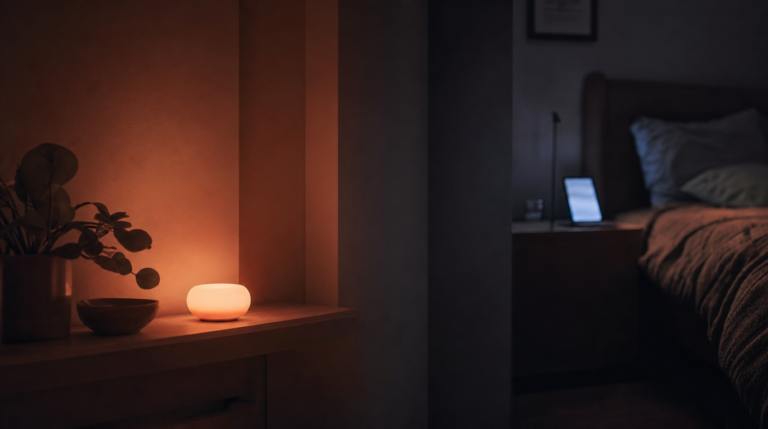
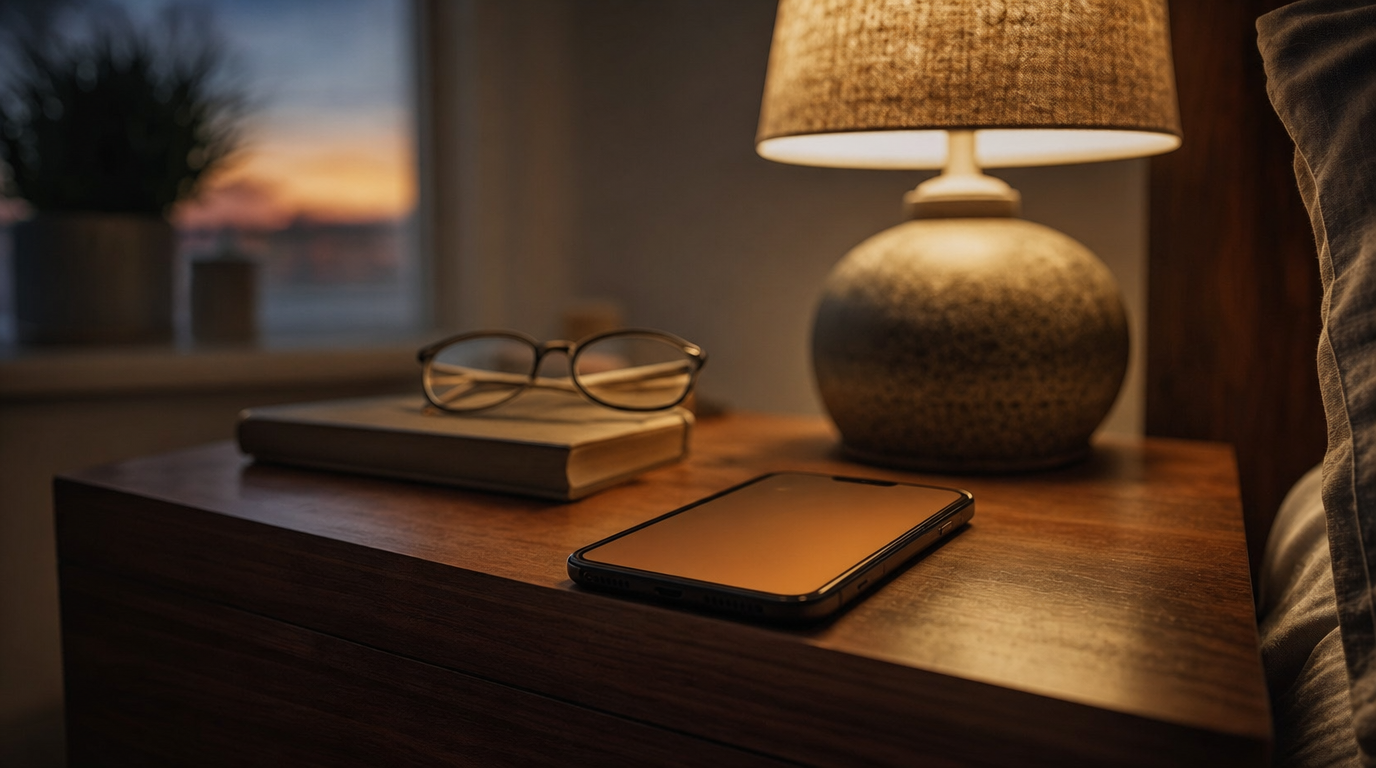
- If you need a light for reading, consider warm, low-level bedside lighting; see guidance on Best Bedside Lighting for Sleep.
Tech settings vs. behavior: which matters more?
Device settings like night mode and blue light filters can help, but they’re just one piece of the puzzle. Behavior—when you use screens, what you do on them, and how bright they are—often has a bigger impact for many people. Combining sensible settings with consistent habits usually works better than relying on a single fix.
When to see a doctor
If difficulty falling or staying asleep persists despite reasonable sleep habits and changes to evening screen use, it may be worth discussing with a healthcare professional. Ongoing sleep problems can have many causes and a clinician can help explore those safely.
RestWell HQ content is for general education and is not a substitute for medical advice. For details on our editorial process and content limits, see our Editorial Policy. For our medical disclaimer, see Medical Disclaimer.
Common mistakes
- Assuming night mode alone eliminates all sleep effects from screens.
- Keeping screen brightness high while using warm color settings.
- Using stimulating apps or shows during the wind-down period.
- Relying on sporadic changes instead of a consistent pre-sleep routine.
- Ignoring notifications that repeatedly interrupt your wind-down.
FAQ
Does night mode block all the blue light from screens?
No. Night mode reduces blue wavelengths and may help, but it does not remove all blue light and does not address other factors like brightness and content.
Is it enough to just lower screen brightness?
Lowering brightness can reduce the overall impact on alertness, and when combined with night mode and behavioral steps it can be helpful. Brightness alone may not prevent stimulation from engaging content.
Are some screens or displays better for evening use?
Some people notice differences between display types and device settings, but individual sensitivity varies. Focusing on reducing brightness, limiting stimulating content, and keeping a wind-down routine is often more important than the specific screen type.
Can I read on my tablet at night if night mode is on?
Reading with night mode on may be less disruptive than full-brightness color displays, but if the material is engaging it can still interfere with falling asleep. Consider calmer reading and a gradual transition away from screens before bed.
Are red or amber lights better than blue at night?
Warmer tones like red or amber are generally considered less likely to signal wakefulness than blue light. For guidance on the relative effects of different hues, see Red Light vs Blue Light Before Bed.
Bottom Line
Night mode can reduce some blue light and be part of a sleep-friendly evening, but it isn’t a complete solution. For many people, the combination of lower brightness, reduced stimulating content, fewer interruptions, and a consistent wind-down routine matters more than color settings alone. Learn more about how light affects sleep in Does Blue Light Affect Sleep? and practical bedside lighting tips in Best Bedside Lighting for Sleep.