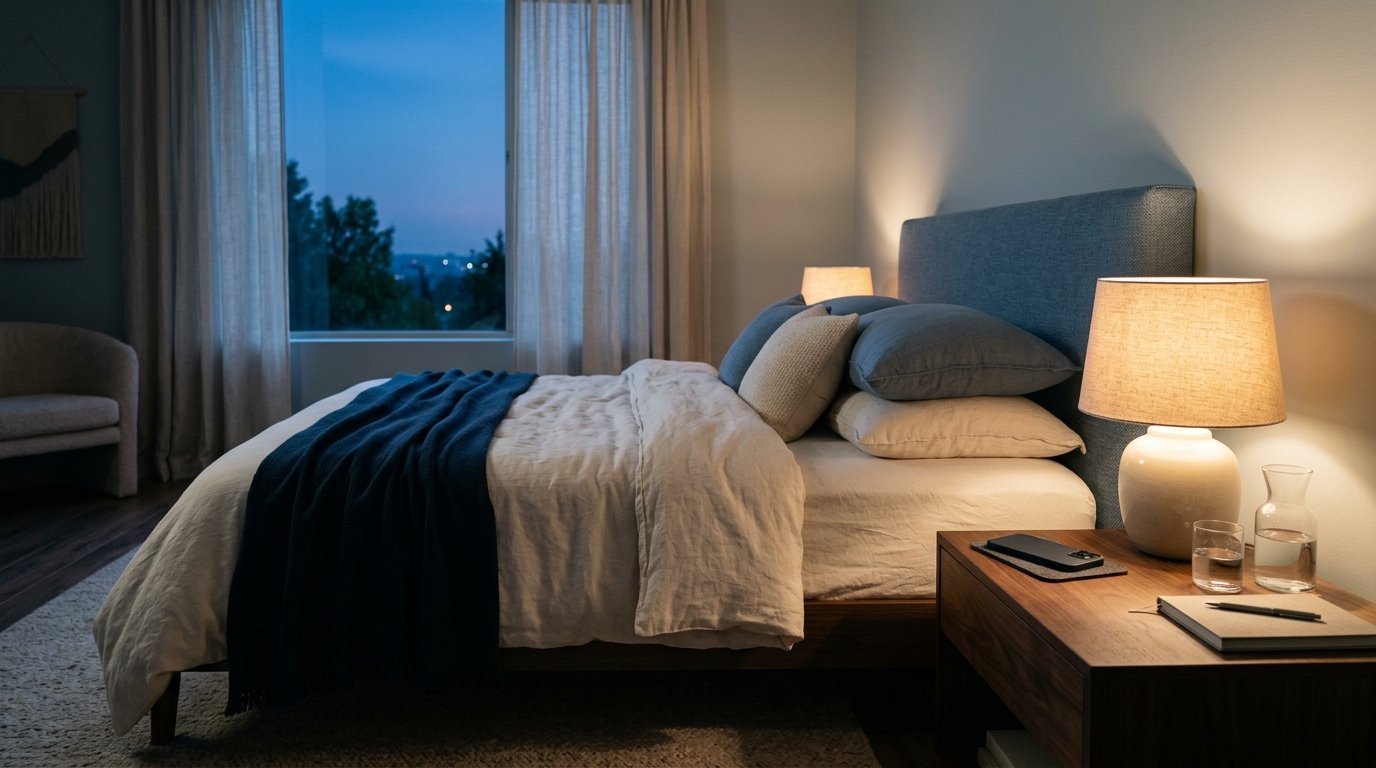
Does Blue Light Affect Sleep?
Blue light may affect sleep for some people, but it is rarely the only bedtime factor. Screens can also keep you awake because of brightness, stressful content, work messages, fast scrolling, and the simple fact that they delay bedtime.
A useful screen routine is not about fear. It is about reducing the parts of your evening that keep your brain alert when you want the night to slow down.
Quick Answer
Blue light can be one reason screens feel disruptive at night, but screen timing, brightness, content, and emotional stimulation matter too. If you use a phone, laptop, tablet, or TV close to bedtime, test a calmer routine: dim the screen, stop work earlier, avoid stressful content, set a clear stopping point, and keep the bedroom focused on sleep.
Blue light vs. screen habits
It is easy to blame blue light for every bad night. That can miss the bigger picture. A phone in bed may keep you awake because it is bright, but also because it delivers messages, news, work, entertainment, and decisions at the exact time your routine should become simpler.
If you are reviewing screens as part of your sleep routine, pair this article with the Sleep Hygiene Guide. Sleep hygiene looks at light, caffeine, bedroom comfort, screens, stress, and timing together.
Screen habit table
| Screen habit | Why it may matter | What to try |
|---|---|---|
| Bright phone in bed. | Light and attention stay high. | Dim the screen and move use earlier. |
| Work messages at night. | Your mind stays in problem-solving mode. | Create a work cutoff when possible. |
| Fast scrolling. | New content keeps attention engaged. | Set a stopping point before bed. |
| Stressful news or conflict. | Emotional activation may carry into bed. | Choose calmer content or none. |
| TV on until sleep. | It may delay sleep timing or fragment the wind-down routine. | Use a timer or move the TV earlier. |
1. Timing matters
The closer screen use gets to bedtime, the more it can blend with your sleep routine. If you are trying to fall asleep while still reading messages, watching intense content, or finishing tasks, your mind may not have a clear transition.
If falling asleep is your main challenge, read How to Fall Asleep Faster for a practical routine focused on reducing bedtime friction.
2. Brightness matters
Brightness is part of the issue. A bright screen in a dark room can feel more intense than the same screen earlier in the evening. Lowering brightness, using warmer display settings, and keeping lights softer may help make the night feel calmer.
Do not treat settings as a cure. A phone set to warm mode can still keep you awake if the content is stressful or endless.
3. Content matters
Not all screen time is equal. A calm, time-limited activity may be very different from urgent work, a heated conversation, breaking news, or fast social media scrolling.
Ask a practical question: does this screen use make me feel calmer, or does it make me want to keep going? If it keeps pulling you in, move it earlier.
4. The bedroom boundary matters
Using a phone in bed can train the bedroom to feel like a place for decisions, messages, and entertainment. That does not mean phones are forbidden. It means you should notice whether the bed has become a scrolling location instead of a sleep location.
For bedroom comfort beyond screens, read Best Bedroom Temperature for Sleep.
5. Screens are not always the main cause
If you remove screens and still cannot sleep, look at the rest of the routine. Caffeine, stress, irregular timing, alcohol, room discomfort, and worries about sleep can all matter. For a broader troubleshooting guide, read Why Do I Wake Up Tired? or Does Coffee Affect Sleep?.
6. Make the easiest screen change first
You do not have to redesign your whole evening at once. Pick the screen habit that creates the most friction. For some people, that is work email. For others, it is scrolling in bed, watching one more episode, or checking messages every few minutes.
Change the easiest high-impact habit first. Move the phone charger away from the bed, set a TV timer, turn off nonessential notifications, or choose a calmer stopping point. The goal is not to prove screens are bad. The goal is to see whether your bedtime feels less activated when the most stimulating screen habit is reduced.
7. Keep the bedroom signal clear
If the bed becomes the place where you work, scroll, argue, shop, and watch intense content, sleep has to compete with many other cues. A clearer bedroom routine can make the transition easier. That might mean keeping the phone on a table, using a regular alarm clock, or doing the last screen check outside the bed.
Small boundaries are often enough for a first test. You might keep entertainment in the living room, charge the phone across the room, or decide that the bed is for quiet reading and sleep rather than active scrolling.
Bedtime screen checklist
- Choose a screen cutoff or slowdown time.
- Move work, messages, and stressful content earlier.
- Dim screen brightness in the evening.
- Use warmer display settings if they help your routine feel calmer.
- Keep the phone off the bed when practical.
- Use a timer for TV or streaming.
- Track whether sleep timing changes over one week.
A simple 3-night experiment
Instead of making a permanent rule, run a short experiment. For three nights, make screens less intense during the final part of the evening. Keep caffeine, bedtime, and wake time as steady as practical so the comparison is useful.
- Night 1: Dim screens and stop work earlier.
- Night 2: Keep the phone off the bed.
- Night 3: Replace late scrolling with a calmer activity.
After three nights, ask whether you fell asleep more easily, felt less wired, or simply noticed a clearer wind-down routine. If not, review other factors before blaming screens alone.
For a better comparison, avoid changing caffeine, bedtime, and wake time at the same time. If everything changes at once, it becomes harder to know whether screens made a difference.
When to get personalized guidance
If sleep problems continue, feel severe, or affect daily life, consider speaking with a qualified healthcare professional. RestWell HQ content is for general education and should not replace medical advice. See the Medical Disclaimer and Editorial Policy.
FAQ
Does blue light from phones affect sleep?
It may for some people, but phones can also affect sleep through brightness, timing, content, notifications, and delayed bedtime.
Are blue light glasses necessary?
This article does not recommend products. Start with free routine changes first: dim screens, move stressful use earlier, and keep the phone away from bed when practical.
Is TV before bed bad?
It depends on the person and the content. If TV delays bedtime or keeps you engaged, use a timer or move it earlier.
Should I stop all screens before bed?
Not necessarily. The better question is which screen habits keep you alert or delay sleep. Start by changing those.
What if I still can’t sleep after reducing screens?
Review caffeine, stress, schedule consistency, bedroom comfort, and whether the problem is persistent enough to discuss with a professional.


3 Comments