
Does a Weighted Blanket Help You Sleep?
Quick Answer
A weighted blanket may help you sleep if you find gentle, even pressure across your body calming, or if you tend to feel restless, fidgety, or “wired” at bedtime. The idea behind weighted blankets is that distributed weight can feel grounding or soothing for some people, similar to the calming effect some people associate with a firm hug or swaddle. For those people, a weighted blanket may make it easier to settle down and stay still.
A weighted blanket is not a cure for insomnia, anxiety, chronic pain, or other persistent sleep issues, and it is not the right choice for everyone. Some people find the weight uncomfortable, restrictive, or overheating rather than calming. It also is not appropriate for every person or situation, including some children and people with certain health conditions. Treat it as one optional comfort tool, test it honestly, and prioritize comfort and safety over marketing claims.
If sleep problems are persistent, severe, or affecting your daily life, or if you are considering a weighted blanket for a child, an older adult, or someone with a medical condition, consider speaking with a qualified healthcare professional first. This article is general education, not medical advice.
Table of Contents
- How a Weighted Blanket May Help
- When It May Be Useful
- Weighted Blanket vs Regular Blanket
- Choosing Weight, Size, Material, and Fit
- Who May Dislike It, and When to Avoid It
- How to Use a Weighted Blanket
- Cleaning and Care
- Weighted Blanket Test Checklist
- How This Fits Into a Broader Sleep Routine
- FAQ
How a Weighted Blanket May Help
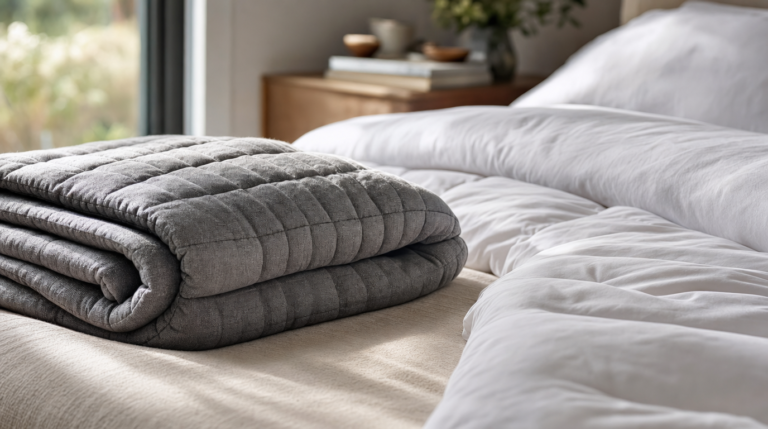
A weighted blanket is filled with material, often glass beads or plastic pellets, sewn into a grid pattern so the weight spreads evenly across your body instead of bunching in one spot. The general idea is that this even pressure may feel calming or grounding for some people, in a way that can make it easier to lie still and unwind at bedtime. Some people describe the sensation as similar to a firm, steady hug.
Some people describe this kind of steady, even pressure as soothing, and it is often talked about in terms of a calming sensory input, though the exact reasons why it feels good to some people and not others are not something this article can settle. The practical takeaway for most readers is simpler: some people find steady, even weight relaxing, and others find it uncomfortable or restrictive. Neither reaction is wrong. It is a matter of individual preference and sensory tolerance.
A weighted blanket only addresses one part of the sleep picture: physical comfort and a sense of calm at bedtime. If your sleep is being disrupted by caffeine timing, an irregular schedule, screens, noise, or an uncomfortable room temperature, a weighted blanket may help you feel more settled without solving the underlying issue. For a broader routine, see the Sleep Hygiene Guide and Night Routine for Better Sleep.
When It May Be Useful
A weighted blanket may be worth trying if you notice you feel restless, fidgety, or unable to settle once you get into bed, even when you are physically tired. Some people also reach for one during stressful periods, when winding down feels harder than usual, or simply because they enjoy the feeling of steady weight while reading or relaxing before sleep.
It may also appeal to people who like the feeling of being tucked in tightly, or who find a heavier comforter more comfortable than a light one regardless of temperature. If you already gravitate toward heavier bedding, a weighted blanket may simply formalize a preference you already have.
A weighted blanket is a personal comfort choice, not a guaranteed fix. Some people try one expecting a dramatic change and are disappointed when the effect is subtle or absent. A more realistic expectation is that it may make the physical act of settling into bed feel calmer for some people, some of the time.
Weighted Blanket vs Regular Blanket
A regular blanket mainly provides warmth. A weighted blanket adds deliberate, evenly distributed weight on top of whatever warmth it provides. The right choice depends on whether you are looking for a calming sensation, whether you run warm at night, and whether you can comfortably move under a heavier layer.
| Option | Best for | Main advantage | Main limitation |
|---|---|---|---|
| Weighted blanket | People who find even pressure calming, restless sleepers, stress-prone evenings | May feel grounding or soothing for some people | Can feel restrictive, heavy, or hot; not for everyone |
| Regular blanket or comforter | General warmth without added pressure | Lightweight, easy to adjust, widely available | Does not offer the pressure sensation some people want |
| Weighted blanket with cooling cover | People who like the pressure but run warm | Combines weight with more breathable fabric | Often costs more; still adds bulk |
| Layered lighter blankets | People who want adjustable warmth without fixed weight | Flexible and easy to remove layer by layer | Does not replicate even, fixed pressure |
If your main issue is a bedroom that runs too warm, address that first. See Best Bedroom Temperature for Sleep before adding a heavier layer that could make a warm room feel worse.
Choosing Weight, Size, Material, and Fit
The right weighted blanket is the one that feels comfortably calming, not the heaviest one available. Choosing well means thinking about weight relative to your body, the size you actually need, and the material you can tolerate night after night.
Weight
Manufacturers often suggest a weight range based on body size, and product listings usually spell out which weight suits which size range — check the specific product’s guidance rather than assuming one rule applies across brands. If you are unsure where to start, choosing a lighter option first and seeing how it feels is a reasonable approach; you can always try a heavier one later if you want more pressure.
Size
Weighted blankets are often sized to drape over the body rather than the entire bed, since covering the whole mattress would add unnecessary weight. Consider whether you want it to cover just yourself, or whether it needs to work for two people sharing a bed, which usually means a different weight and size approach for each person rather than one shared blanket.
Material and Fill
Fill materials vary, and so does outer fabric. A breathable cotton or bamboo-style cover may feel better for warm sleepers, while a plush or minky cover may feel cozier in a cool room. The fill itself, whether glass beads or plastic pellets, mainly affects how the weight feels distributed and how the blanket drapes. Choose fabric based on your temperature preference and skin sensitivity rather than any single “best” material claim.
Fit With Your Sleep Position
Side sleepers and people who change positions frequently may find a heavier blanket harder to move under than back sleepers do. If you shift positions often during the night, consider a lighter weight or a size that leaves more room to move.
Who May Dislike It, and When to Avoid It
A weighted blanket is not for everyone. Some people find the pressure restrictive rather than calming, especially if they dislike tight bedding, tucked-in sheets, or anything that limits movement. Others find it too warm, too heavy to reposition, or simply distracting. If a weighted blanket makes you feel trapped, anxious, or more awake, it is not doing its job, and there is no reason to push through discomfort.
As a general matter of prudent caution, weighted blankets are not recommended for infants or very young children, and anyone with a respiratory, circulatory, or mobility condition that could make it harder to reposition the blanket or breathe comfortably under added weight should check with a doctor before using one. This is general caution rather than a specific medical claim, and it is not a substitute for guidance from a healthcare professional who knows your situation.
This article is general education, not medical advice. If you are considering a weighted blanket for a child, an older adult, or anyone with a health condition, or if you have any concern about whether added weight is appropriate for your situation, speak with a qualified healthcare professional before use.
How to Use a Weighted Blanket Without Overthinking It
Use the blanket as part of a consistent wind-down routine rather than something you only reach for on the worst nights. Lay it over the bed ahead of time so it is ready when you are, and consider using it during a calming pre-sleep activity like reading, rather than waiting until you are already trying to force sleep.
Give it several nights before deciding whether it helps. A single night can be misleading, since novelty, an unrelated bad night, or an unfamiliar sensation can all skew a first impression. If it still feels uncomfortable after a fair trial, it is reasonable to conclude it is not the right fit for you.
If it feels too heavy, try a lighter weight or use it only over your lower body. If it feels too hot, look for a more breathable cover or use it only in cooler months. If it feels restrictive when you change positions, a smaller or lighter option may work better than forcing yourself to adapt.
Cleaning and Care
Weighted blankets are bulkier and heavier than standard bedding, which can make cleaning more involved. Many come with a removable, washable outer cover, while the weighted insert itself may require spot cleaning or a large-capacity washer rather than a standard home machine. Always follow the specific care instructions for your blanket, since fill material and construction affect what is safe.
Using a removable cover, if available, can make regular cleaning far more manageable and protects the weighted insert from frequent washing. If your blanket does not have a cover, consider adding one, since it can extend the life of the product and simplify maintenance.
Before buying, think honestly about whether you will keep up with cleaning a heavy item. A blanket that feels great but is inconvenient to wash may end up used less often than expected.
Weighted Blanket Test Checklist
- Confirm a weighted blanket is appropriate for your age, mobility, and health situation before use.
- Choose a weight based on comfort, not just the heaviest option available.
- Consider fabric and breathability if you tend to sleep warm.
- Check that you can reposition the blanket comfortably if you move during sleep.
- Test it for several nights before judging whether it helps.
- Notice heat, restriction, and how easy it is to fall asleep and move under it.
- Use a removable cover and follow care instructions for cleaning.
- Stop using it if it consistently feels uncomfortable, restrictive, or anxiety-inducing.
- Seek professional guidance for persistent, severe, or concerning sleep problems, or before use with children or anyone with a health condition.
How This Fits Into a Broader Sleep Routine
A weighted blanket can be a useful comfort tool, but it works best alongside the rest of a sensible sleep routine rather than as a stand-alone fix. If your bedroom runs hot, your schedule is inconsistent, or you are consuming caffeine late in the day, a weighted blanket has too much work to do on its own.
Pair it with the basics: keep the room at a comfortable temperature, build a predictable wind-down, and address bigger disruptors first. Start with the Sleep Hygiene Guide for a broad overview, check Best Bedroom Temperature for Sleep if you tend to overheat at night, and use Night Routine for Better Sleep to build the wind-down habits a weighted blanket can support.
FAQ
Does a weighted blanket help everyone sleep better?
No. A weighted blanket may help people who find even, gentle pressure calming. It may not help, and can even feel worse, for people who dislike restriction, heat, or heaviness in bed.
How heavy should a weighted blanket be?
There is no single number that works for everyone. Check the specific product’s weight guidance, since this can vary by manufacturer, and consider starting with a lighter option if you are new to weighted blankets. You can always try a heavier one later if you find you want more pressure.
Can a weighted blanket cure insomnia or anxiety?
No. A weighted blanket is a comfort tool, not a treatment or cure. If insomnia-like symptoms or anxiety are persistent or affecting your life, talk with a qualified healthcare professional.
Are weighted blankets safe for children?
As a general precaution, weighted blankets are not recommended for infants and very young children, and any use with children should be discussed with a pediatrician or other qualified healthcare professional first.
Will a weighted blanket make me too hot at night?
It can for some people, since added weight and fill material can trap heat. Choosing a breathable cover and a lighter weight can reduce this issue, but if you already sleep hot, test carefully or consider a lighter comfort option instead.
How long does it take to know if a weighted blanket is working?
Give it several nights rather than judging from a single night, since novelty and unrelated bad nights can skew a first impression. If it still feels uncomfortable after a fair trial, it is reasonable to try a different weight or move on.
Bottom Line
A weighted blanket may help you sleep if you are someone who finds even, gentle pressure calming, especially during restless or stressful evenings. It is not a guaranteed fix, it is not right for everyone, and it is not appropriate in every situation, including for infants, young children, and some health conditions without professional guidance. Choose a comfortable weight, prioritize breathable material if you run warm, test it honestly for several nights, and treat it as one practical tool inside a broader, consistent sleep routine.

One Comment