Why Do I Sleep Better on Vacation Than at Home?
It is a common observation: a hotel bed, a rental, or a relative’s guest room somehow delivers deeper, more satisfying sleep than your own bed at home. This usually is not a coincidence, and it is rarely about the mattress alone. Vacation sleep tends to remove several small disruptors at once, while also changing your routine and stress levels in ways that are easy to overlook.
This guide walks through the factors that most often explain the difference, which ones you can realistically bring home, and when better sleep away from home might be pointing to something worth addressing in your everyday environment.
Quick Answer
Vacation sleep often improves because several things change at once: less daily stress and fewer reminders of work or chores, a different temperature and light setup, and often a more relaxed, consistent schedule. None of these are unique to travel — many can be recreated at home with some adjustment, though a change of scenery does more of this automatically than any single fix.
Table of Contents
- Why environment changes can improve sleep
- The role of stress and mental associations with home
- Schedule and routine differences on vacation
- What you can realistically bring home
- When better vacation sleep points to a home sleep problem
- Common mistakes
- FAQ
Why environment changes can improve sleep
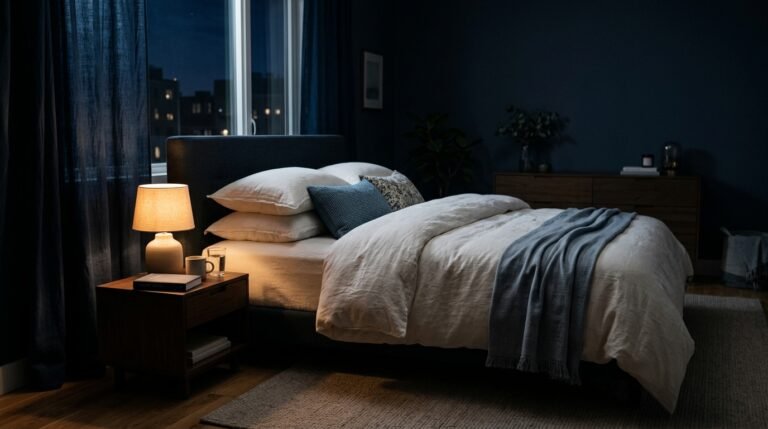
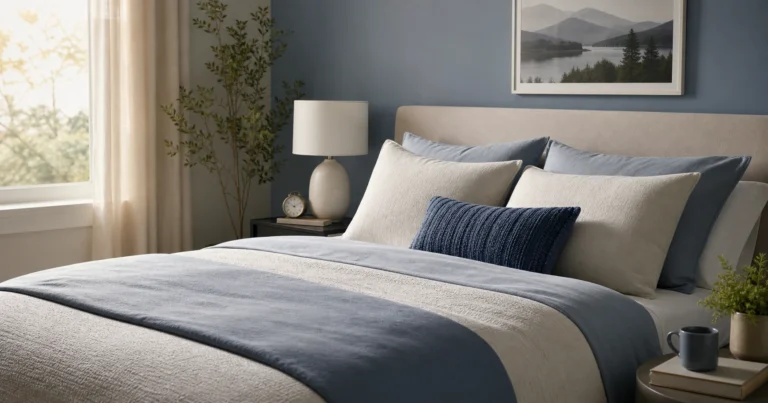
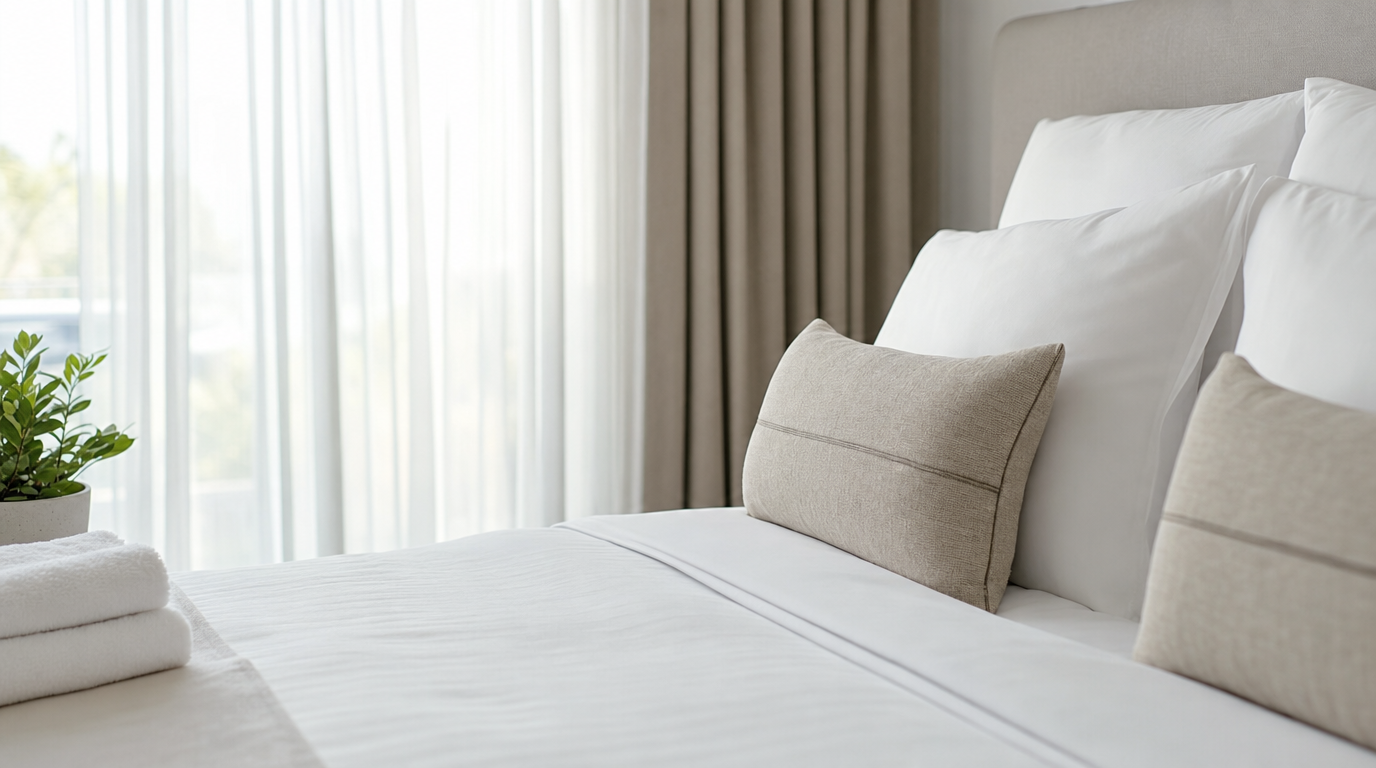
A hotel or rental room often differs from your bedroom in several small ways: a cooler thermostat setting, blackout curtains, fewer light sources, less clutter, and no visible reminders of unfinished tasks. Any one of these alone might not matter much, but many people find that several small improvements stacked together add up to a noticeably better night.
Temperature and darkness are two of the more commonly cited factors. If your bedroom at home tends to run warm or lets in more light than you realize, see Best Bedroom Temperature for Sleep and How to Make Your Bedroom Darker for Better Sleep for specifics.
The role of stress and mental associations with home
Home is where the laundry, the inbox, and tomorrow’s to-do list all live. Many people describe lying in their own bed and mentally drifting toward chores or obligations, even without deciding to. On vacation, those cues are simply absent, which can make it easier for the mind to settle.
This is a comfort and behavioral pattern, not a diagnosis. If your bedroom has become associated with work, screens, or stress rather than rest, that association itself can make falling asleep harder, independent of the room’s physical qualities.
Schedule and routine differences on vacation
Vacations often come with a more relaxed but sometimes more consistent schedule — no early alarm, more daylight exposure, more physical activity, and fewer late-night screen sessions out of habit. Some people also drink less caffeine or alcohol on a different schedule while traveling, which can shift sleep quality without them noticing the cause.
None of this means vacation sleep is inherently “better” in a measurable sense — it is often just less disrupted. For more on how caffeine timing affects sleep specifically, see Does Coffee Affect Sleep?
What you can realistically bring home
- Set your bedroom temperature closer to what felt comfortable on your trip, generally on the cooler side.
- Reduce light sources at night, including any indoor light leaks, using blackout curtains or a sleep mask.
- Keep work materials, laundry, and visible clutter out of the bedroom to reduce mental association with unfinished tasks.
- Build a short wind-down routine that does not involve screens, similar to how an evening away from home often naturally excludes work notifications.
- Notice your caffeine and alcohol timing and see whether adjusting it changes how you sleep at home.
For a broader routine to build these habits consistently, see the Sleep Hygiene Guide.
When better vacation sleep points to a home sleep problem
Occasional better sleep while traveling is common and not usually a concern on its own. It is worth paying closer attention if sleep at home is consistently poor, if you dread going to bed in your own room, or if the gap between vacation sleep and home sleep feels dramatic and persistent rather than a pleasant change of pace. That pattern can be a useful signal that something specific about your home environment or routine — not just the absence of vacation — deserves a closer look.
If sleep at home remains poor despite adjusting environment and routine, or if you suspect an underlying sleep or mood condition, a doctor can evaluate that more thoroughly than general sleep content can. Read the Medical Disclaimer and Editorial Policy for more detail.
Common mistakes
- Assuming it must be the mattress, without considering temperature, light, noise, or stress differences.
- Changing everything about the bedroom at once, making it hard to tell what actually helped.
- Ignoring how much less caffeine, alcohol, or screen time you may be consuming while traveling.
- Overlooking that a more relaxed schedule, not the location itself, may be doing most of the work.
- Treating consistently poor sleep at home as normal instead of testing changes or seeking evaluation.
FAQ
Is it normal to sleep better on vacation than at home?
Yes, this is a common experience. It usually reflects a combination of environmental changes (temperature, light, noise) and reduced daily stress rather than any single cause.
Could it just be a different mattress or pillow?
It’s possible, but mattress and pillow differences are usually only part of the picture. Temperature, light exposure, noise levels, and reduced stress often play at least as large a role.
How can I make my bedroom feel more like a vacation room?
Common starting points include lowering the room temperature slightly, blocking out more light, removing visible clutter and work items, and building a short screen-free wind-down routine before bed.
Does less stress on vacation really affect sleep that much?
Many people report this as a major factor. A bedroom that is mentally associated with rest rather than obligations can make it easier to fall asleep and stay asleep.
When should poor sleep at home be evaluated by a doctor?
If sleep at home stays poor after adjusting environment and routine, or if you suspect an underlying sleep or mood condition, it is worth discussing with a doctor rather than continuing to troubleshoot alone.
Bottom Line
Vacation sleep usually feels better because of a stack of small changes — temperature, light, noise, routine, and reduced stress — rather than any single factor. Many of these are worth testing at home, one at a time, to see how much of that vacation-quality sleep you can recreate.
Start with the environment: see Best Bedroom Temperature for Sleep and How to Make Your Bedroom Darker for Better Sleep. For a broader nightly routine, see the Sleep Hygiene Guide.