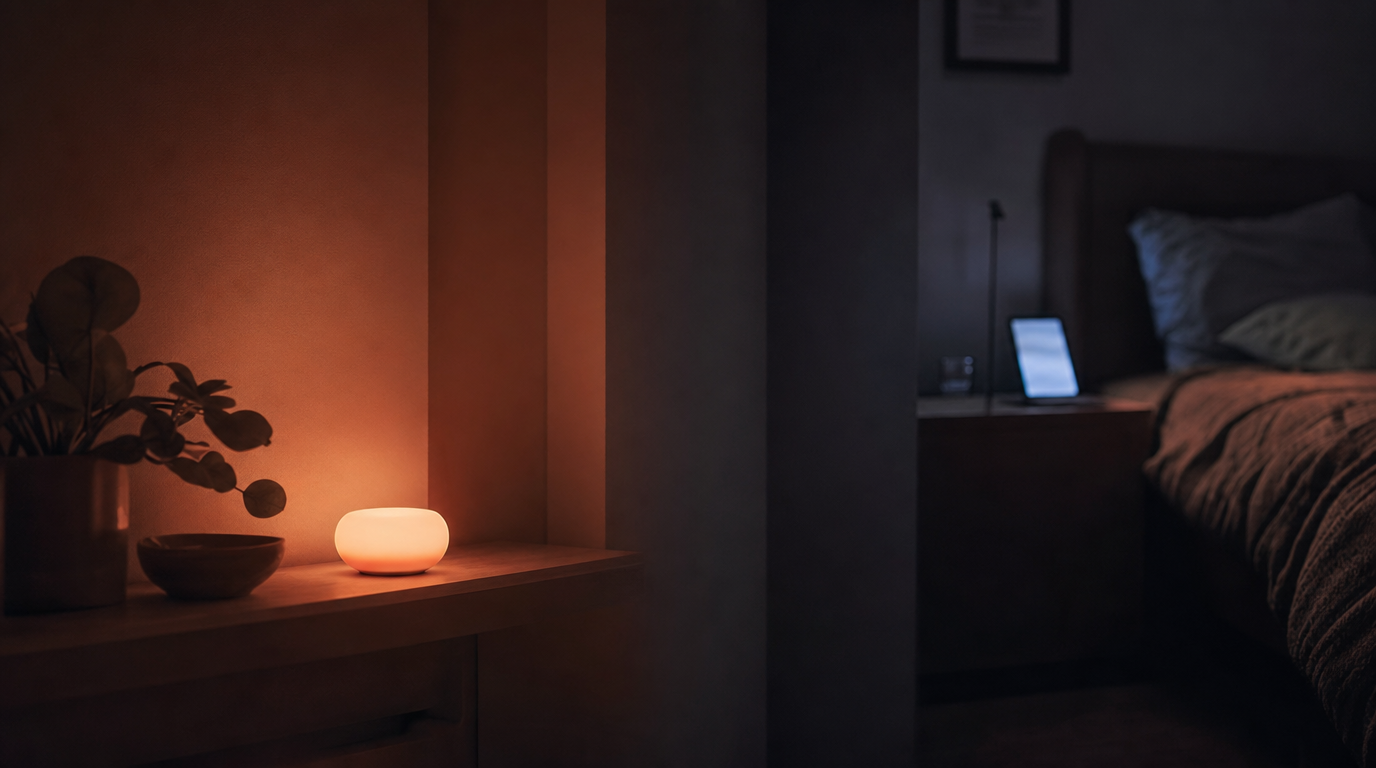
Red Light vs Blue Light Before Bed
Quick Answer
Red-toned light is often marketed and discussed as a gentler option for nighttime use, while blue-toned light is more commonly associated with alertness and daytime brightness. That framing shows up constantly in nightlight ads, sleep blogs, and social media, but the underlying biology is less settled than the marketing suggests. This article explains the common claims, what is actually well-established versus still uncertain, and practical, low-risk ways to think about light color in the evening without treating it as a fix on its own.
This article is general education, not medical advice. Light color is one small piece of a much bigger sleep picture that includes screen habits, room darkness, temperature, and routine consistency.
Table of Contents
- What People Commonly Say About Red Light and Blue Light at Night
- What Is Actually Well-Established vs Less Certain
- Practical Ways People Use Red-Toned Light at Night
- Where Blue Light Commonly Comes From in a Bedroom
- Who Might Not Need to Worry About This
- Common Mistakes
- FAQ
What People Commonly Say About Red Light and Blue Light at Night
If you’ve shopped for a nightlight or read a sleep blog in the last few years, you’ve likely seen the same basic pitch: red light is “sleep-friendly” and blue light is “sleep-disrupting.” This idea shows up in product descriptions, wellness content, and casual advice everywhere, and it’s worth understanding where it comes from before deciding what to do with it.
The common version of the claim goes roughly like this: light toward the blue end of the visible spectrum is said to more strongly affect the body’s internal clock because it resembles daytime sky light, while light toward the red end is said to be a weaker signal to that same system, making it a gentler choice for a dark room at night. This is the framing you’ll see repeated across nightlight marketing, sleep-hygiene articles, and social media posts, often stated with more confidence than the underlying research fully supports.
It’s important to separate “this is a common claim in marketing and casual discussion” from “this is a settled scientific fact.” The two get blurred together often, and this article tries to keep them apart. For the broader question of how screens and blue light interact with sleep, see Does Blue Light Affect Sleep?, which covers that topic in more depth.
What Is Actually Well-Established vs Less Certain
Being transparent about uncertainty is more useful than repeating a tidy claim that oversimplifies the science. Here’s a general breakdown of what tends to be more solid versus more debated in this space.
Reasonably well-established: Light in general — regardless of exact color — can influence how alert or drowsy a room feels, and very bright light of almost any color can make it harder to wind down compared to dim light. It’s also broadly accepted that the eye contains specialized cells involved in detecting light for non-visual purposes, such as helping regulate the body’s internal clock. Exactly how those cells respond across different parts of the light spectrum is an area of ongoing vision-science research, and the finer details aren’t something this guide can verify or spell out with confidence — treat specific spectrum-sensitivity claims you see elsewhere with some skepticism unless they cite real research.
Less certain or still debated: Exactly how much red-toned light affects the body’s internal clock compared with blue-toned light at the brightness levels typically used in a home nightlight, and whether that difference is meaningful for most people’s actual sleep, is less settled than marketing claims suggest. Precise claims about melatonin timing or melatonin suppression tied to specific light colors are common online, but the exact mechanisms and numbers behind them are not something this guide can verify or confirm in detail. If you see a specific percentage or number attached to a claim like “blue light suppresses melatonin by X,” treat that as a claim to verify rather than an established fact.
In practice, this means red-toned light is a reasonable, low-risk thing to try if you’re curious, but it isn’t a proven fix, and it shouldn’t replace more consistently supported basics like a dark, cool, quiet room and a steady bedtime routine.
Practical Ways People Use Red-Toned Light at Night
If you want to experiment with red-toned light in the evening, these are common, low-effort approaches people use. None of these require a specific brand or product recommendation.
- A dim red or amber nightlight for hallway or bathroom trips, so you’re not exposed to a bright white or blue-toned light if you wake up during the night.
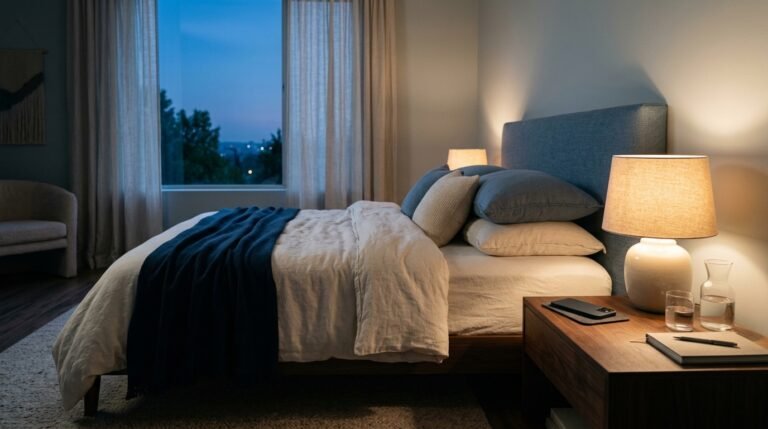
- A warm-toned lamp for the last hour before bed instead of overhead white lighting, simply because dim, warm light tends to feel more relaxing to most people regardless of the exact biological mechanism.
- Dimmer switches or lower-wattage bulbs in warm color temperatures, used generally in the evening rather than only right before bed.
- Keeping any nightlight dim rather than bright, since overall brightness matters alongside color.
If you’re shopping for an actual fixture or nightlight and want practical buying guidance — what to look for, brightness levels, placement — see Best Bedside Lighting for Sleep, which covers that in detail.
Where Blue Light Commonly Comes From in a Bedroom
Blue-toned light in a typical bedroom usually comes from a fairly short list of sources, and being aware of them can be more useful than focusing only on nightlight color.
- Phone, tablet, and laptop screens, especially at higher brightness settings.
- TVs, particularly when viewed up close in a dark room.
- Some LED nightlights and bulbs that are labeled “white” or “daylight,” which often skew cooler and bluer than a warm-white or amber option.
- Overhead LED ceiling lights set to a cool or daylight color temperature rather than warm white.
Simple ways to reduce exposure from these sources include lowering screen brightness in the evening, using a device’s built-in night or warm-color display mode, switching bedroom bulbs to warm white instead of daylight or cool white, and generally dimming overhead lights in the hour or so before bed. None of these require special equipment — they’re mostly settings and habits. For a broader look at how screens specifically factor into sleep, see Does Blue Light Affect Sleep?.
Who Might Not Need to Worry About This
Not everyone needs to think carefully about light color at night. If you fall asleep easily, sleep through the night, and wake up feeling reasonably rested, light color is unlikely to be a meaningful lever for you, and there’s little reason to add a new routine on top of something that already works. Light color is also just one of many factors that can affect sleep, alongside screen time overall, caffeine, stress, room temperature, and sleep schedule consistency — if you’re troubleshooting a real sleep problem, those broader factors are usually worth checking first. If you have a diagnosed circadian rhythm disorder, migraines triggered by light, or another light-sensitivity condition, it’s worth talking with a healthcare professional about what lighting setup works best for you rather than relying on general tips like the ones in this article.
Common Mistakes
- Treating light color as a fix on its own. Switching to a red nightlight while still scrolling a bright phone in bed skips the bigger factor.
- Assuming any red-labeled product automatically helps. Brightness, timing, and overall evening habits matter as much as the color itself.
- Ignoring overall brightness. A very bright red light can still feel stimulating; dimness matters alongside color.
- Overlooking screens as the biggest blue-light source. A warm bedroom lamp doesn’t offset an hour of bright phone use right before bed.
- Expecting a dramatic, guaranteed effect. Individual response to light color varies, and it’s a minor adjustment, not a proven cure for sleep problems.
- Skipping the basics. A consistent bedtime, a dark and cool room, and reduced screen time in the last hour tend to matter more than nightlight color alone. See Night Routine for Better Sleep for a fuller routine framework.
FAQ
Is red light actually better than blue light before bed?
Red-toned light is commonly marketed and discussed as a gentler nighttime option compared with blue-toned light, but the science behind exactly how much difference light color makes at typical home lighting levels is less settled than that marketing suggests. It’s reasonable to try as a low-risk preference, but it isn’t a proven guaranteed improvement for everyone.
Does red light really not affect sleep at all?
This article doesn’t claim red light has zero effect on sleep, because that specific claim needs stronger sourcing than casual sleep content usually provides. What can be said is that red-toned light is generally discussed as less stimulating than bright blue-toned or white light, largely based on how it’s perceived and commonly marketed rather than a fully settled biological mechanism.
What color night light is best for sleep?
Warm tones like red, amber, or soft orange are the most commonly recommended options for a bedroom nightlight, largely because they tend to feel dimmer and less stimulating than bright white or blue-toned light. Keeping any nightlight dim overall tends to matter as much as the specific color.
Should I stop using my phone at night if I already use a red nightlight?
A red nightlight doesn’t offset bright phone or screen use right before bed. If reducing blue light exposure is your goal, screen brightness and screen time in the last hour before bed are generally considered the bigger factors to address first.
Do I need a special red light bulb, or is any warm light fine?
There’s no requirement for a specific specialized product. Any warm-toned, dim light source — a warm-white bulb, an amber nightlight, or a low-wattage lamp — follows the same general idea that’s commonly discussed for evening lighting.
Can changing light color alone fix insomnia or trouble sleeping?
No. Light color is one small factor among many that can influence sleep, including routine consistency, stress, caffeine, and room environment. If you have ongoing trouble sleeping, it’s worth looking at those broader factors and speaking with a healthcare professional rather than relying on nightlight color alone.
Bottom Line
Red-toned light is widely marketed and discussed as a gentler nighttime choice compared with blue-toned light, but that framing runs ahead of what’s fully settled in the research, especially at the brightness levels used in typical home nightlights. It’s a reasonable, low-risk thing to try if you’re curious, and dim warm lighting in the evening is a sensible habit either way — but it works best alongside the basics, not as a replacement for them: a dark, cool room, a consistent bedtime, and reduced screen time in the last hour before sleep. For the broader question of how screens and blue light interact with sleep, see Does Blue Light Affect Sleep?. If you’re shopping for an actual bedside light or nightlight, see Best Bedside Lighting for Sleep. And for a fuller evening routine that puts light color in context, see Night Routine for Better Sleep.

2 Comments