White Noise Machine vs Earplugs for Sleep
Quick Answer
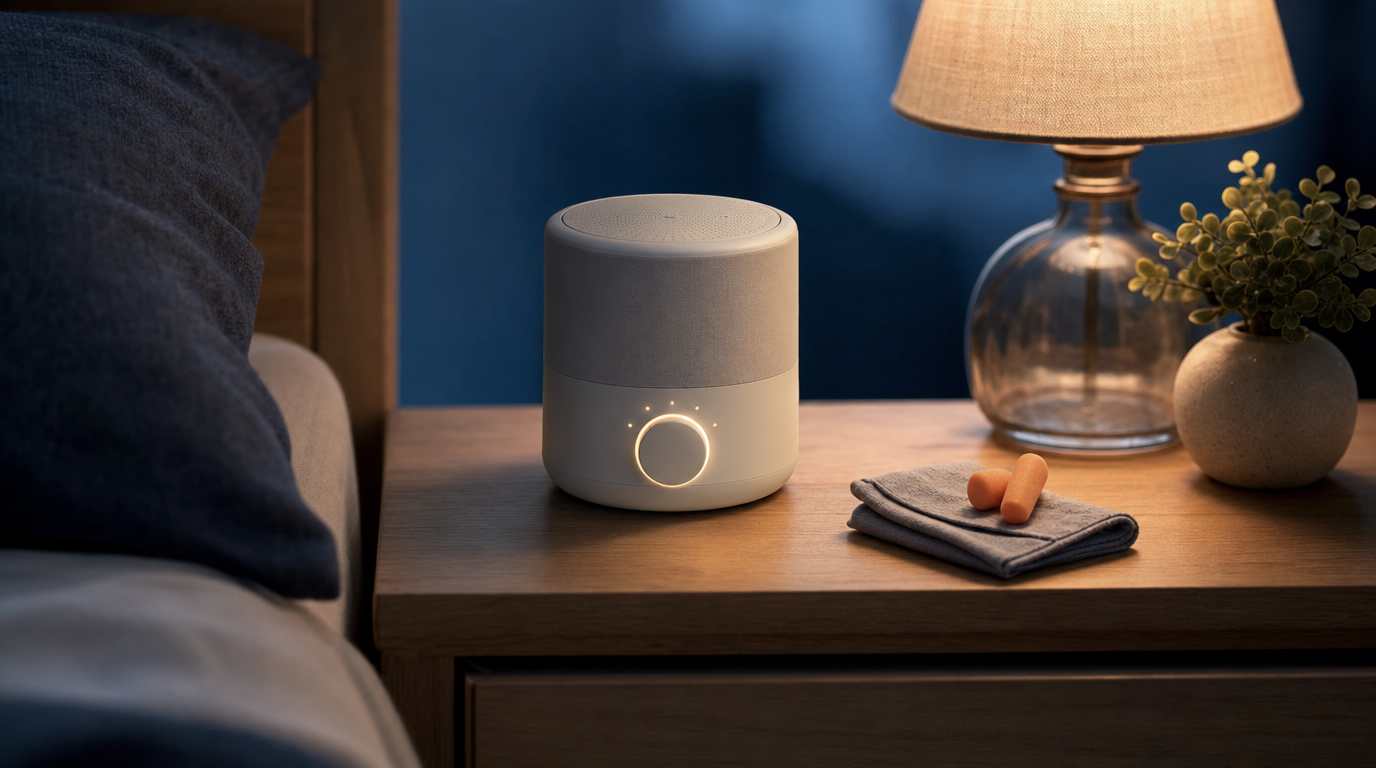
A white noise machine and earplugs both aim to help you sleep through unwanted noise, but they work in opposite ways. A white noise machine adds a steady, consistent sound to the room that tends to cover or “mask” sudden noises so they stand out less against the background. Earplugs work by physically blocking sound from reaching your ear canal in the first place, reducing the volume of everything around you, including the white noise machine itself if you happen to use both.
Neither is universally better. The right choice tends to depend on the kind of noise you are dealing with, whether you share a room, how comfortable you find something in your ear overnight, and whether you need to stay alert to certain sounds, like an alarm or a child. Many people end up using each option in different situations rather than picking one permanently.
Table of Contents
- How Each Approach Works
- Comparison Table
- Safety and Practical Considerations
- Who Tends to Prefer Which Option
- Combining Both for Persistent Noise
- Common Mistakes
- FAQ
How Each Approach Works
A white noise machine works by sound masking rather than sound blocking. It generates a steady, even sound in the background that tends to smooth over the contrast between silence and a sudden noise, such as a door closing or a car passing outside. Because the noise it produces is continuous, your brain can more easily treat it as unremarkable background, which is part of why a sudden change in noise, like a bark or a slammed door, feels less jarring against it. For a deeper look at how white noise itself works and when it tends to help, see White Noise for Sleep: Does It Really Help?
Earplugs work by physical blocking rather than masking. Foam, silicone, and wax earplugs each fill or seal the ear canal in slightly different ways, but the underlying idea is the same: they sit between the noise and your eardrum and reduce how much sound energy reaches it. Earplugs tend to block a broad range of noise fairly effectively when they fit well and are inserted correctly, though fit varies a lot from person to person and material to material.
These two approaches are not the only ways to deal with bedroom noise. If the noise problem is coming from outside the room itself, such as street traffic or noisy neighbors, physically reducing how much sound enters the room in the first place is a different strategy worth considering. See How to Soundproof a Bedroom for Sleep for that approach.
Comparison Table
The table below compares a white noise machine and earplugs across the practical factors that tend to matter most when choosing between them.
| Factor | White Noise Machine | Earplugs |
|---|---|---|
| Comfort | Nothing touches the body; generally comfortable for side sleepers and those who dislike anything in their ears | Sits inside the ear canal; comfort varies by material and fit, and some people find prolonged wear irritating |
| Effectiveness by noise type | Tends to work best against steady, low-level, or intermittent background noise by smoothing it into the mix | Tends to work across a broader range of noise, including sudden or louder sounds, when fitted well |
| Practicality for shared rooms | Affects the whole room, which can help or bother a partner depending on their own noise preferences | Affects only the wearer, which tends to suit shared rooms where partners have different noise needs |
| Travel-friendliness | Requires bringing a device and a power source, or relying on a phone app and speaker | Small, lightweight, and easy to pack; a common choice for travel |
| Cost tendency | Typically a one-time device purchase, though prices vary by features | Typically lower upfront cost per pair, though reusable pairs need periodic replacement and disposable ones are an ongoing cost |
| Maintenance and hygiene | Occasional dusting or wiping down; no direct ear contact to manage | Needs regular cleaning or replacement to stay hygienic, since they sit inside the ear canal |
Safety and Practical Considerations
Because earplugs reduce the volume of everything reaching your ear, not just the noise you are trying to avoid, it is worth thinking through what you might need to hear during the night. An alarm clock, a smoke or carbon monoxide detector, a phone ringing, a crying baby or child, or a partner trying to wake you can all be muffled along with the unwanted noise. If any of these matter in your household, it is worth testing whether your alarm or alert is still loud enough to wake you while wearing earplugs, or considering a vibrating alarm or a monitor built for this purpose as a backup.
A white noise machine does not carry this same tradeoff in the same way, since it does not block your hearing, but it is still worth keeping the volume at a level where important sounds can still cut through rather than turning it up so high that it competes with an alarm or alert.
Fit matters for earplugs too. A poor fit can reduce how effectively they block noise and can also be less comfortable over a full night. If you find a particular style uncomfortable or ineffective, it is often worth trying a different material or size rather than assuming earplugs in general are not for you.
Who Tends to Prefer Which Option
People who share a bed or a room with someone who has different noise sensitivities often lean toward earplugs, since the effect stays with the wearer instead of changing the sound environment for both people. The same tends to be true for frequent travelers, since earplugs are small, do not need power, and pack easily for a hotel room or a flight.
People who dislike anything in their ears overnight, or who deal mainly with a fairly steady, low-level noise problem such as a noisy street or an HVAC hum, often lean toward a white noise machine instead. It can also be an easier fit for a shared room when both people are comfortable with the same background sound, such as parents trying to keep a nursery consistently quiet-feeling for a baby.
Neither preference is fixed. Many people switch between the two depending on the situation, using a machine at home and earplugs while traveling, or the reverse.
Combining Both for Persistent Noise
For noise that is loud, unpredictable, or simply not solved well by either option alone, some people use a white noise machine and earplugs together. The earplugs reduce the overall volume of noise reaching the ear, while the machine’s steady sound helps smooth over whatever still gets through. This combination can be useful in situations like a very noisy street, a snoring partner, or a temporary living situation with thin walls.
If noise remains a persistent problem even after trying both, it may be worth addressing the source directly rather than relying only on masking or blocking at the ear. See How to Soundproof a Bedroom for Sleep for ways to reduce how much noise enters the room in the first place.
Common Mistakes
- Setting a white noise machine louder than needed instead of at the lowest level that still smooths out the noise, which can make it harder to hear an alarm or alert.
- Wearing the same pair of earplugs for a long stretch without cleaning or replacing them, which affects hygiene and comfort.
- Assuming one style of earplug fits everyone the same way, when material and size can significantly change comfort and effectiveness.
- Relying on earplugs without a backup plan for alarms or alerts that matter, such as a smoke detector or a child who may need you.
- Expecting a white noise machine to fully block loud or sudden noise the way earplugs can, when masking and blocking are fundamentally different mechanisms.
- Giving up on one option after a single bad night instead of adjusting volume, fit, or material first.
FAQ
Is a white noise machine or earplugs better for sleep?
Neither is universally better. A white noise machine masks noise by adding a steady background sound, while earplugs physically block sound from reaching the ear. The better option generally depends on the type of noise you deal with, whether you share a room, and how comfortable you find something in your ears overnight.
Can I use a white noise machine and earplugs at the same time?
Yes. Some people combine both for particularly loud or unpredictable noise, using earplugs to reduce overall volume and a white noise machine to smooth over whatever noise still gets through. This combination is generally more relevant for persistent noise problems than as an everyday default.
Will earplugs stop me from hearing my alarm?
They can, since earplugs reduce the volume of everything reaching your ear, not just unwanted noise. If hearing an alarm, a smoke detector, or a child is important, it is worth testing whether your usual alerts are still loud enough while wearing earplugs, or using a vibrating alarm or another backup method.
Are earplugs or a white noise machine easier to travel with?
Earplugs are generally easier for travel since they are small, lightweight, and do not require power. A white noise machine can still be used while traveling, but it usually means packing a device or relying on a phone app and speaker instead.
Which option is better for a shared bedroom?
Earplugs tend to suit shared rooms better when partners have different noise preferences, since the effect stays with the wearer. A white noise machine changes the sound environment for the whole room, which works well when both people are comfortable with the same background sound but can be a mismatch when they are not.
Do earplugs need to be cleaned or replaced regularly?
Yes. Because earplugs sit inside the ear canal, hygiene matters more than it does for a white noise machine. Reusable earplugs generally need regular cleaning and periodic replacement, and disposable foam earplugs are typically meant for limited or single use.
Bottom Line
A white noise machine and earplugs solve the same problem, unwanted noise at night, in fundamentally different ways: one masks sound by adding a steady layer over it, the other blocks sound from reaching your ear at all. Earplugs tend to suit shared rooms, travel, and a broader range of noise types, but come with a practical tradeoff around hearing alarms, alerts, or a child during the night. A white noise machine tends to suit steady background noise and situations where nothing touching your ears matters, but it changes the sound environment for the whole room. For a deeper look at how white noise itself affects sleep, see White Noise for Sleep: Does It Really Help? If the noise problem is coming from outside the room, How to Soundproof a Bedroom for Sleep covers a different, more permanent approach. And for how noise management fits into your broader nightly routine, see the Sleep Hygiene Guide.