Memory Foam vs Down Pillow: Which Is Better for Sleep?
Choosing between a memory foam pillow and a down pillow often comes down to what each person needs from support, temperature control, and feel. Many people find one material suits their sleep position and comfort preferences better than the other.
This guide compares how memory foam and down typically perform for adult sleepers, explains common trade-offs, and offers practical tips so you can pick the pillow that most likely helps you sleep better.
Quick Answer
Memory foam usually offers firmer, contouring support that many people prefer for pressure relief and spinal alignment, while down tends to feel softer and more breathable; the best choice often depends on your sleep position, temperature sensitivity, and whether you need firmer support.
Table of Contents
- How memory foam and down work
- Support and sleep position
- Temperature, breathability, and heat
- Care, lifespan, and allergens
- When to see a doctor
- Common mistakes
- FAQ
- Bottom Line
How memory foam and down work
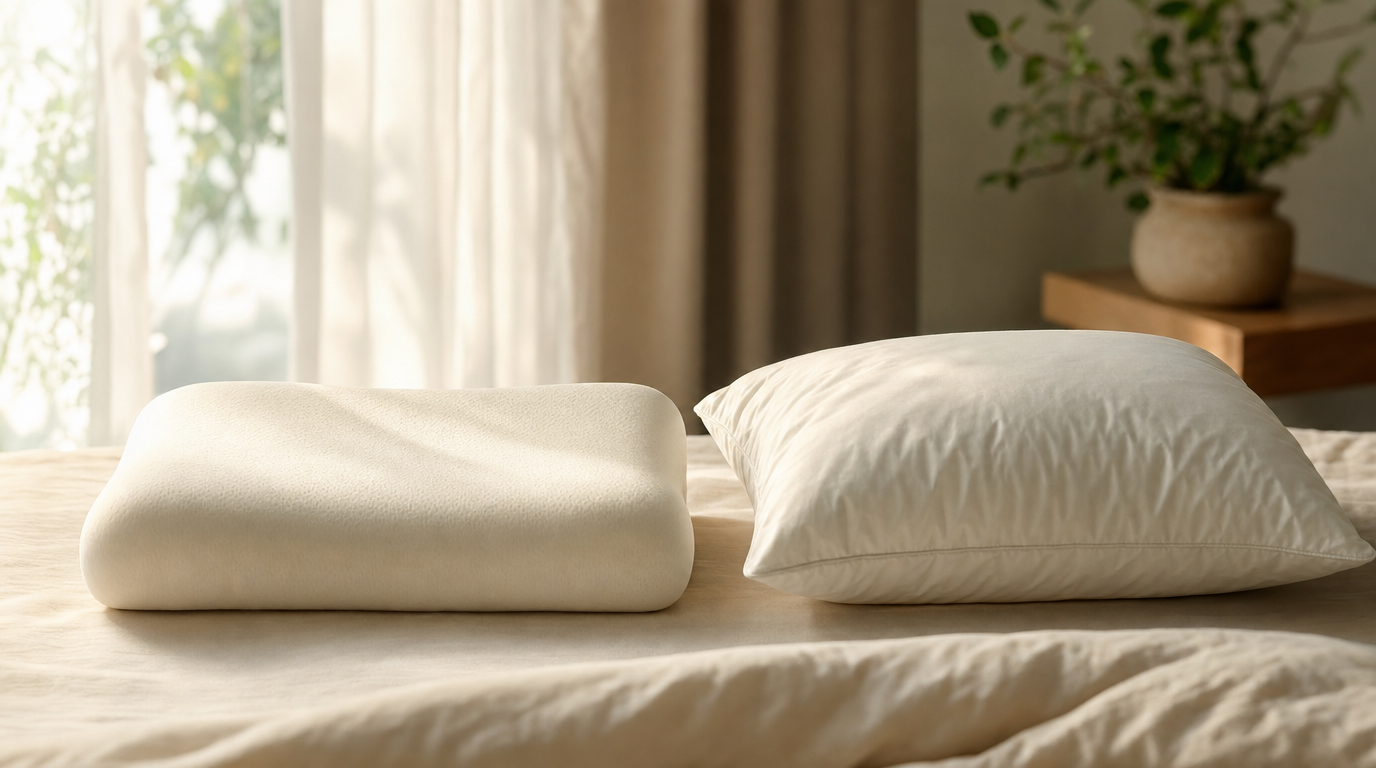
Memory foam pillows are made from viscoelastic foam that responds to pressure and heat, allowing the surface to contour around the head and neck. That contouring can feel supportive for people who need pressure relief, though some people describe the feel as denser or more ‘molded’ than other fills.
Down pillows are filled with soft feathers or clusters that create a plush, compressible surface. They tend to be more malleable—meaning you can often fluff and shape them—and many sleepers describe them as lighter and more airy than foam.
Support and sleep position
Support needs vary with sleep position. Many people who sleep on their side prefer a higher-loft, firmer pillow for neck alignment; memory foam can provide stable loft and contouring support. Back sleepers often benefit from moderate loft and some contouring, which memory foam can supply. Stomach sleepers usually need a thinner, softer pillow to avoid neck extension; a soft down pillow can feel less elevating.
That said, individual comfort matters: some side sleepers prefer the softer sink of down if they pair it with a supportive mattress, while some stomach sleepers tolerate a thin memory foam option. If neck pain or alignment is a concern, many people find reading guidance like Best Pillow for Neck Pain helpful when choosing shape and loft.
Temperature, breathability, and heat
Memory foam can trap more heat for some sleepers because it conforms closely to the head and neck; newer foam designs or ventilated constructions often aim to improve airflow, but heat sensitivity varies. If you tend to sleep hot, many people look for cooling features or consider down as a more breathable-feeling option.
For people worried about sleeping warm, reading about how different pillow types affect temperature—such as considerations in Does a Cooling Pillow Help You Sleep Cooler?—may be useful.
Care, lifespan, and allergens
Down pillows often require occasional special cleaning or professional laundering to maintain loft, and they may need periodic fluffing. Memory foam pillows usually aren’t machine-washable and often require spot-cleaning and airing; they can also develop permanent impressions over time. Lifespan can vary by quality and care.
Allergies are another consideration: some people who are sensitive to feathers avoid down, while others find hypoallergenic down or barrier covers help. If allergens are a concern, it can be helpful to factor that into your choice or consult product care guidance and general allergy advice.
When to see a doctor
Choosing a pillow is generally a comfort and lifestyle decision, but if you have persistent neck pain, new or worsening breathing problems, or suspected allergy reactions linked to bedding, many experts suggest talking with a healthcare professional. This article is educational and not a substitute for medical advice—if you have medical concerns, consult a clinician and review our medical disclaimer and editorial policy for how we approach content and sources.
Common mistakes
- Choosing a pillow solely by perceived softness without considering sleep position or loft.
- Assuming a heavier pillow always provides better support.
- Not replacing a pillow that’s lost shape or support over time.
- Ignoring personal temperature sensitivity when picking between foam and down.
- Buying for aesthetics rather than testing comfort and support.
FAQ
Which is better for side sleepers: memory foam or down?
Many side sleepers prefer memory foam for its ability to hold loft and contour for neck alignment, but some side sleepers like a firmer, specially designed down pillow or a down alternative that offers more structure.
Is memory foam hotter than down?
Memory foam can feel warmer for some people because it conforms closely to the head and neck; however, constructions with ventilation or cooling materials aim to reduce that effect. Personal heat sensitivity makes a difference.
Are down pillows good for people with neck pain?
Down pillows are often softer and easier to compress, which may not suit people who need firmer support for neck pain. Many sleepers with neck concerns find firmer or contoured options more helpful; resources like Best Pillow for Neck Pain can offer general guidance on support and shape.
Can I use a down pillow if I sleep hot?
Some people who sleep hot prefer down because it often feels more breathable than dense foam. That said, sleep temperature varies and some down pillows retain heat when bundled under heavy covers; considering cooling features or different pillow constructions may help.
How do I choose between memory foam and down for my back?
Back sleepers typically need moderate loft and some neck support. A memory foam pillow that provides gentle contouring can be a good fit, while a medium-loft down pillow may also work for those who prefer a softer feel but maintain alignment.
Bottom Line
Memory foam and down each have trade-offs: memory foam generally gives firmer, contouring support useful for alignment, while down offers a softer, more malleable feel that many people find breathable. Consider your sleep position, how hot you sleep, and whether you need firmer neck support when deciding. For more detail on support and choosing the right pillow shape, see Best Pillow for Neck Pain, explore cooling options in Does a Cooling Pillow Help You Sleep Cooler?, or read guidance for back sleepers at How to Choose a Pillow for Back Sleepers.