Best Sleep Mask Materials for Sensitive Skin
Choosing a sleep mask material matters if your skin is easily irritated. Many people with sensitive skin notice differences between fabrics, seams, and dyes — and switching materials or care routines can sometimes help reduce redness or itch.
This guide explains which fabrics are often considered gentler, fabrics people sometimes avoid, and practical care and fit tips that may lower the chance of irritation without recommending specific products.
Quick Answer
For sensitive skin, many people find smooth, breathable natural or plant-derived fibers such as silk, high-quality cotton, or Tencel/lyocell-style fabrics to be gentler than rough or heavily processed synthetic materials. Washing masks with a mild, fragrance-free detergent and avoiding strong dyes or harsh finishes often helps too.
Table of Contents
- Why fabric matters for sensitive skin
- Materials many people find gentle
- Materials to avoid if you have sensitive skin
- Caring for your sleep mask
- Fit, features, and non-fabric considerations
- When to see a doctor about skin irritation
Why fabric matters for sensitive skin
Fabrics differ in texture, breathability, and the way they’re finished. A smooth, breathable fabric is less likely to create friction or trap sweat, which some people find reduces irritation. Dyes, chemical finishes, and rough seams can be triggers for sensitive skin, so fabric choice is just one piece of the puzzle.
Materials many people find gentle
These materials are commonly suggested by sleep-conscious people and bedside-care guides for sensitive skin:
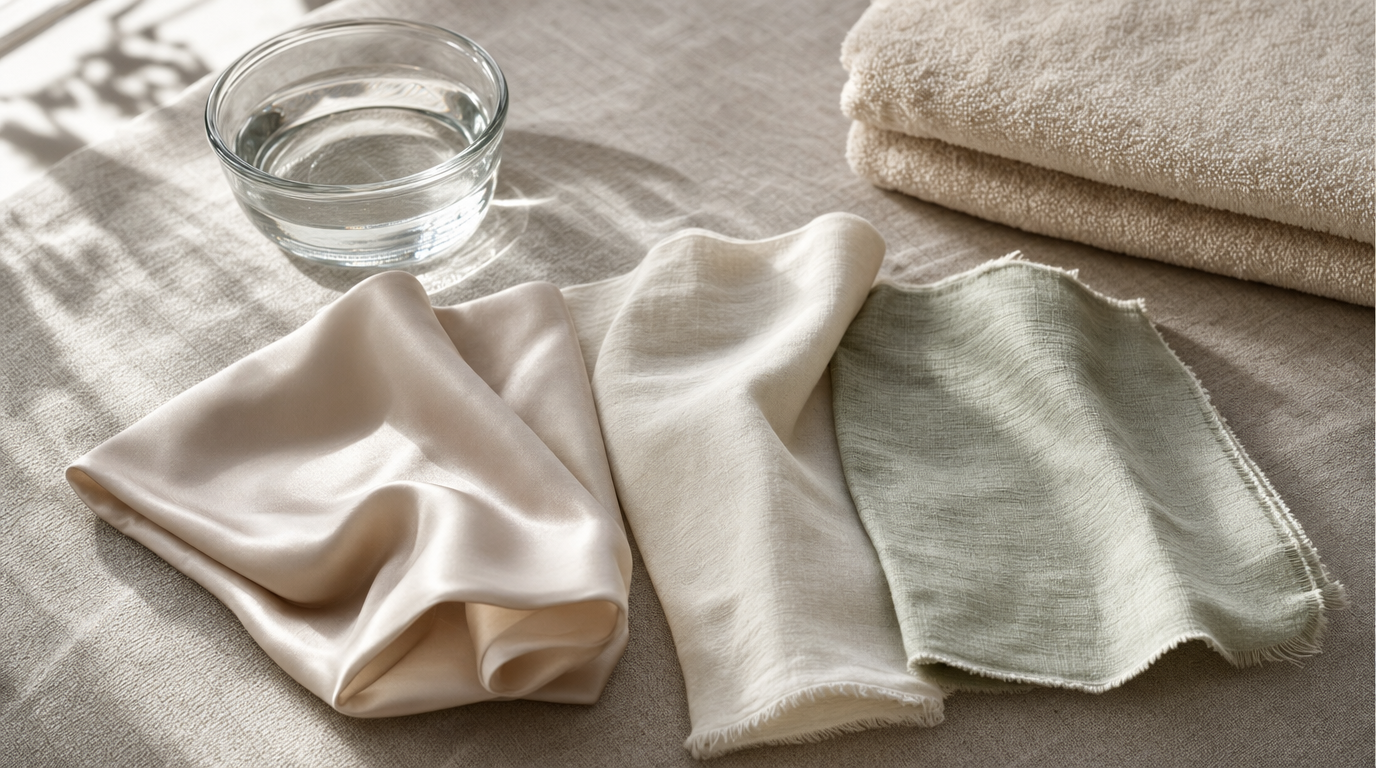
- Satin or silk (natural silk): Natural silk is smooth and has a low-friction surface, which many people with sensitive skin and hair prefer. Some people find silk feels cooler against the skin, but very delicate silk may require gentle washing.
- High-quality cotton (long-staple or combed): Breathable and familiar, plain cotton in a soft weave can be comfortable for sensitive skin. Look for masks without rough labels or seams near the eye area.
- Bamboo-derived fabrics / Tencel / lyocell: Plant-based fibers that are often marketed as soft and breathable. Many people report they feel gentle on skin, though processing can vary between manufacturers.
- Hypoallergenic-labeled fabrics: Some masks use fabrics described as hypoallergenic; while that label isn’t regulated in a single way, it can indicate attention to low-irritant production choices such as reduced chemical finishes.
Materials to avoid if you have sensitive skin
Some materials are more likely to cause irritation for people with sensitive skin:
- Rough, textured synthetics: Coarse polyester or cheap satin blends can create friction and trap heat or sweat.
- Heavily dyed or chemically finished fabrics: Bright dyes, strong fragrances, or wrinkle-resistant finishes may irritate reactive skin for some people.
- Coarse seams and embellishments: Lace trims, pronounced stitching, or bulky closures near the eyes can rub or press into the skin.
Caring for your sleep mask
How you wash and handle a mask can be as important as the fabric. Many people with sensitive skin reduce reactions by washing a new mask before first use, choosing a mild, fragrance-free laundry detergent, and washing masks separately or in a gentle cycle. Air-drying or using a low-heat setting can protect delicate fibers.
Also consider how often you wash the mask: if you sweat at night or use facial products before bed, more frequent washing may reduce buildup that can irritate skin. For guidance on bedroom textiles and cleaning frequency, see How Often Should You Wash Your Bedding?.
Fit, features, and non-fabric considerations
Fit and construction affect contact and pressure. Wide, soft straps that distribute pressure and masks with minimal seams over the eye area tend to be more comfortable for sensitive skin. Adjustable closures let you reduce tightness, and removable covers can make cleaning easier.
When to see a doctor about skin irritation
If you have persistent redness, swelling, a rash, or a reaction that doesn’t improve after changing masks and care routines, it’s reasonable to consult a healthcare professional or dermatologist. RestWell HQ content is educational and not a substitute for medical care; for more about our content standards see our Editorial Policy, and for clinical guidance see our Medical Disclaimer.
Common mistakes
- Assuming any silk or satin is the same — finish and weave matter.
- Using strong-scented detergents or fabric softeners that can leave residues.
- Keeping the same mask on for long stretches without washing if you sweat or use night creams.
- Choosing a tight fit that presses seams into delicate skin around the eyes.
- Ignoring label care instructions for delicate fabrics, causing premature wear or roughness.
FAQ
Is silk really hypoallergenic for sensitive skin?
Many people find natural silk feels smooth and less irritating, but “hypoallergenic” isn’t a single regulated claim. Individual reactions vary, so testing a wash-and-wear trial is often useful.
Can cotton irritate sensitive skin?
Cotton is breathable and commonly comfortable, but coarse weaves, labels, or rough seams can still cause irritation for some people. Softer, high-quality cotton weaves are usually gentler.
Are bamboo or Tencel fabrics safe for sensitive skin?
Plant-derived fabrics like bamboo viscose or Tencel are often described as soft and breathable, and many people find them comfortable. Processing methods can differ, so personal testing helps determine what feels best.
How often should I wash a sleep mask if I have sensitive skin?
If you sweat during sleep or use facial products at night, you may find washing your mask once a week or more often helpful. Gentle detergents and following care instructions can reduce residue that might irritate skin.
Can the dye or finish on a sleep mask cause irritation?
Yes, strong dyes and chemical finishes can be a source of irritation for some people with reactive skin. Washing a new mask before use and choosing lightly finished fabrics may help reduce that risk.
Bottom Line
Many people with sensitive skin find that smooth, breathable fabrics and careful washing reduce irritation. Try a gentle fabric, wash new masks before use, and avoid strong fragrances or tight seams. For more on whether a mask might help your sleep and how to darken your sleeping space, see Does a Sleep Mask Help You Sleep Better? and How to Make Your Bedroom Darker for Better Sleep.