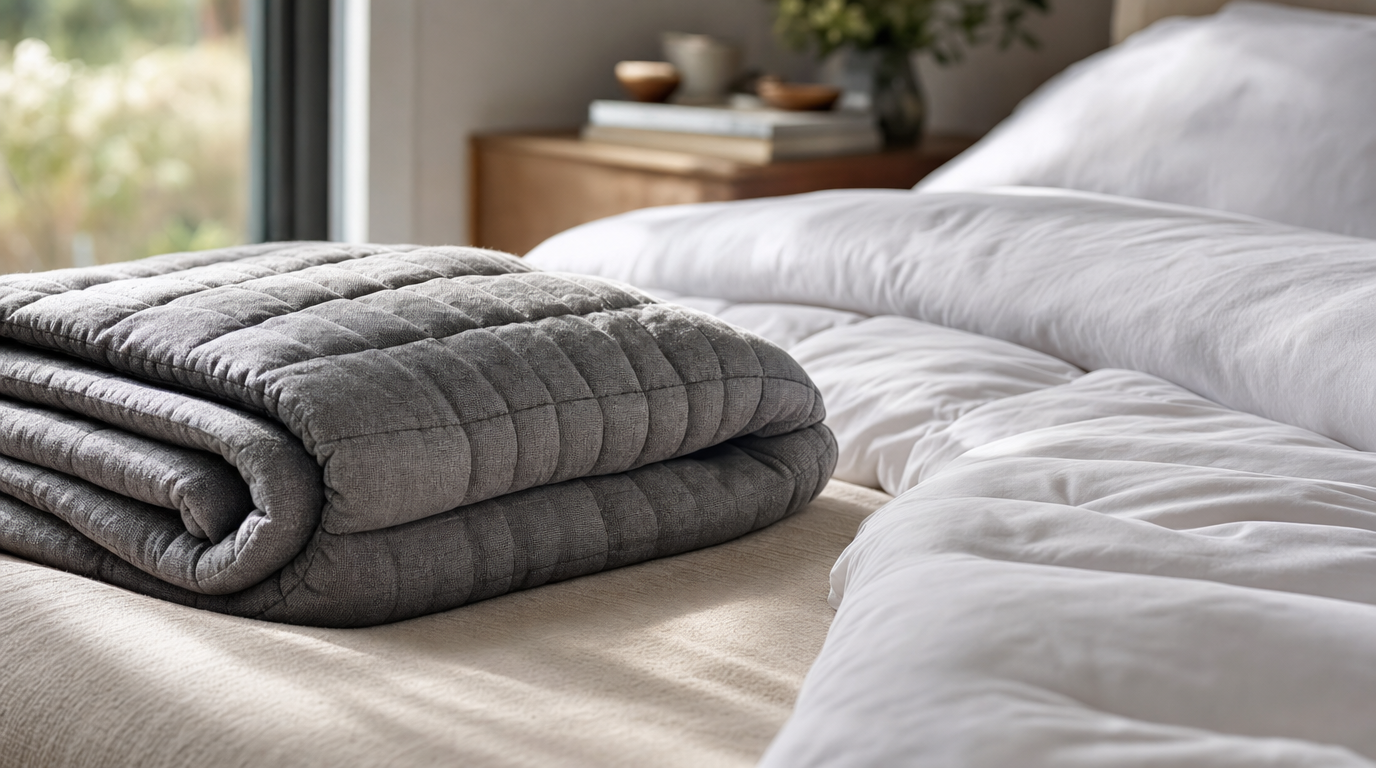
Weighted Blanket vs Regular Comforter: Which Is Warmer?
Many people choose bedding based on warmth alone, and the difference between a weighted blanket and a regular comforter can feel confusing at first. Both can keep you warm, but they work in different ways and the best choice often depends on your personal sleep temperature and how you use bedding.
This article compares how weighted blankets and comforters trap heat, lists the main factors that influence warmth, and offers practical tips to help you pick the right layer for different seasons and sleep styles.
Quick Answer
Weighted blankets and regular comforters both provide warmth, but a comforter’s insulation and loft usually trap more air and feel warmer overall; a weighted blanket may feel warmer to some because of close contact and pressure, but its warmth varies with fill, cover fabric, and layering.
Table of Contents
- How weighted blankets trap heat
- How regular comforters trap heat
- Key factors that decide which is warmer
- Season and sleep style: choosing warmth
- When to see a doctor about overheating or circulation concerns
How weighted blankets trap heat
Weighted blankets are dense and sit close to the body, which reduces air movement next to your skin. That close contact can increase perceived warmth for many people, especially if the cover fabric is woven tightly. However, because weighted blankets are typically less lofty than comforters, they trap less insulating air overall.
Fill material matters: some fills move heat away better than others, and breathable covers can help reduce overheating. Many people find that breathable weighted blankets are comfortable year-round, while denser, less breathable covers feel warmer.
How regular comforters trap heat
Comforters rely on loft and trapped air to provide insulation. A puffier comforter usually traps more air between layers, and air is a good insulator—so more loft often equals more warmth. The type of fill (synthetic vs natural fibers) and the quality of the shell fabric also affect how much heat is held close to the body.
Because comforters typically wrap around more of the body and have more volume, many people find them warmer in situations where you want a strong insulating layer rather than close pressure.
Key factors that decide which is warmer
- Fill and insulation: Lofty fills trap more insulating air; dense fills provide closer contact but less trapped air.
- Cover fabric: Breathable cotton or linen covers usually feel cooler than tightly woven synthetic shells.
- Weight versus loft: A heavy blanket presses against the body and can feel warmer, while a tall loft comforter insulates through trapped air.
- Room temperature and humidity: Ambient conditions change how warm either option feels—higher humidity can make either layer feel hotter.
- How you sleep: If you move a lot, a comforter may better stay over you; if you prefer the sensation of pressure, a weighted blanket may feel cozier.
Season and sleep style: choosing the right warmth
Many people rotate bedding by season. A lightweight, breathable weighted blanket or a thin comforter can work well for warmer months, while a loftier comforter or a heavier comforter-insert may be preferable in colder months. Layering is often the most flexible approach—use a lighter layer close to the skin and add a comforter if you need more insulation.
If you tend to sleep hot, look for breathable covers and lighter fills; if you sleep cold, prioritize loft or insulating layers. People who like the calming pressure of a weighted blanket might combine a breathable weighted layer with a thin comforter for extra insulation without excessive heat.
When to see a doctor about overheating or circulation concerns
For most adults, choosing bedding is a comfort and preference issue. However, if you notice persistent overheating during sleep, excessive night sweats, or symptoms like numbness or tingling that could be related to circulation, it’s reasonable to talk with a healthcare professional. These symptoms can have medical causes that are beyond general sleep guidance.
RestWell HQ content is for general education and not a substitute for medical advice. For more about our content standards and to understand the scope of guidance here, see our editorial policy and our medical disclaimer.
Common mistakes
- Assuming heavier always means warmer without considering loft and breathability.
- Using a single blanket year-round rather than switching or layering for seasons.
- Choosing dense synthetic covers that trap heat if you already sleep hot.
- Ignoring how room temperature and humidity affect perceived warmth.
- Overlooking how sleep position and movement change how bedding feels at night.
FAQ
Is a weighted blanket warmer than a comforter?
Not always—weighted blankets offer close contact that can feel warmer, but comforters with higher loft usually trap more insulating air and may be warmer overall.
Can weighted blankets make you overheat?
Some people find weighted blankets warmer, especially if the cover isn’t breathable; choosing breathable fabrics and lighter fills can reduce the chance of overheating.
How should hot sleepers choose between the two?
Hot sleepers often prefer breathable covers, lighter fills, or thinner comforters. Layering a lightweight weighted blanket with breathable bedding can offer pressure without excessive heat for some people.
Can I layer a weighted blanket under or over a comforter?
Yes—layering can combine the pressure of a weighted blanket with the insulation of a comforter. Be mindful that layering increases overall warmth, so adjust layers to match room temperature and personal comfort.
Are weighted blankets safe for adults with circulation or breathing issues?
Most adults use weighted blankets safely, but if you have circulation, breathing, or other medical concerns, it’s wise to discuss bedding choices with a healthcare professional before use.
Bottom Line
Both weighted blankets and regular comforters can be warm; comforters often provide stronger insulation through loft, while weighted blankets provide close contact that some people find warmer. Consider fill, cover fabric, room climate, and whether you prefer pressure or loft. If you sleep hot, prioritize breathable materials or lighter fills; if you sleep cold, look for greater loft or additional layers.
For more on weighted blankets and how they affect sleep, see Does a Weighted Blanket Help You Sleep?. If temperature regulation is a concern, you may also find guidance in Does a Cooling Pillow Help You Sleep Cooler? and seasonal tips in How to Sleep Better in Hot Weather.