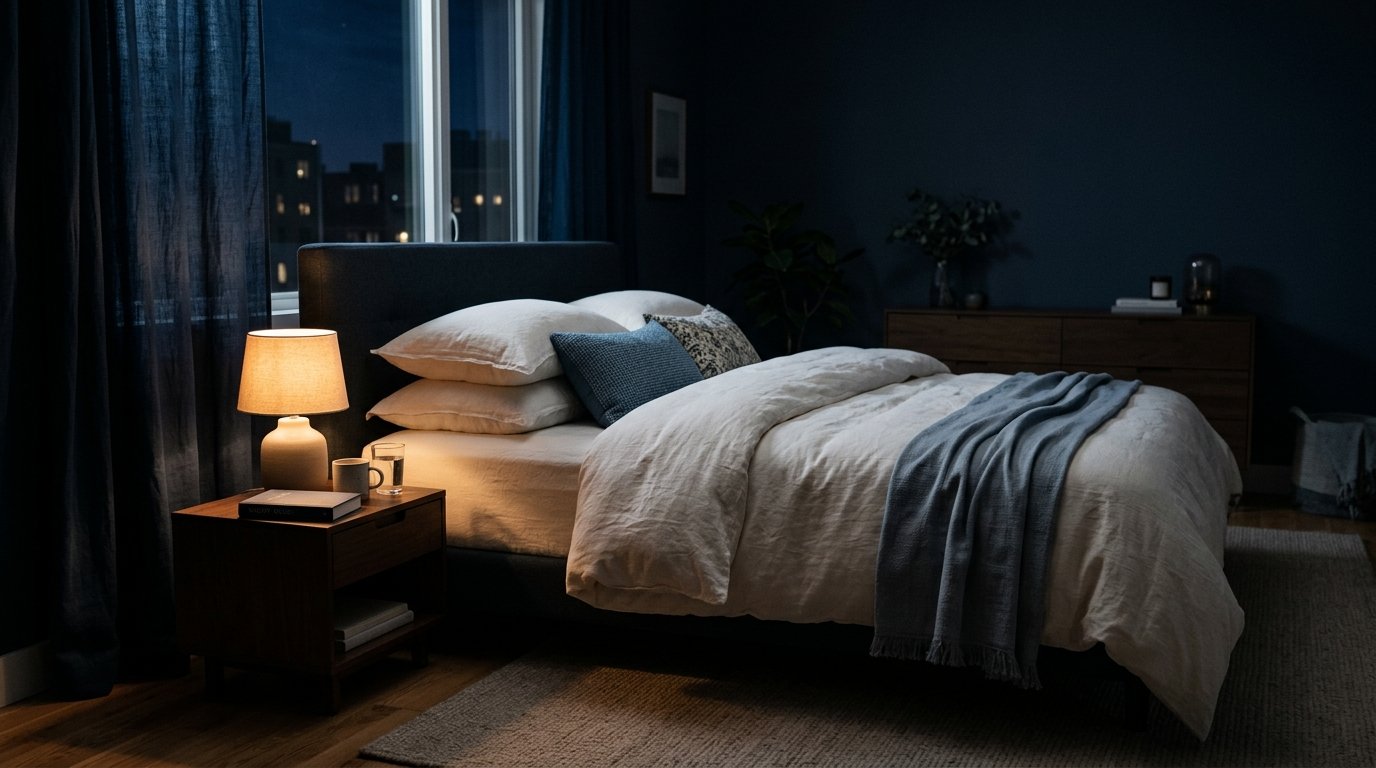
Why Can’t I Sleep?
If you can’t sleep, the first step is not to assume one dramatic cause. Trouble sleeping can come from timing, caffeine, stress, light, room comfort, an inconsistent routine, or simply trying too hard to force sleep on a night when your body does not feel ready.
This guide is educational, not diagnostic. If sleep trouble is persistent, severe, or affecting daily life, consider talking with a qualified healthcare professional.
Quick Answer
You may not be sleeping because your schedule, environment, caffeine timing, stress level, light exposure, or bedtime habits are keeping your brain and body more alert than you expect. Start with the easiest checks: what time you woke up, when you had caffeine, how bright your evening was, whether your room felt comfortable, and whether your mind was still in problem-solving mode.
For tonight, keep the goal simple: reduce pressure, make the room calm, avoid clock-watching, and use a quiet wind-down routine. If this keeps happening, track patterns for a week instead of changing everything at once.
Why can’t I sleep? Common patterns to check
Most bad nights have more than one contributor. Use the table below to narrow your first review.
| Pattern | What it may suggest | What to check first |
|---|---|---|
| You feel tired all day but alert at bedtime. | Your routine may be sending mixed timing signals. | Wake time, evening light, naps, and caffeine timing. |
| Your mind races when you get into bed. | Stress or unfinished tasks may be carrying into bedtime. | Evening planning, work cutoff, and wind-down routine. |
| You fall asleep better on some nights than others. | A variable habit may be involved. | Caffeine, alcohol, late meals, exercise timing, or screen use. |
| You feel uncomfortable in bed. | The sleep environment may be adding friction. | Temperature, bedding, light, noise, and airflow. |
| You worry about not sleeping. | Sleep pressure may be making the night feel more stressful. | Clock-watching, frustration, and attempts to force sleep. |
1. Your sleep schedule may be working against you
A changing sleep schedule can make bedtime feel unpredictable. If you wake at different times, nap late, sleep in heavily on weekends, or work irregular hours, your body may not feel ready for sleep when your calendar says it should.
Start with wake time. A consistent wake time is often easier to control than a forced bedtime. If your schedule is scattered, use the Sleep Hygiene Guide to review timing, light, caffeine, and wind-down habits together.
2. Caffeine may still be part of the picture
Caffeine affects people differently. Some people can drink coffee in the afternoon and sleep normally. Others notice that later caffeine lines up with lighter, shorter, or more restless nights.
The practical move is not to panic about coffee. Track your last caffeinated drink for several days and compare it with bedtime. Coffee, tea, energy drinks, pre-workout, and some sodas can all be worth noting. For a focused guide, read Does Coffee Affect Sleep?.
3. Stress can keep the night active
Stress does not always feel dramatic. Sometimes it looks like planning, replaying conversations, checking messages, or trying to solve tomorrow’s problems from bed. If your mind gets louder at night, your routine may need a clearer boundary between the day and sleep.
A simple first step is a short evening reset: write down tomorrow’s tasks, close work loops earlier, and choose one calm activity that does not invite more decisions. If falling asleep is the main challenge, pair this with How to Fall Asleep Faster.
4. Light and screens may be keeping bedtime too alert
Evening screens are not all the same. A calm show, urgent work email, bright phone scrolling, and stressful news can affect your evening differently. The issue is often the full bedtime context, not only the screen itself.
Try making the final part of the evening less bright and less demanding. Put the phone down earlier when practical, move work off the bed, and avoid content that pulls you into problem-solving.
5. Your bedroom may be adding friction
A bedroom does not need to be perfect, but it should make sleep easier. If you are too warm, too cold, distracted by light, bothered by noise, or uncomfortable in bed, your body has more reasons to stay alert.
Start with simple changes before buying anything: adjust bedding, reduce light, create consistent background sound if needed, and review airflow. For a focused room setup guide, read Best Bedroom Temperature for Sleep.
6. Trying too hard to sleep can backfire
When sleep becomes a performance goal, bedtime can feel like a test. Watching the clock, calculating lost hours, and forcing yourself to relax may make the night feel more tense.
If you are awake and frustrated, shift the goal from “make sleep happen now” to “make the next 20 minutes calmer.” Lower the lights, stop checking the time, and choose a quiet, low-stimulation activity until you feel sleepier.
A 7-night sleep troubleshooting checklist
- Write down your wake time.
- Record your last caffeine time.
- Note naps, alcohol, intense exercise, and late meals.
- Record when screens or work stopped.
- Rate bedroom comfort: temperature, light, noise, and bedding.
- Write one sentence about stress or mental load.
- Track whether you fell asleep easily, woke up often, or woke up tired.
After a week, look for patterns. If the problem shows up after later caffeine, start there. If it follows schedule swings, focus on timing. If it happens even with a stable routine, consider whether professional guidance would be useful.
What to try tonight
- Stop trying to solve the whole sleep problem tonight.
- Dim lights and make the room feel calmer.
- Move the phone away from the bed if it keeps pulling attention.
- Write down tomorrow’s tasks instead of rehearsing them mentally.
- Avoid checking the clock repeatedly.
- Use a quiet activity until sleepiness returns.
When to get professional guidance
Consider talking with a qualified healthcare professional if sleep trouble is persistent, severe, worsening, connected with symptoms that concern you, or affecting daytime functioning. RestWell HQ articles are for general education and should not replace medical advice, diagnosis, or treatment. See the Medical Disclaimer and Editorial Policy.
FAQ
Why can’t I sleep even when I am tired?
Feeling tired and feeling ready to sleep are not always the same. Stress, caffeine timing, bright light, schedule changes, naps, or an uncomfortable bedroom may keep you alert even when you want rest.
Should I stay in bed if I can’t sleep?
If staying in bed makes you more frustrated, it may help to switch to a quiet, low-light activity for a short period and return when you feel sleepier. Keep the goal calm rather than perfect.
Can caffeine make me unable to sleep?
It can for some people, especially when caffeine is used later than usual or in larger amounts than usual. Track timing before making broad assumptions.
Is not sleeping one night dangerous?
One bad night can feel frustrating, but it does not always mean something serious. If sleep trouble repeats, worsens, or affects your days, get personalized guidance.
What is the first thing to fix if I can’t sleep?
Start with the most measurable pattern: wake time, caffeine timing, evening light, stress, or room comfort. Change one or two things at a time so you can see what matters.




4 Comments