How to Sleep Better in Hot Weather
Quick Answer
To sleep better in hot weather, focus on comfort, airflow, lighter layers, and preparing the room before bedtime. Start by moving hot air out when conditions allow, using a fan or air conditioning safely, choosing breathable bedding and sleepwear, reducing heat buildup during the day, and keeping your evening routine simple. Avoid chasing one perfect temperature for everyone. The practical goal is a room and bed setup that feels cooler, steadier, and less stuffy.
Hot weather can make sleep harder, but it should not lead to unsafe cooling choices. Avoid extreme cold exposure, unsafe electrical setups, blocked exits, or ignoring signs of heat-related illness. If you feel faint, confused, very weak, unusually ill, or have concerning symptoms during severe heat, seek appropriate help. This article is general education, not medical advice.
Table of Contents
- Why Hot Weather Can Disrupt Sleep Comfort
- What to Adjust First
- Airflow and Ventilation
- Bedding and Sleepwear
- Fan and Air Conditioning Considerations
- Hydration Without Overdoing It
- Daytime Heat Preparation
- Hot-Weather Evening Checklist
- Mistakes to Avoid
- FAQ
Why Hot Weather Can Disrupt Sleep Comfort
Hot weather can make the bedroom feel harder to settle into because heat changes several parts of the sleep environment at once. The room may feel stuffy, bedding may trap warmth, pajamas may feel heavier, the mattress may hold heat, and windows may bring in warm air instead of relief. Even if you are tired, discomfort can keep pulling attention back to your body and the room.
This article does not try to replace the broader temperature guide. If you want a general room-temperature framework, start with Best Bedroom Temperature for Sleep. This guide is specifically about hot-weather nights, seasonal heat, and practical adjustments when the room is warmer than you would like.
The most useful question is not “What exact number should my room be?” The better question is “What is making tonight feel hot?” It might be outdoor air, a closed room, heavy bedding, poor airflow, sunlight absorbed during the day, humidity, a warm mattress, or a fan placed in the wrong spot. Once you identify the main source, the solution becomes simpler.
What to Adjust First
Hot-weather sleep can become expensive quickly if you start with products. Start with the basics before buying cooling bedding, fans, or accessories. A few changes often reveal whether the problem is trapped room heat, bedding heat, poor airflow, or daytime heat buildup.
| What you notice | Likely issue | First adjustment | Possible upgrade later |
|---|---|---|---|
| Room feels stuffy before bed | Stale air or poor ventilation | Air out the room when outdoor air is cooler | Fan placement or improved ventilation |
| You wake sweaty | Bedding, sleepwear, or room warmth | Remove one layer and use lighter sleepwear | Breathable sheets or cooling pillow |
| Room stayed sunny all day | Daytime heat buildup | Block afternoon sun and close warm windows | Blackout curtains or reflective window treatment |
| Fan runs but room still feels hot | Air circulation without heat removal | Change fan direction or window timing | Air conditioning or stronger ventilation plan |
| You wake thirsty or uncomfortable | Hydration and heat balance | Hydrate earlier and keep water nearby | Review evening routine and room setup |
Make one or two changes at a time. If you change the fan, bedding, pajamas, thermostat, window timing, and bedtime all at once, you will not know what helped. A simple, repeatable test is more useful than a dramatic one-night reset.
It also helps to separate the room problem from the bed problem. If the air feels comfortable but you wake hot under the covers, start with bedding and sleepwear. If the bed feels light but the room feels stale, start with airflow. This prevents unnecessary purchases and keeps the plan practical.
Airflow and Ventilation
Airflow can make a warm room feel less stagnant. The goal is not to blast air at your face all night. The goal is to move air in a way that makes the room feel steadier and less trapped. If outdoor air is cooler in the evening or early morning, ventilation may help. If outdoor air is hotter or humid, open windows may make the room worse.
Start by noticing the timing. In some climates, the best window time is early morning. In others, it may be after sunset. During the hottest part of the day, closing windows, curtains, and blinds may help reduce heat buildup. Later, when the outdoor air is more comfortable, opening windows can help move heat out.
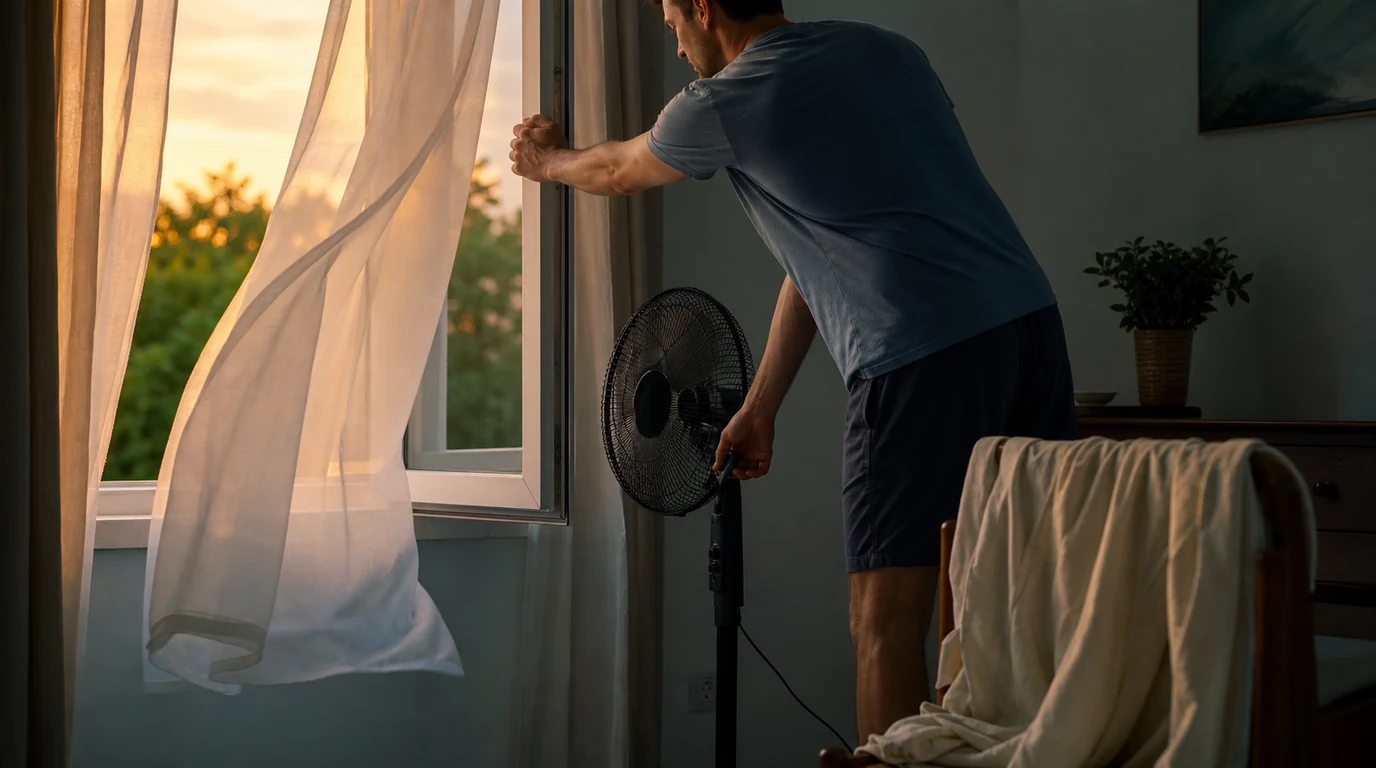
Fan placement matters. A fan pointed directly at you may feel helpful for some people and irritating for others. A fan placed near a window may help move air depending on the layout and outdoor conditions. A fan across the room may create enough circulation without blowing on your face. Test placement before assuming the fan itself is the problem.
If noise from a fan becomes part of the environment, it may also mask small household sounds. For a cautious look at steady sound, see White Noise for Sleep: Does It Really Help?.
Bedding and Sleepwear
Bedding can make a warm room feel much hotter than the air temperature suggests. A heavy comforter, dense blanket, thick mattress protector, or heat-retaining pillow can trap warmth close to the body. In hot weather, lighter layers often help more than changing the whole room.
Try simplifying the bed first. Use a lighter top layer. Keep an extra layer nearby instead of starting too warm. If you share the bed, consider separate blankets so each person can adjust comfort without fighting over one cover. A breathable sheet may be more comfortable than a heavy comforter, but fabric feel is personal and should be tested.
Sleepwear matters too. Tight, heavy, or heat-trapping clothing can make a hot room feel worse. Loose, comfortable sleepwear can help, but there is no one best material for everyone. Choose what feels breathable and non-irritating for your skin and laundry routine.
If you often change layers during the night, use that as feedback. Waking sweaty may point to too much bedding or poor airflow. Waking chilled after removing everything may mean the room cools later and you need a lighter backup layer rather than a heavy setup from the start.
Fan and Air Conditioning Considerations
Fans and air conditioning can both help, but they work differently. A fan moves air. Air conditioning can lower indoor temperature and may reduce humidity depending on the system. The best choice depends on climate, room size, safety, cost, noise, and what you can control.
If you use a fan, keep the setup safe and practical. Avoid unstable placement, overloaded outlets, cords across walking paths, or placing a fan where it could fall. If direct airflow dries your eyes, irritates your throat, or feels too intense, try angling it away or using indirect airflow.
If you use air conditioning, avoid turning the room into an extreme cold environment just because the day was hot. The goal is comfort, not a dramatic temperature swing. Some people sleep better with steady cooling; others wake chilled if the room drops too far overnight. Make small adjustments and notice morning comfort.
Humidity can make heat feel heavier. In some homes, improving humidity comfort may matter as much as lowering temperature. Avoid making health claims around humidity unless validated, but pay attention to how the room feels: sticky, dry, stale, cool, or uneven.
Hydration Without Overdoing It
Hot weather can make hydration more noticeable, but the timing matters. Drinking a large amount right before bed may lead to bathroom trips. Ignoring thirst can also make the night feel uncomfortable. A practical middle ground is to hydrate steadily earlier in the day and keep water nearby for small sips if needed.
Avoid treating hydration as a sleep hack. It is basic comfort and safety. If you are outside in heat, exercising, sweating heavily, or spending time in a very warm home, pay attention to your overall day, not only bedtime. Severe heat can become a safety issue, especially for vulnerable people. Use appropriate public health guidance during heat events.
Also watch evening choices that add heat or disruption. Heavy late meals, alcohol, late caffeine, or intense late exercise may make warm nights feel harder for some people. For caffeine-specific guidance, see Does Coffee Affect Sleep?.
Daytime Heat Preparation
Hot-weather sleep often starts before bedtime. If a room absorbs heat all afternoon, it may still feel warm at night. Closing blinds or curtains during strong sun, especially on windows that heat the room, can help reduce buildup. This connects naturally with bedroom darkness. A darker room can also be a cooler room when sunlight is part of the problem.
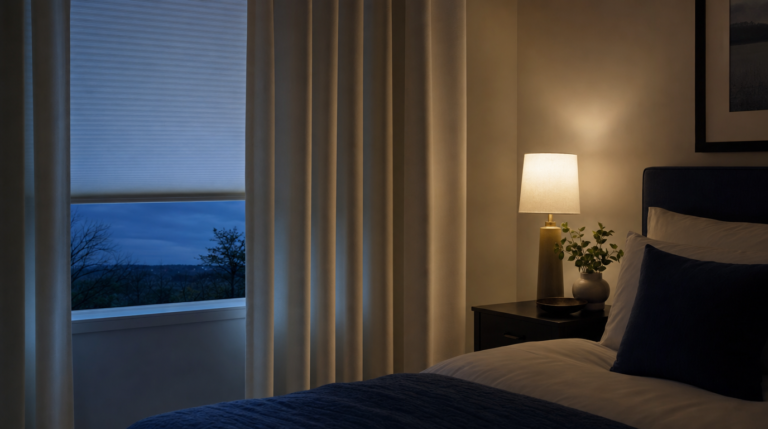
For more light-control ideas, read How to Make Your Bedroom Darker for Better Sleep. In hot weather, blackout curtains may have two roles: reducing sleep-disruptive light and limiting direct sun during the day. That does not mean every room needs them, but it makes them worth considering in bright, hot bedrooms.
Prepare the bed before the room becomes uncomfortable. Choose lighter bedding, move extra blankets off the bed, check fan placement, and decide when windows should be open or closed. These small steps reduce bedtime friction. When it is already late and hot, decision-making gets worse.
Hot-Weather Evening Checklist
- Check whether outdoor air is cooler than indoor air before opening windows.
- Close curtains or blinds earlier if the room gets strong afternoon sun.
- Use lighter bedding and keep a backup layer nearby.
- Choose sleepwear that feels breathable and non-restrictive.
- Place the fan safely and test indirect airflow.
- Use air conditioning for steady comfort, not extreme cooling.
- Hydrate earlier in the day and keep water nearby for small sips.
- Keep screens, caffeine, and late stimulation from adding to the problem.
- Watch for concerning heat symptoms and seek help when appropriate.
Hot-Weather Mistakes to Avoid
Waiting Until Bedtime to Cool the Room
If the room has been heating all day, bedtime may be too late to fix it quickly. Blocking sun earlier, managing windows, and preparing airflow before bedtime can help the room feel less trapped.
Using Heavy Bedding Out of Habit
Many people keep the same bedding year-round. In hot weather, that can make sleep harder than it needs to be. Rotate layers by season and keep comfort flexible.
Pointing a Fan Too Aggressively
Direct airflow may feel good at first and irritating later. If you wake dry, chilled, or uncomfortable, try indirect airflow or a different fan position.
Ignoring Humidity and Stale Air
A room can feel uncomfortable even when the thermostat does not look extreme. Humidity, still air, and poor ventilation can all change comfort.
Using Unsafe Cooling Tricks
Avoid risky electrical setups, unstable fans, blocked ventilation, extreme cold exposure, or advice that feels unsafe for your home. Comfort should not create a new hazard.
When Hot Weather Sleep Problems Need More Help
Most hot-weather sleep problems are practical: the room is warm, the bedding is too heavy, airflow is poor, or the day was unusually hot. But severe heat can become a health and safety issue. If someone is unusually confused, faint, very weak, experiencing concerning symptoms, or unable to cool down, seek appropriate help.
If sleep problems continue even when the weather improves, the issue may not be only heat. Review Why Can’t I Sleep?, How to Fall Asleep Faster, and How to Sleep Better Naturally for broader routines and troubleshooting.
FAQ
What is the best temperature for sleeping in hot weather?
There is no single perfect temperature for everyone. Focus on whether the room feels comfortable, steady, and not stuffy. Bedding, airflow, humidity, and sleepwear can change comfort as much as the thermostat.
Is it better to sleep with a fan or air conditioning?
It depends on your room, climate, budget, and comfort. A fan moves air, while air conditioning can lower indoor temperature. Some people use both lightly. Keep the setup safe and avoid extreme cooling.
Should I open windows at night when it is hot?
Only if outdoor air is cooler or more comfortable than indoor air and it is safe to do so. In some weather, open windows help. In other conditions, they bring in more heat or humidity.
Can blackout curtains help in hot weather?
They may help if direct sun is heating the room during the day. They can also reduce unwanted light. They are not the only solution, but they can be part of a broader room setup.
What bedding is best for hot nights?
There is no universal best. Lighter, breathable layers often feel better than heavy bedding, but personal comfort, laundry habits, skin feel, and room conditions matter.
Can heat cause serious problems?
Severe heat can become a safety issue. If you or someone else has concerning symptoms, cannot cool down, or seems unusually ill, seek appropriate help and follow local public health guidance.
Bottom Line
Sleeping better in hot weather is usually about reducing heat buildup, improving airflow, using lighter layers, and preparing before bedtime. Do not chase one perfect number or use unsafe cooling tricks. Make the room more comfortable step by step, track what actually helps, and get appropriate help if heat becomes a health concern or sleep problems persist beyond the weather.




One Comment