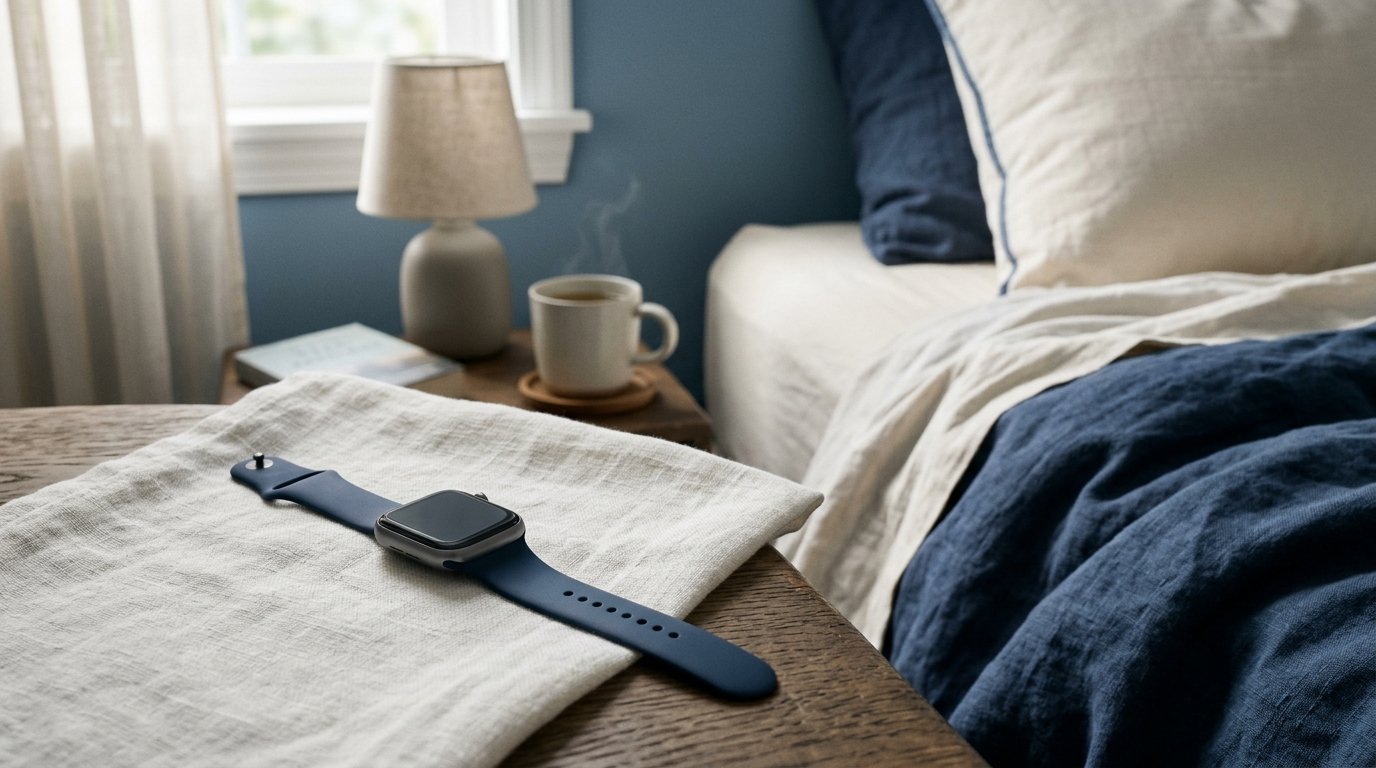
Sleep Tracker Basics
Sleep trackers can be useful when they help you notice patterns. They become less useful when one night’s score turns into anxiety, self-diagnosis, or a buying decision based on assumptions.
This guide explains sleep tracker basics: what trackers may show, what they cannot prove, and how to use the data as a starting point for better questions. It does not recommend a specific device, app, or brand.
Quick Answer
A sleep tracker can help you observe patterns in bedtime, wake time, estimated sleep duration, restlessness, and routine consistency. It should not be treated as a medical diagnosis or a perfect measurement of sleep quality. Use tracker data as a trend tool: compare it with how you feel, your caffeine timing, bedroom comfort, stress, and schedule. If the data worries you or symptoms persist, talk with a qualified healthcare professional.
What a sleep tracker can and cannot tell you
A sleep tracker can give you a structured way to notice habits. It may show when you went to bed, when you woke up, whether your night looked restless, or whether your schedule has drifted. That can be helpful if you are trying to understand why you wake up tired or why bedtime feels inconsistent.
But a tracker cannot tell the whole story. It cannot know every detail of your health, stress, bedroom environment, caffeine timing, or how restored you feel. For a practical morning review, read Why Do I Wake Up Tired?.
Sleep tracker basics table
| Tracker item | Useful for | Use with caution |
|---|---|---|
| Bedtime and wake time. | Seeing schedule consistency. | It may not match actual sleep exactly. |
| Estimated sleep duration. | Spotting short nights. | One night is not enough to judge a pattern. |
| Restlessness or movement. | Noticing disrupted nights. | Movement is not the same as a diagnosis. |
| Sleep stages. | General curiosity about patterns. | Do not treat stage estimates as clinical results. |
| Sleep score. | A quick summary signal. | Scores can oversimplify your night. |
1. Use trends, not single-night scores
One bad score can feel alarming, but it may reflect a normal variation, a late night, a stressful day, alcohol, caffeine, travel, a software estimate, or simply a mismatch between the device and your actual experience.
Look at patterns across a week or more. If your tracker shows short sleep on the same nights you drink caffeine later, that is more useful than one isolated low score. For caffeine-specific tracking, read Does Coffee Affect Sleep?.
2. Compare data with how you feel
A tracker can say the night looked good while you feel tired, or it can give a low score when you feel fine. Do not ignore your own experience. Pair the data with a simple morning note: energy, mood, focus, and whether you woke up refreshed.
If your tracker consistently disagrees with how you feel, use that as a reminder to review habits and symptoms rather than as proof that one side is correct.
3. Track the habits around the data
Sleep numbers are more useful when you know what happened before them. A sleep tracker alone may not know your last caffeine time, whether the room was too warm, whether work ran late, or whether you were stressed.
Pair tracker data with the basics from the Sleep Hygiene Guide: wake time, light, caffeine, screens, bedroom comfort, and wind-down routine.
4. Do not use a tracker to self-diagnose
Sleep trackers are not a substitute for medical evaluation. They may estimate trends, but they cannot diagnose a sleep disorder, breathing issue, mental health condition, or medical cause of fatigue.
If your data worries you, or if you have persistent tiredness, severe sleepiness, breathing concerns, or symptoms that affect daily life, consider bringing your notes to a qualified healthcare professional.
5. Avoid buying based on fear
Sleep products can be tempting when you feel tired. Before buying anything, clarify the problem you are trying to solve. Are you trying to understand bedtime consistency? Caffeine timing? Room comfort? Wake patterns? Product features matter only after the goal is clear.
For bedroom comfort questions, read Best Bedroom Temperature for Sleep. For bedtime routine problems, read How to Fall Asleep Faster.
6. Keep a simple sleep diary beside the tracker
A tracker is more useful when it has context. A simple sleep diary can explain why a number changed. You do not need a complicated log. A few notes can be enough: last caffeine time, bedtime, wake time, alcohol if relevant, room comfort, stress level, and morning energy.
This keeps the tracker from becoming the only source of truth. If the device shows a low score after a stressful evening and late caffeine, the pattern is easier to interpret. If the device shows a low score but you feel fine, you can avoid overreacting to one number.
Sleep tracker starter checklist
- Choose one goal for tracking.
- Track for at least one week before judging patterns.
- Write down caffeine timing and alcohol when relevant.
- Record bedtime, wake time, and perceived morning energy.
- Review bedroom comfort and screen use.
- Do not overreact to one score.
- Bring notes to a professional if symptoms persist or concern you.
What to look for in a tracker without picking a brand
This first RestWell HQ version does not recommend specific products. If you are evaluating trackers, focus on practical fit rather than marketing language.
- Comfort: Will you actually wear or use it consistently?
- Battery and charging: Does it fit your routine?
- Data clarity: Does it show simple trends without overwhelming you?
- Privacy: Are you comfortable with the app and account requirements?
- Export or notes: Can you compare data with your own sleep diary?
- Cost: Is the value clear without needing a subscription you do not want?
These questions matter more than a long feature list. A tracker you dislike using will not give you useful trends. A simple tool that helps you notice timing and routine patterns may be more useful than a complicated dashboard you stop checking after a week.
When sleep tracker data is worth discussing
Consider discussing your sleep notes with a qualified healthcare professional if you have persistent sleep trouble, strong daytime sleepiness, symptoms that concern you, or a tracker pattern that matches how poorly you feel. Bring simple notes rather than only screenshots: bedtime, wake time, caffeine, alcohol, wakeups, and morning energy.
RestWell HQ content is for general education. Read the Medical Disclaimer and Editorial Policy for more context.
FAQ
Are sleep trackers accurate?
Accuracy depends on the device, metric, and situation. Treat sleep trackers as trend tools, not diagnostic instruments or perfect measurements.
Can a sleep tracker diagnose insomnia or sleep apnea?
No. A consumer sleep tracker should not be used to diagnose a medical condition. If you are concerned about symptoms, talk with a qualified healthcare professional.
What sleep tracker metric matters most?
For many beginners, schedule consistency and estimated sleep duration are more practical than complex scores. Compare those with how you feel in the morning.
Should I buy a sleep tracker?
Only if it supports a clear goal and will not make you more anxious. You can start with a simple sleep diary before buying anything.
Why does my sleep score not match how I feel?
A score is a simplified estimate. Your stress, comfort, caffeine timing, health, and daily context may explain more than the score alone.
3 Comments